technical writing Archives | Shufrans TechDocs Home // technical writing Archives | Shufrans TechDocs

9 Years Later, a Slice of Cream Cake, and Why ‘Good Enough’ English is a Universal Cognitive Tax

9 Years Later, a Slice of Cream Cake, and Why ‘Good Enough’ English is a Universal Cognitive Tax

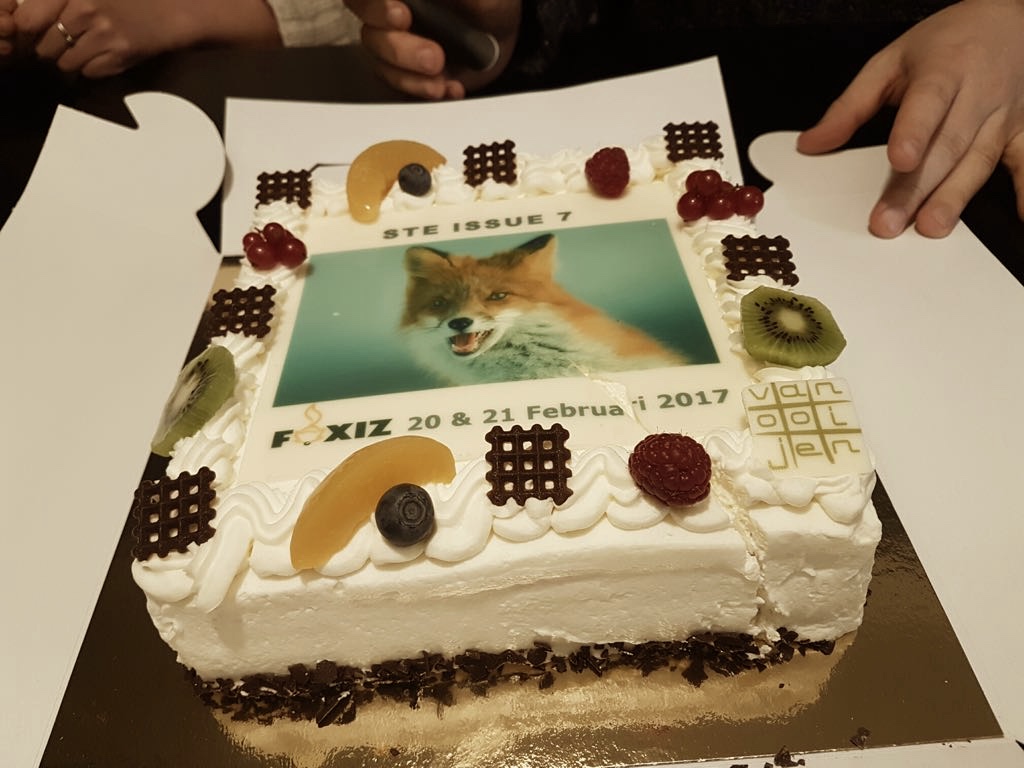
Shufrans TechDocs is currently marking a significant milestone as our principal trainer has reached 20 years of delivering technical documentation expertise and training to high-compliance industries. Such milestones prompt reflection on the evolution of linguistic standards. A retrospective look at our archives brought us to a few photographs from February 2017, taken during our ASD-STE100 Simplified Technical English training in Tiel, Holland.

During that session, our team and the participants celebrated the release of STE Issue 7 with a traditional cream cake. Beyond the rigorous application of controlled language rules, our trainer also hosted a traditional tea ceremony to provide a structured intermission from the technical material. These images highlight a persistent challenge, particularly the ongoing friction that technical authors and editors encounter daily when advocating for corporate linguistic governance.

A recent post-implementation review of our 2017 masterclass cohort confirms that a pervasive structural bottleneck remains unaddressed in web governance and software deployment documentation.

Modern software teams frequently use automated systems to extract user documentation directly from source code or system configurations. This process is efficient on paper. However, automated outputs that bypass rule-based linguistic standards consistently default to unstructured, traditional, and ambiguous prose.

When editors attempt to standardise this text to comply with ASD-STE100 guidelines during peer review, engineering teams often resist. Their argument is predictable: the wording is acceptable because the basic grammar is correct.

For technical communicators and developers managing this friction across globally distributed networks, the following arguments establish the objective business case for controlled language.


A recent post-implementation review of our 2017 masterclass cohort confirms that a pervasive structural bottleneck remains unaddressed in web governance and software deployment documentation.

Modern software teams frequently use automated systems to extract user documentation directly from source code or system configurations. This process is efficient on paper. However, automated outputs that bypass rule-based linguistic standards consistently default to unstructured, traditional, and ambiguous prose.

When editors attempt to standardise this text to comply with ASD-STE100 guidelines during peer review, engineering teams often resist. Their argument is predictable: the wording is acceptable because the basic grammar is correct.

For technical communicators and developers managing this friction across globally distributed networks, the following arguments establish the objective business case for controlled language.

The Reality of the Accessibility Card

Organisations routinely categorise web governance and documentation accessibility as an isolated compliance box, viewing it as a secondary accommodation for users with specific cognitive or physical challenges.

Shufrans TechDocs treats accessibility as a core functional requirement. Ambiguous text imposes a universal cognitive tax on all readers. Whether the user is a native speaker, an international client using English as a second language, or a systems engineer troubleshooting a critical failure under operational pressure, unstructured language forces the human brain to expend extra processing capacity simply to decode intent.

When technical content includes subjective attributes like “appropriate” or “sufficient” or relies on complex, passive structures, it compromises user efficiency. Forcing an operator to interpret meaning constitutes a structural product failure, irrespective of user ability. True accessibility ensures immediate, deterministic comprehension for every user across the global operational ecosystem.

Automation Requires Deterministic Constraints

When development teams automate documentation retrieval from source code, the operational logic driving that text generation must incorporate STE rules as core parameters.

Automated language generators excel at producing fluent prose. However, without deterministic boundaries, these engines systematically introduce rhetorical padding, passive structures, and polysemous verbs. Filtering automated output through a controlled language framework like ASD-STE100 ensures that software documentation remains predictable, standardised, and immediately actionable.

For technical communicators and editors enforcing these standards, linguistic governance is not a pedantic exercise in word choice. It is a necessary mechanism to safeguard data integrity and minimise cognitive strain across the digital enterprise.


The Cost of Creative Writing in Aviation Maintenance: Why Curriculum Integration Beats Passive Distance Learning

The Cost of Creative Writing in Aviation Maintenance: Why Curriculum Integration Beats Passive Distance Learning

In aviation engineering, linguistic clarity is a matter of operational safety and structural efficiency. Yet, a significant gap remains in how the aerospace ecosystem trains both incoming graduates and experienced engineers.

While technical training rightly focuses on avionics, airframe structures, and mechanical precision, the language used to document and maintain these systems is often treated as an afterthought. Engineering professionals frequently enter the workforce relying on standard, expressive English to write maintenance logs, repair reports, and service bulletins.

In a high-stakes MRO (Maintenance, Repair, and Overhaul) environment, linguistic ambiguity is a measurable operational risk. This is why global aerospace relies on ASD-STE100 (Simplified Technical English) to normalise technical data.

Embedding Safety into the Curriculum

Progressive technical training academies are shifting their approach, realising that training in international technical writing standards should not be treated as an afterthought or a post-employment luxury. Instead, they are integrating ASD-STE100 principles directly into basic aviation engineering and avionics curricula, specifically embedding it into foundational technical writing subjects.

By equipping students with these precise text standards from day one of their aviation careers, these forward-thinking academies ensure their graduates are industry-ready. For major MRO providers and aerospace manufacturers, hiring graduates who already understand controlled language provides an immediate operational advantage. It reduces internal training overheads, protects data integrity, and strengthens the maintenance safety chain from the point of entry.

However, achieving successful curriculum integration requires specialised, contextual execution. Applying a mass-market, one-size-fits-all approach to a safety-critical environment introduces distinct failure modes.

Evaluating the Risk of Passive Training Models

When organisations look to adopt ASD-STE100, procurement teams are often faced with a choice between specialist, interactive instruction and high-volume, pre-recorded distance-learning portals. While mass-enrolment online platforms are highly efficient for broad academic theory, data shows they underperform in high-compliance technical environments.

Technical documentation varies drastically across engineering sectors. An avionics curriculum faces entirely different documentation challenges and nomenclature than a heavy maintenance syllabus or a component overhaul pathway.

Evaluating the Risk of Passive Training Models

When organisations look to adopt ASD-STE100, procurement teams are often faced with a choice between specialist, interactive instruction and high-volume, pre-recorded distance-learning portals. While mass-enrolment online platforms are highly efficient for broad academic theory, data shows they underperform in high-compliance technical environments.

Technical documentation varies drastically across engineering sectors. An avionics curriculum faces entirely different documentation challenges and nomenclature than a heavy maintenance syllabus or a component overhaul pathway.

When instructors and engineers are subjected to generic, passive distance learning, several structural gaps emerge:

  • Absence of Technical Context: Universal, “out-of-the-can” modules cannot adapt to complex, proprietary maintenance manuals or specific institutional curriculum frameworks.
  • Lack of Synchronous Feedback: Controlled languages require behavioural change. Without real-time dialogue, learners cannot get immediate correction on their specific writing errors or clear up misinterpretations of the rules.
  • Low Operational Retention: Passive, slide-clicking exercises rarely translate into practical compliance once the engineer or instructor returns to their daily workspace.

To truly transform an aviation curriculum or an engineering team, training must be delivered via dynamic, instructor-led frameworks that use the actual data structures of the institution. Every experience must be customised, not pre-recorded

Safeguarding the Investment: Why Post-Training Support is Critical

Adopting a controlled language standard like ASD-STE100 represents a profound behavioural shift. For educators integrating these principles into a new programme syllabus, or engineers writing live reports, the real test occurs weeks after the workshop concludes. The critical phase happens when a writer is sitting at their desk attempting to restructure lesson plans, design assessments, or rewrite highly complex technical manuals.

Without expert guidance during this transition period, documentation quality frequently degrades, and the initial training investment is lost.

This is why robust, expert-led instruction must be accompanied by an extended operational safety net. Incorporating dedicated, 120-day post-training remote support ensures that as personnel apply STE to live materials, they have access to expert validation and text review. This ongoing quality assurance is what bridges the gap between classroom theory and strict regulatory compliance.

Aviation safety begins with physical precision on the hangar floor, but it is sustained by absolute clarity in the technical record. To safeguard operations and future-proof talent pipelines, the aviation ecosystem must look past the convenience of canned distance education and invest in targeted, interactive precision.

To learn how to eliminate ambiguity from your technical documentation and protect your operational timelines, connect with the team at Shufrans TechDocs.


Shufrans TechDocs Reinforces Commitment to Practical, Experience-Led Simplified Technical English (STE) Training

Shufrans TechDocs Reinforces Commitment to Practical, Experience-Led Simplified Technical English (STE) Training

FOR IMMEDIATE RELEASE

SINGAPORE – 10 June 2025 – Shufrans TechDocs today reaffirmed its position as a leading provider of expert-led training in ASD-STE100 Simplified Technical English, emphasising a profound commitment to practical, real-world application, honed over two decades of dedicated experience.

At the core of Shufrans TechDocs’ unique offering is the extensive, hands-on experience of its lead trainer, Ms. Shumin Chen, Head of ASD-STE100 Simplified Technical English training & implementation, whose journey in applying STE principles began in 2006. This foundational knowledge, cultivated directly within complex technical environments, significantly predates many contemporary certification frameworks, providing a depth of practical insight that is unparalleled.


“Our mission at Shufrans TechDocs has always been to empower technical communicators with truly actionable skills,” says Shumin. “My 20 years in the field have taught me that effective STE isn’t just about rules; it’s about practical application that makes a tangible difference in documentation clarity, efficiency, and global translatability. Our training programmes reflect this real-world perspective, moving beyond theoretical concepts to deliver immediate, impactful results for our clients.”

Shufrans TechDocs’ training methodology is distinguished by:

  • Decades of Practical Expertise: Leveraging over 20 years of direct, on-the-job experience in applying STE. This deep, real-world grounding ensures that our training is informed by actual industry challenges and effective solutions.
  • Focus on Actionable Skills: Ensuring participants gain concrete techniques they can implement immediately. Our programmes are designed to move beyond theory, providing practical methodologies that lead to instant improvements in documentation quality.
  • Enhanced Clarity and Readability: Enabling clients to produce documentation that is unambiguous and easy to understand. This commitment to precision helps prevent misinterpretation, reducing errors and improving user safety and efficiency.
  • Improved Global Communication: Facilitating more efficient and accurate translation processes. By simplifying the source language, we help organisations achieve consistent messaging and reduce translation costs significantly across diverse markets.

By focusing on battle-tested methodologies and genuine expertise, Shufrans TechDocs continues to be the trusted partner for organisations seeking to achieve superior technical communication standards.

About Shufrans TechDocs: Shufrans TechDocs is a specialist consultancy providing expert training and services in Simplified Technical English (ASD-STE100). With a focus on practical application and real-world results, Shufrans TechDocs empowers organisations to enhance the clarity, precision, and efficiency of their technical documentation.

Clear Docs, Human Touch: Why AI Isn’t the Full Answer for Technical Communication

Clear Docs, Human Touch: Why AI Isn’t the Full Answer for Technical Communication

For industries defined by innovation and complexity, including software development, renewable energy, advanced manufacturing, biotechnology, healthcare technology, e-learning, and logistics, your technical documentation isn’t merely an instruction guide. It’s a critical asset, the essential bridge between your sophisticated innovations and the people who use, maintain, and rely on them globally.

However, achieving consistent, unambiguous information across diverse teams and international markets presents a significant challenge. When documentation lacks clarity, organisations can inadvertently face:

  • Increased support demands, diverting valuable resources.
  • User errors, leading to frustration, costly rework, or even safety implications.
  • Extended and expensive translation cycles due to convoluted source material.
  • Delays in market entry, as documentation struggles to keep pace with product development.
  • Compliance hurdles in highly regulated industries, stemming from imprecise instructions.
  • Undermined brand reputation, when sophisticated products are accompanied by confusing guides.

This isn’t just about grammatical precision. It’s about operational efficiency, global market access, and proactively managing business risks.


The Problem: When Precision is Paramount, but Language Isn’t Always Clear

Consider the engineer troubleshooting complex industrial equipment, the clinician relying on a medical device manual, or the developer integrating a new software solution. Their success hinges on absolute clarity. Yet, traditional technical writing often struggles with:

  • Unnecessary jargon and colloquialisms.
  • Inconsistent terminology and phrasing.
  • Overly complex sentence structures.
  • Subtle cultural nuances that don’t translate universally.

This is precisely where Simplified Technical English (STE) transcends a mere writing guideline and transforms into a strategic enabler.


STE: Your Pathway to Unambiguous Communication and Strategic Advantage

Developed initially for the aerospace industry, STE is a controlled language that employs a restricted vocabulary, simplified grammar, and consistent phrasing. It’s not about oversimplifying content. It’s about eliminating ambiguity to ensure every reader, regardless of their linguistic background, grasps the exact intended meaning – the first time.

For businesses operating in highly technical and global environments, adopting STE offers a tangible competitive edge:

  • Enhanced User Experience: Making your complex products genuinely accessible and user-friendly.
  • Streamlined Global Operations: Significantly reducing translation costs and accelerating international deployment.
  • Improved Safety and Compliance: Minimising misinterpretation in critical instructions.
  • Operational Efficiency: Reducing errors, rework, and support burdens across your organisation.

The Human Element: Why AI Isn’t the Full Answer for Technical Communication

In an era increasingly shaped by Artificial Intelligence, the question often arises: “Will AI replace technical writers?” At Shufrans TechDocs, our perspective is clear: AI is a powerful assistant, not a replacement for the human technical writer.

While AI excels at pattern recognition, rapid text generation, and adherence to rules (like STE guidelines), it profoundly lacks the critical human attributes essential for truly effective technical documentation:

  • Nuance and Empathy: AI can’t fully grasp the subtle context, unstated assumptions, or the emotional state of a user navigating a complex task. Human writers apply empathy to anticipate user needs and craft clear pathways to understanding.
  • Critical Thinking & Problem-Solving: AI generates text based on existing data. It doesn’t strategically identify core information gaps, troubleshoot complex user scenarios, or innovate new ways to present information. That requires human ingenuity.
  • Subject Matter Expert (SME) Interaction: Extracting complex, often tacit, knowledge from engineers, developers, and scientists demands sophisticated interpersonal skills, active listening, and the ability to ask the right questions – tasks far beyond current AI capabilities.
  • Ethical Judgment & Responsibility: Especially in regulated sectors, the responsibility for accuracy, safety, and compliance rests with humans, who must exercise ethical judgment, not simply generate text.

STE provides a robust framework, and AI can certainly assist in checking compliance or generating initial drafts. However, it is the human technical writer who applies strategic oversight, translates complex ideas into accessible language, and ultimately ensures the documentation genuinely serves its purpose and its audience. Our services are designed to empower and elevate these indispensable human skills.


Where STE Becomes Indispensable – A Sector Focus

At Shufrans TechDocs, we understand the unique documentation challenges within your industry. We partner with organisations like yours to help master STE:

  • In Software Development: Imagine documentation that genuinely empowers users and reduces your support burden, driving adoption and satisfaction for intricate software solutions.
  • In Renewable Energy & Sustainability: Flawless operational and maintenance manuals are critical for safety, efficiency, and the reliable functioning of complex infrastructure worldwide.
  • In Heavy Machinery & Industrial Equipment: Precision in assembly, maintenance, and safety manuals directly impacts uptime, worker safety, and regulatory adherence for your sophisticated equipment.
  • In Biotechnology & Pharmaceuticals: In an industry where accuracy can save lives, STE ensures research protocols, manufacturing guides, and clinical trial documentation are unequivocally clear.
  • In Healthcare Technology & Medical Devices: The clarity of instructions for life-saving devices and diagnostic tools is paramount for both user efficacy and regulatory scrutiny.
  • In E-learning & Corporate Training Solutions: Consistent and globally comprehensible learning materials accelerate knowledge transfer and improve educational outcomes across diverse audiences.
  • In Logistics & Supply Chain Management Technology: Clear documentation for complex technology solutions ensures seamless operations, reducing costly errors and delays in global supply chains.

Our Partnership: Equipping You for Documentation Excellence

Shufrans TechDocs provides the expertise to seamlessly integrate STE into your organisation’s content ecosystem:

  1. STE Training: We equip your technical writers and content creators with the principles and practical application of STE, building sustainable in-house capability. This allows your human talent to focus on critical thinking and content strategy.
  2. STE Proofreading & Editing: Our specialists meticulously review your existing documentation, refining it to meet stringent STE standards and eradicate ambiguity, ensuring legacy content is future-proofed.
  3. STE Technical Writing Services: For new projects or when internal resources are stretched, our experienced writers craft precise, compliant, and user-friendly documentation directly in STE, leveraging their unique human understanding.

Don’t let unclear technical documentation be an overlooked obstacle. Invest in clarity, precision, and global understanding, empowered by human expertise and strategic frameworks like STE.

Ready to explore how human expertise and strategic frameworks like STE can elevate your technical communication? Connect with Shufrans TechDocs today.

🗓️ View our training calendar.

Beyond the Crowd: Experience Personalised Simplified Technical English (STE) Training and Unrivalled Support

Beyond the Crowd: Experience Personalised Simplified Technical English (STE) Training and Unrivalled Support

In today’s globalised world, clear and concise technical documentation isn’t just a nice-to-have – it’s a necessity. That’s where Simplified Technical English (STE) comes in, providing a set of clear writing rules and a controlled vocabulary to ensure your message is understood by everyone, regardless of their native language or technical expertise.

While many training programmes adopt a broad, less individualised approach, potentially leaving participants to navigate the complexities of STE implementation in relative isolation, Shufrans TechDocs has, since 2006, championed a more refined educational experience. Our approach is rooted in the conviction that learning & mastery of the STE standard flourishes within intimate, small group settings, complemented by the assurance of comprehensive post-training support.

At Shufrans TechDocs, we believe there’s a better way. Since 2006, we’ve championed a more human-centred approach to STE training, built on the power of small group learning and unrivalled post-training support.

The Deliberate Distinction: Personalised Learning in Focused Groups

We consciously move away from the paradigm of expansive online cohorts, favouring instead online STE training limited to a carefully considered maximum of five participants. This deliberate selectivity cultivates an environment where learning becomes a more nuanced and interactive process. Within these focused groups, participants can expect:

  • Direct and Personalised Attention: With fewer participants, you’ll have ample opportunity to interact directly with the instructor and get your specific questions answered in detail.
  • Relevant Discussions: The smaller size fosters a more collaborative environment where we can delve into examples and scenarios that are directly relevant to your industry and needs.
  • A Supportive Learning Space: Feel comfortable asking questions, sharing challenges, and learning from your peers in a more relaxed and engaging atmosphere.
  • Tailored Insights: Where possible, the content and examples can be adapted to the specific backgrounds and requirements of the individuals within the group, ensuring the training is truly impactful.

We understand that the learning journey doesn’t end when the training session concludes. That’s why Shufrans TechDocs offers a unique and comprehensive 120 days of post-training support.

This isn’t just a cursory follow-up. It’s our commitment to your long-term success in applying STE. During this period, you’ll have access to:

  • Direct Email Consultation: Got a question about a specific rule or how to apply STE to a particular document? Reach out directly, and you’ll receive personalised guidance.
  • Feedback on Your Work: As you begin to implement STE, you can submit examples of your writing for constructive feedback to ensure you’re on the right track.
  • Clarification and Reinforcement: Need a refresher on a particular concept? We’re here to provide the clarification you need to solidify your understanding.

We believe that mastering STE is a skill that develops over time, and having expert support in those crucial initial months of application can make all the difference between simply knowing the rules and confidently implementing them.

Why Personalisation and Support Matter in STE Mastery

In a world often dominated by scale and automation, we believe in the power of the human touch. Learning is a personal journey, and having dedicated support can significantly enhance your understanding and application of STE.

If you’re looking for STE training that goes beyond the generic, that prioritises your individual learning needs and provides ongoing guidance to ensure your success, then Shufrans TechDocs offers a different approach.

The Shufrans TechDocs Approach

With two decades dedicated to Simplified Technical English training, our commitment is to empower individuals and organisations to communicate clearly and effectively. Our focus is on providing not just knowledge, but the practical skills and ongoing support needed to truly master STE.

Ready to experience the difference of personalised STE training with unrivalled support?

www.shufrans.com

The Perilous Afterthought: Why Product Documentation Cannot Be an After-the-Fact Endeavour

The Perilous Afterthought: Why Product Documentation Cannot Be an After-the-Fact Endeavour

In the fast-paced world of product development, especially within critical sectors like aerospace, defence, and manufacturing, the allure of rapid iteration and quick deployment can be overwhelming. However, this urgency often leads to a critical oversight: treating product documentation as an afterthought. This practice, while seemingly efficient in the short term, is a recipe for disaster, a potential malpractice that can have far-reaching consequences.

The Pitfalls of Post-Production Documentation:

  • Inaccurate and Incomplete Information: When documentation is created after the product is finalised, crucial details can be lost or misinterpreted. Developers, having moved on to new projects, may struggle to recall specific design decisions or implementation nuances. This leads to inaccurate or incomplete documentation that fails to serve its intended purpose.
  • Increased Risk of Errors and Accidents: In industries like aerospace and defence, where precision and safety are paramount, inadequate documentation can have catastrophic repercussions. Without clear and comprehensive instructions, operators and maintenance personnel are at a heightened risk of making errors, potentially leading to equipment malfunctions, accidents, and even loss of life.
  • Higher Maintenance and Support Costs: Troubleshooting and maintenance become significantly more complex when documentation is lacking. Support teams spend excessive time deciphering cryptic code or reverse-engineering design flaws, leading to increased costs and prolonged downtime.
  • Compliance and Regulatory Issues: Aerospace, defence, and manufacturing are heavily regulated industries. Comprehensive documentation is often a mandatory requirement for compliance. Failing to provide accurate and up-to-date documentation can result in hefty fines, legal penalties, and even product recalls.
  • Hindered Knowledge Transfer and Training: Effective documentation serves as a vital tool for knowledge transfer and training. When documentation is incomplete or inaccurate, it hinders the ability of new employees and operators to quickly grasp the intricacies of the product, leading to inefficiencies and potential errors.
  • Damage to Reputation and Trust: In industries where reliability and safety are paramount, inadequate documentation can severely damage a company’s reputation and erode customer trust. When customers encounter issues due to poor documentation, they are less likely to rely on the company’s products in the future.

Why This is Malpractice, Especially in Critical Industries:

In aerospace, defence, and manufacturing, the stakes are exceptionally high. Products are often complex, mission-critical, and subject to stringent safety standards. Treating documentation as an afterthought in these sectors is not merely an oversight; it’s a potential malpractice.

  • Safety-Critical Applications: In these industries, products are often used in safety-critical applications where human lives are at stake. Errors resulting from inadequate documentation can have dire consequences.

  • Long Product Lifecycles: Aerospace and defence products often have exceptionally long lifecycles. Proper documentation ensures that the product can be maintained and supported for decades.
  • Complex Regulatory Landscapes: These industries operate within complex regulatory landscapes that demand meticulous documentation. Failure to comply can lead to severe penalties.
  • High Cost of Failure: The cost of failure in these industries is exceptionally high, both in terms of financial losses and potential loss of life.


The Solution: Integrating Documentation into the Development Process:

The solution lies in integrating documentation into the product development process from the very beginning. By treating documentation as a core component of the product, companies can ensure accuracy, completeness, and consistency.

  • Early Planning and Collaboration: Documentation should be planned and initiated during the early stages of product development, with close collaboration between developers, technical writers, and subject matter experts.
  • Continuous Updates and Revisions: Documentation should be continuously updated and revised throughout the product lifecycle to reflect any changes or modifications.
  • Utilising Modern Documentation Tools: Leveraging modern documentation tools and technologies can streamline the documentation process and improve efficiency.

By prioritising product documentation and integrating it into the development process, companies can mitigate risks, enhance safety, and build trust, particularly in the demanding and critical sectors of aerospace, defence, and manufacturing.

🔗 Analyse your documentation needs and get recommendations and tailor-made solutions to help you establish and improve your documentation processes: https://www.shufrans-techdocs.com/services/consultancy/

ASD-STE100 Issue 9: Simplified Technical English Becomes a Global Standard

ASD-STE100 Issue 9: Simplified Technical English Becomes a Global Standard

The latest version of Simplified Technical English (STE), Issue 9 of ASD-STE100, arrived on January 15, 2025. This update, three years in the making, signifies more than just a revision; it marks STE’s transition from a specification to a full-fledged international standard.

Developed by the ASD Simplified Technical English Maintenance Group (STEMG) with input from national and multi-country Support Teams (STEST), Issue 9 reflects a commitment to clarity, safety, and alignment with international standards. The STEMG, comprised of industry experts and linguists, meticulously reviewed 160 items and change forms, including 11 specifically related to meta-terminology. This collaborative process ensures the standard meets the needs of technical writers and, ultimately, the end-users of the documentation.


👩🏻‍💻 Find the right expert to support you with ASD-STE100 training and consultancy: www.asd-ste100.net

From Specification to Standard: A Key Shift

This isn’t just a name change. The move to “standard” reflects STE’s broader applicability. While a specification governs individual projects, a standard establishes universal rules. The official document title now reflects its registered trademark: “ASD-STE100 Simplified Technical English: Standard for Technical Documentation.”

Originally designed for aerospace and defense, STE is now used across various sectors, including rail, medical, automotive, and renewable energy. Its focus on clear, unambiguous language reduces human error, especially for non-native English speakers, leading to improved documentation quality, enhanced safety, and smoother global communication.

The Core of STE: Rules and Dictionary

ASD-STE100 is built on two pillars: writing rules and a controlled dictionary. The rules provide strict guidelines for grammar, style, and sentence structure, making content easily understandable for a global audience. The dictionary lists approved words, their definitions, and usage examples, along with a list of unapproved words and alternatives. This standardization of terminology ensures consistency and avoids confusion.

What’s New in Issue 9?

While no new rules were added, 31 of the 53 existing rules were clarified. The dictionary saw significant updates, with 555 entries revised for accuracy and relevance. A major focus was the meta-terminology review. In the context of ASD-STE100, terminology refers to the words and phrases used within the standard itself, such as “technical noun” and “technical verb.” Meta-terminology, on the other hand, refers to the terms used to describe and categorize those terms, such as “noun” and “verb.”

Essentially, meta-terminology is the language we use to talk about the language of the standard. It provides a framework for understanding the relationships between different types of terms and how they should be used.

The distinction between terminology and meta-terminology is important because it helps to ensure that the standard is clear, consistent, and easy to understand. By using precise meta-terminology, the ASD-STE100 Maintenance Group can avoid ambiguity and ensure that the standard is interpreted correctly by technical authors and translators.

Meta-Terminology Refresh: Aligning with International Standards

Issue 9 aligns with ISO 1087-1:2019, modernizing legacy classifications. “Technical name” and “technical verb” are now “technical noun” and “technical verb (term).” Subject field classifications have also been refined, with new categories added under Rules 1.5 and 1.12.

User-Centric Approach: Balancing Precision and Practicality

The STEMG prioritized usability for technical writers, recognizing that most aren’t linguists. Simplicity was key, even while maintaining terminological precision. For example, the dictionary retains the “word” column designation instead of more complex lexicographic terminology. Balancing correct meta-terminology with practical application was a key challenge. The goal was always to empower authors to create clear, accessible documentation. Defining technical verbs, in particular, required careful consideration to ensure both accuracy and ease of understanding.

The Future: AI and Collaboration

The STEMG and STEST are now exploring how AI can enhance STE compliance checks, provide real-time feedback, and automate terminology updates. Collaborations with universities are examining AI-driven tools to streamline technical documentation, improve accessibility, and ensure interoperability.

Issue 9 represents a significant step for ASD-STE100. Its evolution to a global standard, coupled with meta-terminology updates and alignment with international standards, ensures its continued relevance. With a focus on AI and digital transformation, STE is poised to evolve further in the age of smart documentation and Natural Language Processing.

Generative AI in Simplified Technical English: A Balancing Act of Automation and Human Expertise

Generative AI in Simplified Technical English: A Balancing Act of Automation and Human Expertise

While generative AI offers exciting possibilities for streamlining STE content creation, it’s crucial to understand its limitations and the enduring value of human expertise.

AI as a Tool, Not a Replacement: Generative AI excels at tasks like:

  • Drafting and Editing: Automating repetitive tasks, suggesting alternative phrasing, and identifying potential inconsistencies.
  • Enforcing Standards: Checking for adherence to ASD-STE100 and other standards.
  • Improving Clarity: Identifying areas of ambiguity and suggesting clearer language.

However, AI cannot fully replace the critical thinking and nuanced understanding that human writers bring to the table.


Addressing Missing Information:

  • Human Expertise: Technical writers, with their deep domain knowledge and understanding of the target audience, are essential for identifying and addressing crucial information gaps.
  • Thorough Planning: Careful planning, including detailed requirements gathering and thorough subject matter research, is paramount to prevent missing information from the outset.

  • Human Review: Even with AI assistance, meticulous human review is necessary to ensure all mission critical information is accurately and comprehensively conveyed.


The Importance of Human Judgement:

  • Nuance and Context: STE requires understanding subtle nuances, interpreting complex technical concepts, and tailoring the information to the specific needs of the audience. These tasks demand human judgement and expertise.
  • Ethical Considerations: AI models can sometimes exhibit biases or generate inaccurate information. Human oversight is crucial to ensure the ethical and responsible use of AI in STE.

Generative AI can be a valuable tool for technical writers, enhancing efficiency and improving the quality of STE documentation. However, it should be viewed as an assistant, not a replacement. The unique skills and expertise of human writers, including critical thinking, domain knowledge, and the ability to understand and address complex technical issues, remain indispensable for creating high-quality, effective, and trustworthy STE content. By leveraging the strengths of both AI and human expertise, we can create a synergistic approach that maximises the benefits of both while mitigating the risks.

The Future of Technical Writing: A Shift Towards Creativity and Collaboration

The Future of Technical Writing: A Shift Towards Creativity and Collaboration

Introduction

In the age of automation and artificial intelligence, there’s a common misconception that technical writing is a dying profession. However, reality is quite the opposite. As technology continues to advance, the role of technical writers becomes even more crucial in ensuring that complex information is communicated effectively and accurately.

The Evolving Role of Technical Writers

Despite the advancements in technology, human interaction remains essential in the field of technical writing. Software and automation tools can assist with tasks like formatting and style checking, but they cannot replace the creativity, judgment, and interpersonal skills that a skilled technical writer brings to the table.

Today, technical writers are expected to be more than just writers; they are communicators, collaborators, and creative thinkers. The shift towards a more creative and collaborative approach is driven by the need to produce documentation that is not only informative but also engaging and user-friendly.

The Cost-Effective Solution

One strategy that can enhance the effectiveness of technical writing is the use of Simplified English. While it might seem counterintuitive to simplify technical language, adopting Simplified English can actually make documentation more clear, concise, and accessible to a wider audience. By eliminating unnecessary jargon and complexity, technical writers can ensure that their content is easier to understand and apply.

Investing in training and development for human technical writers is a far more cost-effective solution compared to investing in expensive AI tools which do not always guarantee results.

While these tools can be helpful for certain tasks, they cannot fully replicate the nuanced understanding, critical thinking, and creative problem-solving skills that human writers bring to the table. By investing in training, organisations can empower their technical writers to excel in their roles and produce high-quality documentation that meets the needs of their audience.

Beyond Cost-Effectiveness

Investing in technical writer training offers several additional benefits beyond cost-effectiveness. Human writers can:

  • Provide context and nuance: They can understand the broader context of a project and tailor their writing accordingly.
  • Build relationships: They can foster strong relationships with subject matter experts and stakeholders, leading to better collaboration and understanding.
  • Adapt to change: They can quickly adapt to changes in project requirements or industry trends.
  • Innovate: They can contribute to innovative solutions and approaches to technical communication.

While technology can certainly assist technical writers, it cannot replace the unique skills and abilities that human writers bring to the table. By investing in training and development, organisations can ensure that their technical writing teams are equipped to meet the challenges and opportunities of the future.

🔗 Learn more about this international writing standard: www.asd-ste100.net.

🔗 Learn more about what the STE standard can do for you: https://www.shufrans-techdocs.com/simplified-technical-english-case-study/

🔗 Ongoing STE workshops: https://www.shufrans-techdocs.com/online-ste-workshop-2-day-training-course/

Can Simplified Technical English be used for various documentation types?

Can Simplified Technical English be used for various documentation types?

Remote webinar: Simplified Technical English

Dates: Wednesday, 28 August 2019

Time: 12:00 PM to 1:00 PM, Australian Eastern Standard Time (AEST)

Register

ASD-STE100 Simplified Technical English is a guideline that regulates the wording and writing style used in technical publications. Originally developed for the aerospace industry, it is now widely used also outside the aviation industry, including companies in the defence, machinery, electronics, semiconductor, medical equipment, IT, and hi-tech industries.

This presentation explores the usability of Simplified Technical English outside of maintenance documentation. We will discuss industry examples that demonstrate the versatility of this documentation standard that has been in active use since the 1980s.