
June 2026 | Shufrans TechDocs Home // June 2026 | Shufrans TechDocs

9 Years Later, a Slice of Cream Cake, and Why ‘Good Enough’ English is a Universal Cognitive Tax

9 Years Later, a Slice of Cream Cake, and Why ‘Good Enough’ English is a Universal Cognitive Tax

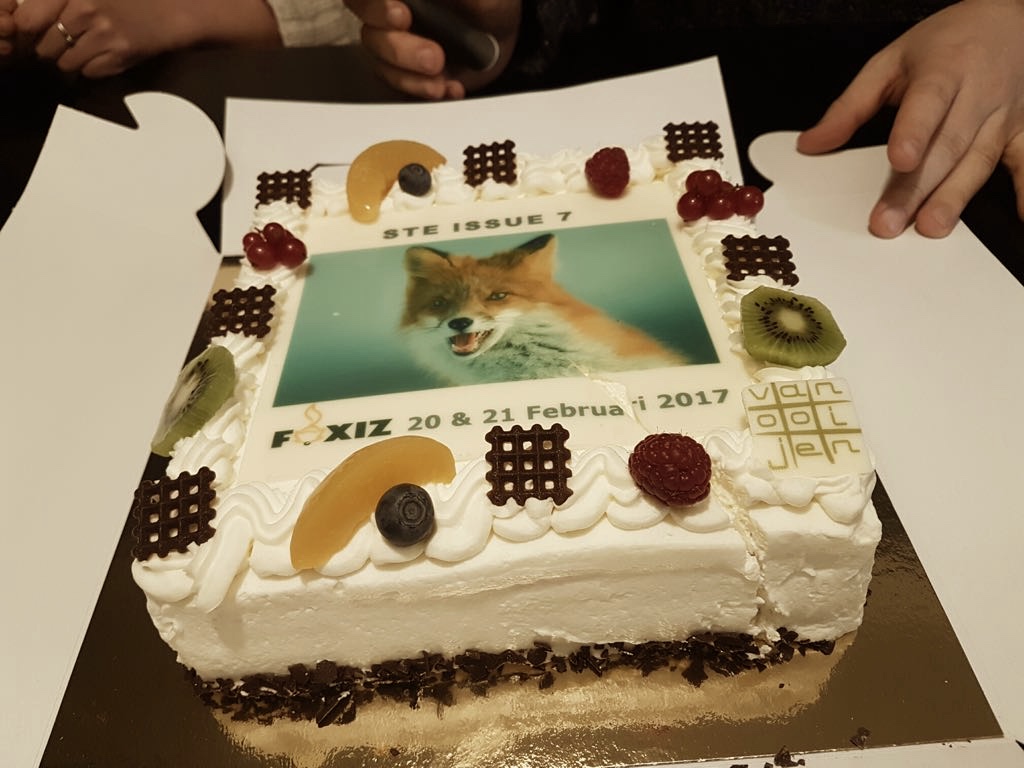
Shufrans TechDocs is currently marking a significant milestone as our principal trainer has reached 20 years of delivering technical documentation expertise and training to high-compliance industries. Such milestones prompt reflection on the evolution of linguistic standards. A retrospective look at our archives brought us to a few photographs from February 2017, taken during our ASD-STE100 Simplified Technical English training in Tiel, Holland.

During that session, our team and the participants celebrated the release of STE Issue 7 with a traditional cream cake. Beyond the rigorous application of controlled language rules, our trainer also hosted a traditional tea ceremony to provide a structured intermission from the technical material. These images highlight a persistent challenge, particularly the ongoing friction that technical authors and editors encounter daily when advocating for corporate linguistic governance.

A recent post-implementation review of our 2017 masterclass cohort confirms that a pervasive structural bottleneck remains unaddressed in web governance and software deployment documentation.

Modern software teams frequently use automated systems to extract user documentation directly from source code or system configurations. This process is efficient on paper. However, automated outputs that bypass rule-based linguistic standards consistently default to unstructured, traditional, and ambiguous prose.

When editors attempt to standardise this text to comply with ASD-STE100 guidelines during peer review, engineering teams often resist. Their argument is predictable: the wording is acceptable because the basic grammar is correct.

For technical communicators and developers managing this friction across globally distributed networks, the following arguments establish the objective business case for controlled language.


A recent post-implementation review of our 2017 masterclass cohort confirms that a pervasive structural bottleneck remains unaddressed in web governance and software deployment documentation.

Modern software teams frequently use automated systems to extract user documentation directly from source code or system configurations. This process is efficient on paper. However, automated outputs that bypass rule-based linguistic standards consistently default to unstructured, traditional, and ambiguous prose.

When editors attempt to standardise this text to comply with ASD-STE100 guidelines during peer review, engineering teams often resist. Their argument is predictable: the wording is acceptable because the basic grammar is correct.

For technical communicators and developers managing this friction across globally distributed networks, the following arguments establish the objective business case for controlled language.

The Reality of the Accessibility Card

Organisations routinely categorise web governance and documentation accessibility as an isolated compliance box, viewing it as a secondary accommodation for users with specific cognitive or physical challenges.

Shufrans TechDocs treats accessibility as a core functional requirement. Ambiguous text imposes a universal cognitive tax on all readers. Whether the user is a native speaker, an international client using English as a second language, or a systems engineer troubleshooting a critical failure under operational pressure, unstructured language forces the human brain to expend extra processing capacity simply to decode intent.

When technical content includes subjective attributes like “appropriate” or “sufficient” or relies on complex, passive structures, it compromises user efficiency. Forcing an operator to interpret meaning constitutes a structural product failure, irrespective of user ability. True accessibility ensures immediate, deterministic comprehension for every user across the global operational ecosystem.

Automation Requires Deterministic Constraints

When development teams automate documentation retrieval from source code, the operational logic driving that text generation must incorporate STE rules as core parameters.

Automated language generators excel at producing fluent prose. However, without deterministic boundaries, these engines systematically introduce rhetorical padding, passive structures, and polysemous verbs. Filtering automated output through a controlled language framework like ASD-STE100 ensures that software documentation remains predictable, standardised, and immediately actionable.

For technical communicators and editors enforcing these standards, linguistic governance is not a pedantic exercise in word choice. It is a necessary mechanism to safeguard data integrity and minimise cognitive strain across the digital enterprise.




The Cost of Creative Writing in Aviation Maintenance: Why Curriculum Integration Beats Passive Distance Learning

The Cost of Creative Writing in Aviation Maintenance: Why Curriculum Integration Beats Passive Distance Learning

In aviation engineering, linguistic clarity is a matter of operational safety and structural efficiency. Yet, a significant gap remains in how the aerospace ecosystem trains both incoming graduates and experienced engineers.

While technical training rightly focuses on avionics, airframe structures, and mechanical precision, the language used to document and maintain these systems is often treated as an afterthought. Engineering professionals frequently enter the workforce relying on standard, expressive English to write maintenance logs, repair reports, and service bulletins.

In a high-stakes MRO (Maintenance, Repair, and Overhaul) environment, linguistic ambiguity is a measurable operational risk. This is why global aerospace relies on ASD-STE100 (Simplified Technical English) to normalise technical data.

Embedding Safety into the Curriculum

Progressive technical training academies are shifting their approach, realising that training in international technical writing standards should not be treated as an afterthought or a post-employment luxury. Instead, they are integrating ASD-STE100 principles directly into basic aviation engineering and avionics curricula, specifically embedding it into foundational technical writing subjects.

By equipping students with these precise text standards from day one of their aviation careers, these forward-thinking academies ensure their graduates are industry-ready. For major MRO providers and aerospace manufacturers, hiring graduates who already understand controlled language provides an immediate operational advantage. It reduces internal training overheads, protects data integrity, and strengthens the maintenance safety chain from the point of entry.

However, achieving successful curriculum integration requires specialised, contextual execution. Applying a mass-market, one-size-fits-all approach to a safety-critical environment introduces distinct failure modes.

Evaluating the Risk of Passive Training Models

When organisations look to adopt ASD-STE100, procurement teams are often faced with a choice between specialist, interactive instruction and high-volume, pre-recorded distance-learning portals. While mass-enrolment online platforms are highly efficient for broad academic theory, data shows they underperform in high-compliance technical environments.

Technical documentation varies drastically across engineering sectors. An avionics curriculum faces entirely different documentation challenges and nomenclature than a heavy maintenance syllabus or a component overhaul pathway.

Evaluating the Risk of Passive Training Models

When organisations look to adopt ASD-STE100, procurement teams are often faced with a choice between specialist, interactive instruction and high-volume, pre-recorded distance-learning portals. While mass-enrolment online platforms are highly efficient for broad academic theory, data shows they underperform in high-compliance technical environments.

Technical documentation varies drastically across engineering sectors. An avionics curriculum faces entirely different documentation challenges and nomenclature than a heavy maintenance syllabus or a component overhaul pathway.

When instructors and engineers are subjected to generic, passive distance learning, several structural gaps emerge:

  • Absence of Technical Context: Universal, “out-of-the-can” modules cannot adapt to complex, proprietary maintenance manuals or specific institutional curriculum frameworks.
  • Lack of Synchronous Feedback: Controlled languages require behavioural change. Without real-time dialogue, learners cannot get immediate correction on their specific writing errors or clear up misinterpretations of the rules.
  • Low Operational Retention: Passive, slide-clicking exercises rarely translate into practical compliance once the engineer or instructor returns to their daily workspace.

To truly transform an aviation curriculum or an engineering team, training must be delivered via dynamic, instructor-led frameworks that use the actual data structures of the institution. Every experience must be customised, not pre-recorded

Safeguarding the Investment: Why Post-Training Support is Critical

Adopting a controlled language standard like ASD-STE100 represents a profound behavioural shift. For educators integrating these principles into a new programme syllabus, or engineers writing live reports, the real test occurs weeks after the workshop concludes. The critical phase happens when a writer is sitting at their desk attempting to restructure lesson plans, design assessments, or rewrite highly complex technical manuals.

Without expert guidance during this transition period, documentation quality frequently degrades, and the initial training investment is lost.

This is why robust, expert-led instruction must be accompanied by an extended operational safety net. Incorporating dedicated, 120-day post-training remote support ensures that as personnel apply STE to live materials, they have access to expert validation and text review. This ongoing quality assurance is what bridges the gap between classroom theory and strict regulatory compliance.

Aviation safety begins with physical precision on the hangar floor, but it is sustained by absolute clarity in the technical record. To safeguard operations and future-proof talent pipelines, the aviation ecosystem must look past the convenience of canned distance education and invest in targeted, interactive precision.

To learn how to eliminate ambiguity from your technical documentation and protect your operational timelines, connect with the team at Shufrans TechDocs.


The Unbearable Lightness of Ambiguity: Why Technical Documentation Needs Linguistic Governance

The Unbearable Lightness of Ambiguity: Why Technical Documentation Needs Linguistic Governance

By Shumin (Soumaiya) Chen

In his classic novel, Milan Kundera wrote about the “unbearable lightness of being”—a state where a total absence of rules and constraints causes life to lose its anchor, leaving everything floating in a void of insignificance. In the high-stakes engineering, manufacturing, and aerospace sectors, technical authors face a remarkably similar hazard.

We call it Linguistic Lightness.

When technical authors are given absolute freedom to write documentation, language becomes unanchored. Writers can choose any unapproved verb, stack complex noun clusters, or deploy vague descriptive phrases. On paper, it looks like creative freedom; in reality, it creates an unmanageable operational void.

The Hidden Operational Cost of Unstandardised Phrasing

Consider a typical instruction found in many industrial asset manuals:

“Tapping the ‘System Status’ icon navigates to the Event log page when an auxiliary system inspection is due.”

To a human author, that sentence feels perfectly natural. However, to an operator under pressure, a multinational engineering team, or a localization translator, unstandardised phrasing introduces immediate ambiguity.

  • What constitutes an abstract “event”?

  • Which exact sub-components are included in an “auxiliary system”?

  • What happens if a non-native speaker misinterprets when an inspection is “due”?

When technical text lacks standardization, clear communication breaks down. And when communication fails on a manufacturing floor, a defence asset, or an offshore platform, the consequences are measured in operational downtime, safety hazards, and regulatory non-compliance.


Mitigating Risk Through ASD-STE100 Implementation

To mitigate this risk, global industrial organizations must establish strict linguistic governance across their technical content. We achieve this by implementing ASD-STE100 (Simplified Technical English).

ASD-STE100 acts as a structural anchor. It strips away the “lightness” of subjective writing by enforcing a controlled vocabulary and a rigid set of writing rules. It leaves no room for creative interpretation because it ensures every word has exactly one approved meaning.

When you standardise technical data through a linguistic governance framework, you achieve three critical outcomes:

  1. Human Error Mitigation: Field technicians receive precise, actionable commands that eliminate guessing games.

  2. AI and RAG Accuracy: Clean, standardized documentation serves as high-fidelity training data for LLMs and enterprise AI search tools, preventing hallucination.

  3. Reduced Localization Costs: Eliminating linguistic variance slashes translation timelines and translation memory costs.

Establishing Linguistic Governance in 2026

Uncontrolled language is a hidden liability to asset integrity and operational safety. Technical documentation should never be “light” or open to interpretation—it requires absolute structural weight.

At Shufrans TechDocs, we bring 20 years of experience to helping enterprises implement ASD-STE100 training and workflows. We ensure your documentation standardisation complies with global aerospace, defence, and industrial requirements while de-risking your complex data lifecycles.

An earlier version of this thought leadership piece was shared by Shumin (Soumaiya) Chen on LinkedIn. Follow her profile real-time insights on linguistic standardization.

[/row