Simplified Technical English Archives | Page 2 of 6 | Shufrans TechDocs Home // Simplified Technical English Archives | Page 2 of 6 | Shufrans TechDocs

Weatherford: Optimising Global Communication in Oilfield Services with STE

Weatherford: Optimising Global Communication in Oilfield Services with STE

Driving Unambiguous Communication for Enhanced Safety and Efficiency in Global Onshore Operations

Client: Weatherford (Global Operations)

Industry: Onshore Drilling & Energy Services

Location: Global (Online Training across Europe, US & Canada, APAC timezones)

Challenge: Ensuring consistent, unambiguous, and safe technical communication across diverse global teams and critical documentation, particularly concerning complex onshore drilling operations and other highly sensitive well completion activities.

Solution: Multiple batches of online ASD-STE100 training programmes delivered by Shufrans TechDocs, tailored for professionals across various timezones.

Results: Improved clarity and precision in technical documentation, enhanced safety protocols for critical operations, streamlined global communication, and professional development for a diverse range of technical roles.


The Challenge: Precision in High-Stakes Global Operations

Weatherford, a prominent global energy services company, operates at the forefront of onshore drilling and well completion. In such a high-stakes environment, which often involves highly sensitive downhole operations, the clarity and accuracy of technical documentation are not merely regulatory requirements but fundamental pillars of safety, operational efficiency, and environmental responsibility.

Maintaining a unified standard of communication across a globally dispersed workforce, with teams operating in different time zones (Europe, US & Canada, APAC), presents a significant challenge. Ambiguity in crucial documents, especially those related to complex drilling procedures or sensitive well completion activities, could lead to:

  • Serious safety incidents or operational errors.
  • Increased downtime and costly operational inefficiencies.
  • Misinterpretations during complex well interventions.
  • Challenges in compliance with diverse international regulations.
  • Difficulties in efficient knowledge transfer and training.

Weatherford sought a scalable solution that could standardise their technical language, ensuring every instruction was understood unambiguously, regardless of the reader’s location or native language, with particular emphasis on the critical safety aspects of their operations.

The Solution: Targeted Online STE Training for a Global Workforce

Shufrans TechDocs partnered with Weatherford to implement a comprehensive ASD-STE100 training programme delivered entirely online, accommodating their global presence and various time zones. This approach ensured accessibility and consistency across their international teams. The training was delivered in multiple batches for participants from Europe, the US & Canada, and the APAC regions.

While a significant portion of the participants were engineers, the training was highly beneficial for several other key roles crucial to Weatherford’s operations:

  • Technical Writers/Documentation Specialists: Direct authors of manuals and procedures, ensuring consistency and clarity from the source.
  • Field Service Technicians/Operators: Directly implement procedures; clear instructions are paramount for safe and effective high-risk operations.
  • Safety Officers/Compliance Specialists: Ensure adherence to safety protocols and regulatory standards, benefiting from unambiguous documentation.
  • Training & Development Personnel: Responsible for creating clear and effective training materials for new hires and ongoing professional development.
  • Supply Chain & Logistics Personnel: Who interpret specifications for equipment and materials, where precision avoids errors in ordering and handling.


The training focused on real-world application, working on the types of documents most critical to Weatherford’s operations:

  • Drilling Procedures & Protocols: For various onshore drilling techniques, ensuring step-by-step clarity.
  • Safety Procedures & High-Risk Operation Manuals: Covering all critical safety aspects, including the precise handling of specialised and sensitive materials used in well completion.
  • Tool Operation & Maintenance Manuals: For specialised drilling tools and equipment.
  • Technical Specifications & Data Sheets: Ensuring precise definitions for components and performance characteristics.
  • Emergency Response Procedures: Where immediate and clear understanding can mitigate severe risks.
  • Field Service Reports: For consistent and accurate reporting of observations and actions from the field.

The Results: Elevated Clarity, Enhanced Safety, and Optimised Global Operations

By embracing ASD-STE100 online training with Shufrans TechDocs, Weatherford achieved significant improvements across its technical communication landscape:

  • Enhanced Safety & Reduced Risk: The primary benefit, especially for sensitive and high-risk operations, was a drastic reduction in ambiguity, leading to clearer, safer operational procedures and a lower risk of misinterpretation.
  • Improved Operational Efficiency: Clearer procedures streamlined onshore drilling operations, reducing downtime and costly errors.
  • Strengthened Global Consistency: A unified language standard ensured that documentation was consistently understood by diverse teams worldwide, regardless of geographical location or native language.
  • Optimised Knowledge Transfer: Training materials became more effective, accelerating the onboarding of new personnel and improving ongoing professional development for all technical roles.
  • Facilitated Compliance: Adherence to STE principles supported compliance with stringent industry regulations and safety standards globally.

Weatherford’s investment in STE training has transformed their technical documentation into a strategic asset, reinforcing their commitment to safety, efficiency, and operational excellence across their global onshore drilling and energy services.

If your organisation faces similar challenges in achieving uncompromising clarity and operational readiness through precise communication, discover how Shufrans TechDocs can help. Learn more about our ASD-STE100 training and consulting services:

🗓️ View our training calendar.

www.shufrans.com


The Strategic Clarity of Simplified Technical English: Why Less Grammar Means More Precision

The Strategic Clarity of Simplified Technical English: Why Less Grammar Means More Precision

In the complex world of technical documentation, the pursuit of clarity is paramount. Yet, many still perceive “simplified” language as a reduction in sophistication. However, for those familiar with ASD-STE100 Simplified Technical English (STE), its precisely defined grammar—particularly the constrained use of verb tenses—is not a limitation, but a powerful feature designed to eliminate ambiguity and minimise errors.

At the heart of STE’s effectiveness is its disciplined approach to verb tenses. Unlike the vast array of options in general English, STE limits writers to a specific, unambiguous set: Present Tense, Past Tense, Infinitive, Future Tense, Past Participle (used as an adjective), and the Imperative. This intentional restriction drives immense benefits across an organisation, impacting everything from operational efficiency to strategic communication.

Precision for the Front Lines: How Limited Tenses Empower Technicians and Engineers

For the individuals directly interacting with products, machinery, and complex systems—your technicians and engineers—the clarity afforded by STE’s simplified tenses is transformative. When every instruction must be perfectly understood, ambiguity can lead to costly errors, safety hazards, and downtime.

  • Reduces Ambiguity: Complex or rarely used tenses in general English can lead to different interpretations, especially for non-native English speakers. By using simpler, direct tenses, STE ensures that instructions in maintenance manuals, operational procedures, and troubleshooting guides are understood universally and unequivocally. “PRESS THE START BUTTON” leaves no room for doubt about the action or its timing.
  • Faster Comprehension: Less cognitive load means quicker understanding. Engineers and technicians can rapidly grasp instructions without needing to parse intricate grammatical structures, leading to more efficient task execution.
  • Minimises Operational Mistakes: Clear, unambiguous commands directly translate to fewer errors in the field. This is critical in safety-sensitive industries, where a single misinterpretation can have severe consequences. Simplified tenses mean the intent of the author is preserved, every time.
  • Improved Efficiency: Time spent deciphering poorly written documents is time wasted. STE’s simplified tenses enable a smooth workflow, allowing technical staff to focus on their core tasks rather than struggling with linguistic complexities.

Elevating Insights: STE in White Papers and Technical Reports 

There’s a common misconception that simplification equates to “dumbing down” content, particularly in high-level documents like white papers and technical reports where managers seek sophistication. However, the true sophistication in such documents lies in precision, conciseness, and impactful clarity, not linguistic embellishment. STE’s principles, including its tense limitations, enhance these qualities.

  • Enhanced Precision: By advocating for direct statements and avoiding vague phrasing, STE encourages writers to express technical concepts with utmost accuracy. This avoids misinterpretation of data, findings, or recommendations. A report written in STE is lean, impactful, and analytically rigorous, free of unnecessary complexity.
  • Improved Readability for Decision-Makers: Managers and executives are busy. They need to quickly extract key insights and make informed decisions. Reports that are direct, factual, and easy to consume—thanks to simplified tenses and consistent vocabulary—facilitate faster understanding, leading to more timely and effective strategic choices.
  • Stronger Argumentation: When ideas are presented with unambiguous language, arguments become more compelling and defensible. The focus shifts from deciphering the writing style to understanding the presented facts and analysis.
  • Increased Credibility: Documents free from grammatical slips, awkward phrasing, or linguistic ambiguities inherently appear more authoritative and trustworthy. This bolsters the credibility of the presented technical concepts and the expertise of the authors.

Broadening Reach: The Usefulness of STE in Marketing and Corporate Communication

While STE is a controlled language for technical documentation, its underlying principles of clarity, conciseness, and consistent messaging are invaluable in broader communication contexts for technical industries and businesses. Applying STE’s ethos to marketing and corporate communications can significantly enhance their effectiveness.

  • Marketing & Product Communication: For technical products, clearly articulating features and benefits to a diverse audience (both technical and non-technical) is crucial. Simplified language in marketing materials, product descriptions, and user guides ensures that the value proposition is immediately understood, reducing customer support queries and increasing user adoption.
  • Consistent Brand Voice: Adopting a “simplified English” approach, informed by STE principles, ensures a consistent and approachable voice across all internal and external communications. This is particularly important for global companies where messaging can get diluted or misinterpreted across different regions and languages.
  • Enhanced Internal Communication: From HR policies to inter-departmental memos and internal training materials, applying principles of clarity and conciseness ensures that all employees—regardless of their primary language or technical background—understand critical information, fostering a more efficient and cohesive workforce.

The Verdict: Strategic Simplicity for a Complex World

The strength of ASD-STE100 Simplified Technical English lies not in dumbing down complex ideas, but in stripping away linguistic barriers that hinder comprehension and introduce errors. Its disciplined approach to verb tenses is a prime example of how structured simplification leads to profound gains in clarity, accuracy, and efficiency across an entire organisation. From the factory floor to the boardroom, and across your marketing efforts, leveraging STE is a strategic investment that pays dividends in reduced costs, improved safety, and enhanced global reach.

Ready to unlock the full potential of your organisation’s knowledge assets? Explore Shufrans Techdocs worldwide online instructor-led training sessions. We equip your professionals with the practical skills to implement STE, enabling them to create precise, compliant, and highly effective documentation. Plus, you’ll benefit from 120 days of post-training support to ensure lasting success.


Ready to explore how human expertise and strategic frameworks like STE can elevate your technical communication? Connect with Shufrans TechDocs today.

🗓️ View our training calendar.

www.shufrans.com

Shufrans TechDocs Reinforces Commitment to Practical, Experience-Led Simplified Technical English (STE) Training

Shufrans TechDocs Reinforces Commitment to Practical, Experience-Led Simplified Technical English (STE) Training

FOR IMMEDIATE RELEASE

SINGAPORE – 10 June 2025 – Shufrans TechDocs today reaffirmed its position as a leading provider of expert-led training in ASD-STE100 Simplified Technical English, emphasising a profound commitment to practical, real-world application, honed over two decades of dedicated experience.

At the core of Shufrans TechDocs’ unique offering is the extensive, hands-on experience of its lead trainer, Ms. Shumin Chen, Head of ASD-STE100 Simplified Technical English training & implementation, whose journey in applying STE principles began in 2006. This foundational knowledge, cultivated directly within complex technical environments, significantly predates many contemporary certification frameworks, providing a depth of practical insight that is unparalleled.


“Our mission at Shufrans TechDocs has always been to empower technical communicators with truly actionable skills,” says Shumin. “My 20 years in the field have taught me that effective STE isn’t just about rules; it’s about practical application that makes a tangible difference in documentation clarity, efficiency, and global translatability. Our training programmes reflect this real-world perspective, moving beyond theoretical concepts to deliver immediate, impactful results for our clients.”

Shufrans TechDocs’ training methodology is distinguished by:

  • Decades of Practical Expertise: Leveraging over 20 years of direct, on-the-job experience in applying STE. This deep, real-world grounding ensures that our training is informed by actual industry challenges and effective solutions.
  • Focus on Actionable Skills: Ensuring participants gain concrete techniques they can implement immediately. Our programmes are designed to move beyond theory, providing practical methodologies that lead to instant improvements in documentation quality.
  • Enhanced Clarity and Readability: Enabling clients to produce documentation that is unambiguous and easy to understand. This commitment to precision helps prevent misinterpretation, reducing errors and improving user safety and efficiency.
  • Improved Global Communication: Facilitating more efficient and accurate translation processes. By simplifying the source language, we help organisations achieve consistent messaging and reduce translation costs significantly across diverse markets.

By focusing on battle-tested methodologies and genuine expertise, Shufrans TechDocs continues to be the trusted partner for organisations seeking to achieve superior technical communication standards.

About Shufrans TechDocs: Shufrans TechDocs is a specialist consultancy providing expert training and services in Simplified Technical English (ASD-STE100). With a focus on practical application and real-world results, Shufrans TechDocs empowers organisations to enhance the clarity, precision, and efficiency of their technical documentation.

Clear Docs, Human Touch: Why AI Isn’t the Full Answer for Technical Communication

Clear Docs, Human Touch: Why AI Isn’t the Full Answer for Technical Communication

For industries defined by innovation and complexity, including software development, renewable energy, advanced manufacturing, biotechnology, healthcare technology, e-learning, and logistics, your technical documentation isn’t merely an instruction guide. It’s a critical asset, the essential bridge between your sophisticated innovations and the people who use, maintain, and rely on them globally.

However, achieving consistent, unambiguous information across diverse teams and international markets presents a significant challenge. When documentation lacks clarity, organisations can inadvertently face:

  • Increased support demands, diverting valuable resources.
  • User errors, leading to frustration, costly rework, or even safety implications.
  • Extended and expensive translation cycles due to convoluted source material.
  • Delays in market entry, as documentation struggles to keep pace with product development.
  • Compliance hurdles in highly regulated industries, stemming from imprecise instructions.
  • Undermined brand reputation, when sophisticated products are accompanied by confusing guides.

This isn’t just about grammatical precision. It’s about operational efficiency, global market access, and proactively managing business risks.


The Problem: When Precision is Paramount, but Language Isn’t Always Clear

Consider the engineer troubleshooting complex industrial equipment, the clinician relying on a medical device manual, or the developer integrating a new software solution. Their success hinges on absolute clarity. Yet, traditional technical writing often struggles with:

  • Unnecessary jargon and colloquialisms.
  • Inconsistent terminology and phrasing.
  • Overly complex sentence structures.
  • Subtle cultural nuances that don’t translate universally.

This is precisely where Simplified Technical English (STE) transcends a mere writing guideline and transforms into a strategic enabler.


STE: Your Pathway to Unambiguous Communication and Strategic Advantage

Developed initially for the aerospace industry, STE is a controlled language that employs a restricted vocabulary, simplified grammar, and consistent phrasing. It’s not about oversimplifying content. It’s about eliminating ambiguity to ensure every reader, regardless of their linguistic background, grasps the exact intended meaning – the first time.

For businesses operating in highly technical and global environments, adopting STE offers a tangible competitive edge:

  • Enhanced User Experience: Making your complex products genuinely accessible and user-friendly.
  • Streamlined Global Operations: Significantly reducing translation costs and accelerating international deployment.
  • Improved Safety and Compliance: Minimising misinterpretation in critical instructions.
  • Operational Efficiency: Reducing errors, rework, and support burdens across your organisation.

The Human Element: Why AI Isn’t the Full Answer for Technical Communication

In an era increasingly shaped by Artificial Intelligence, the question often arises: “Will AI replace technical writers?” At Shufrans TechDocs, our perspective is clear: AI is a powerful assistant, not a replacement for the human technical writer.

While AI excels at pattern recognition, rapid text generation, and adherence to rules (like STE guidelines), it profoundly lacks the critical human attributes essential for truly effective technical documentation:

  • Nuance and Empathy: AI can’t fully grasp the subtle context, unstated assumptions, or the emotional state of a user navigating a complex task. Human writers apply empathy to anticipate user needs and craft clear pathways to understanding.
  • Critical Thinking & Problem-Solving: AI generates text based on existing data. It doesn’t strategically identify core information gaps, troubleshoot complex user scenarios, or innovate new ways to present information. That requires human ingenuity.
  • Subject Matter Expert (SME) Interaction: Extracting complex, often tacit, knowledge from engineers, developers, and scientists demands sophisticated interpersonal skills, active listening, and the ability to ask the right questions – tasks far beyond current AI capabilities.
  • Ethical Judgment & Responsibility: Especially in regulated sectors, the responsibility for accuracy, safety, and compliance rests with humans, who must exercise ethical judgment, not simply generate text.

STE provides a robust framework, and AI can certainly assist in checking compliance or generating initial drafts. However, it is the human technical writer who applies strategic oversight, translates complex ideas into accessible language, and ultimately ensures the documentation genuinely serves its purpose and its audience. Our services are designed to empower and elevate these indispensable human skills.


Where STE Becomes Indispensable – A Sector Focus

At Shufrans TechDocs, we understand the unique documentation challenges within your industry. We partner with organisations like yours to help master STE:

  • In Software Development: Imagine documentation that genuinely empowers users and reduces your support burden, driving adoption and satisfaction for intricate software solutions.
  • In Renewable Energy & Sustainability: Flawless operational and maintenance manuals are critical for safety, efficiency, and the reliable functioning of complex infrastructure worldwide.
  • In Heavy Machinery & Industrial Equipment: Precision in assembly, maintenance, and safety manuals directly impacts uptime, worker safety, and regulatory adherence for your sophisticated equipment.
  • In Biotechnology & Pharmaceuticals: In an industry where accuracy can save lives, STE ensures research protocols, manufacturing guides, and clinical trial documentation are unequivocally clear.
  • In Healthcare Technology & Medical Devices: The clarity of instructions for life-saving devices and diagnostic tools is paramount for both user efficacy and regulatory scrutiny.
  • In E-learning & Corporate Training Solutions: Consistent and globally comprehensible learning materials accelerate knowledge transfer and improve educational outcomes across diverse audiences.
  • In Logistics & Supply Chain Management Technology: Clear documentation for complex technology solutions ensures seamless operations, reducing costly errors and delays in global supply chains.

Our Partnership: Equipping You for Documentation Excellence

Shufrans TechDocs provides the expertise to seamlessly integrate STE into your organisation’s content ecosystem:

  1. STE Training: We equip your technical writers and content creators with the principles and practical application of STE, building sustainable in-house capability. This allows your human talent to focus on critical thinking and content strategy.
  2. STE Proofreading & Editing: Our specialists meticulously review your existing documentation, refining it to meet stringent STE standards and eradicate ambiguity, ensuring legacy content is future-proofed.
  3. STE Technical Writing Services: For new projects or when internal resources are stretched, our experienced writers craft precise, compliant, and user-friendly documentation directly in STE, leveraging their unique human understanding.

Don’t let unclear technical documentation be an overlooked obstacle. Invest in clarity, precision, and global understanding, empowered by human expertise and strategic frameworks like STE.

Ready to explore how human expertise and strategic frameworks like STE can elevate your technical communication? Connect with Shufrans TechDocs today.

🗓️ View our training calendar.

Cultivating Expertise: Simplified Technical English as a Core Skillset

Cultivating Expertise: Simplified Technical English as a Core Skillset

In an era of rapid technological advancement, the role of clear and accurate technical communication remains paramount. While artificial intelligence (AI) and the allure of complex, sophisticated technology may offer seemingly efficient solutions, they often overlook the fundamental importance of human expertise. ASD-STE100, or Simplified Technical English, is not merely a tool; it’s a skillset that empowers the human writer – the technical communicator, engineer, or developer who possesses the crucial subject-matter knowledge.

Beyond Automation: The Value of Human Expertise

AI, despite its capabilities, cannot replicate the nuanced understanding and critical thinking that human writers bring to technical documentation. While AI can generate text, it lacks the contextual awareness and ability to make informed judgements about the accuracy and suitability of information. Complex language, conversely, creates barriers to understanding, hindering effective communication.

  • Reduced Misinterpretation: By eliminating ambiguity and promoting clarity, ASD-STE100 minimises the risk of misinterpretations of STPA findings. This reduced risk of misinterpretation leads to more accurate and effective risk assessments and subsequent risk mitigation strategies.

Simplified Technical English, instead, provides a structured framework that enhances the human writer’s abilities. It’s a skillset that equips writers with:

  • A Controlled Vocabulary: Limiting word choices to reduce ambiguity while allowing the writer to select the most precise term.
  • Clear Grammatical Rules: Promoting consistent and easily understood sentence structures.
  • A Focus on Clarity and Precision: Ensuring that information is conveyed accurately and efficiently, without sacrificing the writer’s voice.

How This Skillset Empowers:

  • Ownership and Control: Writers retain full control over their content, ensuring accuracy and reflecting their expertise.
  • Enhanced Clarity: Simplified Technical English facilitates the creation of documents that are accessible to diverse audiences, including non-native English speakers.
  • Improved Efficiency: Clear writing reduces revisions and clarifies, streamlining the documentation process.
  • Preservation of Expertise: ASD-STE100 allows organisations to capture and retain the valuable knowledge of their human experts through a consistent method.


The Human Writer at the Forefront:

The essence of Simplified Technical English is not about replacing human writers with automated systems, but rather about providing them with the skillset necessary to excel. It recognises that human expertise is irreplaceable, especially when it comes to complex technical information. By empowering the human writer with this skillset, organisations ensure that technical documentation is not only accurate and clear but also reflects the knowledge and insights of the individuals who created it.

In conclusion, ASD-STE100, as a core skillset, is a testament to the enduring importance of human expertise in technical communication. It empowers writers to create clear, concise, and accurate documentation, ultimately fostering better understanding and more effective communication.

🔗 Learn more about this international writing standard: www.asd-ste100.net.

🔗 Ongoing STE workshops: https://www.shufrans-techdocs.com/online-ste-workshop-2-day-training-course/

ASD-STE100 Issue 9: Simplified Technical English Becomes a Global Standard

ASD-STE100 Issue 9: Simplified Technical English Becomes a Global Standard

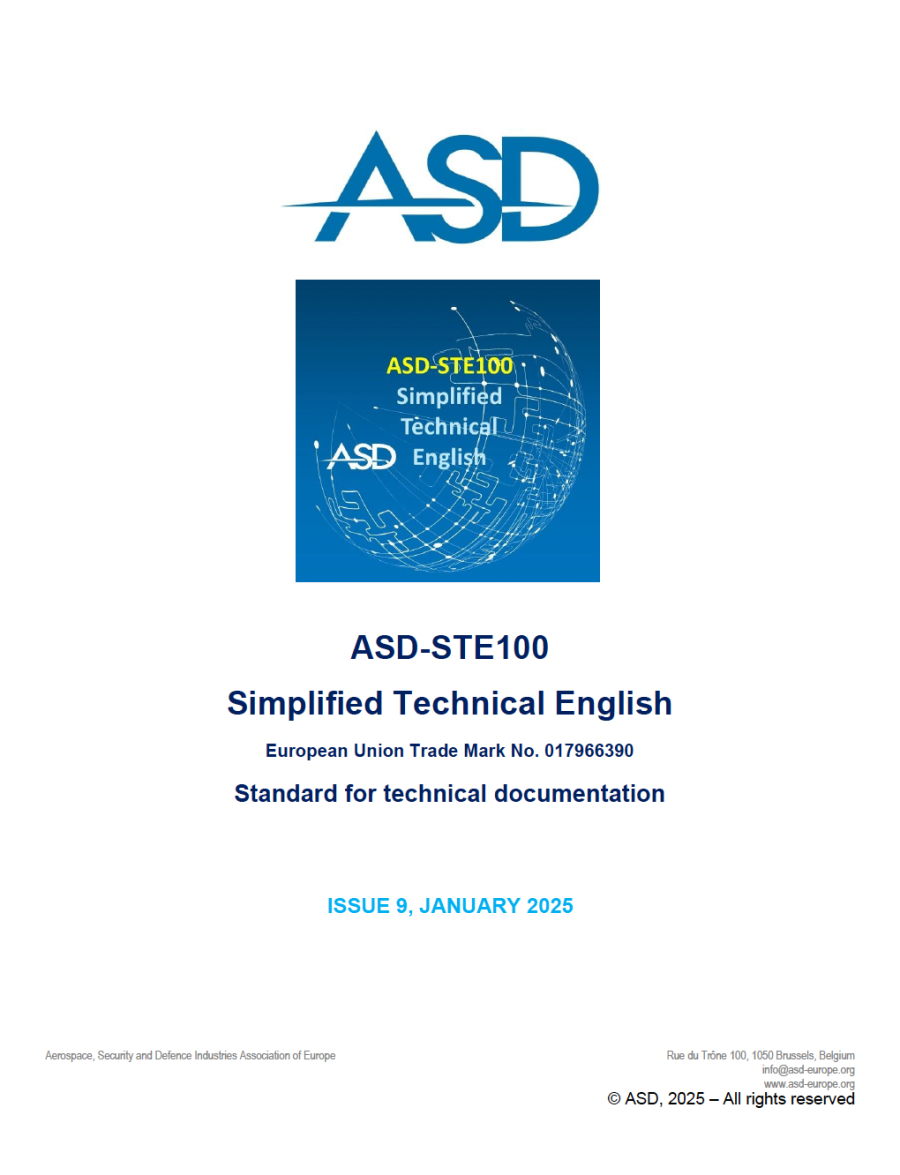
The latest version of Simplified Technical English (STE), Issue 9 of ASD-STE100, arrived on January 15, 2025. This update, three years in the making, signifies more than just a revision; it marks STE’s transition from a specification to a full-fledged international standard.

Developed by the ASD Simplified Technical English Maintenance Group (STEMG) with input from national and multi-country Support Teams (STEST), Issue 9 reflects a commitment to clarity, safety, and alignment with international standards. The STEMG, comprised of industry experts and linguists, meticulously reviewed 160 items and change forms, including 11 specifically related to meta-terminology. This collaborative process ensures the standard meets the needs of technical writers and, ultimately, the end-users of the documentation.


👩🏻‍💻 Find the right expert to support you with ASD-STE100 training and consultancy: www.asd-ste100.net

From Specification to Standard: A Key Shift

This isn’t just a name change. The move to “standard” reflects STE’s broader applicability. While a specification governs individual projects, a standard establishes universal rules. The official document title now reflects its registered trademark: “ASD-STE100 Simplified Technical English: Standard for Technical Documentation.”

Originally designed for aerospace and defense, STE is now used across various sectors, including rail, medical, automotive, and renewable energy. Its focus on clear, unambiguous language reduces human error, especially for non-native English speakers, leading to improved documentation quality, enhanced safety, and smoother global communication.

The Core of STE: Rules and Dictionary

ASD-STE100 is built on two pillars: writing rules and a controlled dictionary. The rules provide strict guidelines for grammar, style, and sentence structure, making content easily understandable for a global audience. The dictionary lists approved words, their definitions, and usage examples, along with a list of unapproved words and alternatives. This standardization of terminology ensures consistency and avoids confusion.

What’s New in Issue 9?

While no new rules were added, 31 of the 53 existing rules were clarified. The dictionary saw significant updates, with 555 entries revised for accuracy and relevance. A major focus was the meta-terminology review. In the context of ASD-STE100, terminology refers to the words and phrases used within the standard itself, such as “technical noun” and “technical verb.” Meta-terminology, on the other hand, refers to the terms used to describe and categorize those terms, such as “noun” and “verb.”

Essentially, meta-terminology is the language we use to talk about the language of the standard. It provides a framework for understanding the relationships between different types of terms and how they should be used.

The distinction between terminology and meta-terminology is important because it helps to ensure that the standard is clear, consistent, and easy to understand. By using precise meta-terminology, the ASD-STE100 Maintenance Group can avoid ambiguity and ensure that the standard is interpreted correctly by technical authors and translators.

Meta-Terminology Refresh: Aligning with International Standards

Issue 9 aligns with ISO 1087-1:2019, modernizing legacy classifications. “Technical name” and “technical verb” are now “technical noun” and “technical verb (term).” Subject field classifications have also been refined, with new categories added under Rules 1.5 and 1.12.

User-Centric Approach: Balancing Precision and Practicality

The STEMG prioritized usability for technical writers, recognizing that most aren’t linguists. Simplicity was key, even while maintaining terminological precision. For example, the dictionary retains the “word” column designation instead of more complex lexicographic terminology. Balancing correct meta-terminology with practical application was a key challenge. The goal was always to empower authors to create clear, accessible documentation. Defining technical verbs, in particular, required careful consideration to ensure both accuracy and ease of understanding.

The Future: AI and Collaboration

The STEMG and STEST are now exploring how AI can enhance STE compliance checks, provide real-time feedback, and automate terminology updates. Collaborations with universities are examining AI-driven tools to streamline technical documentation, improve accessibility, and ensure interoperability.

Issue 9 represents a significant step for ASD-STE100. Its evolution to a global standard, coupled with meta-terminology updates and alignment with international standards, ensures its continued relevance. With a focus on AI and digital transformation, STE is poised to evolve further in the age of smart documentation and Natural Language Processing.

Generative AI in Simplified Technical English: A Balancing Act of Automation and Human Expertise

Generative AI in Simplified Technical English: A Balancing Act of Automation and Human Expertise

While generative AI offers exciting possibilities for streamlining STE content creation, it’s crucial to understand its limitations and the enduring value of human expertise.

AI as a Tool, Not a Replacement: Generative AI excels at tasks like:

  • Drafting and Editing: Automating repetitive tasks, suggesting alternative phrasing, and identifying potential inconsistencies.
  • Enforcing Standards: Checking for adherence to ASD-STE100 and other standards.
  • Improving Clarity: Identifying areas of ambiguity and suggesting clearer language.

However, AI cannot fully replace the critical thinking and nuanced understanding that human writers bring to the table.


Addressing Missing Information:

  • Human Expertise: Technical writers, with their deep domain knowledge and understanding of the target audience, are essential for identifying and addressing crucial information gaps.
  • Thorough Planning: Careful planning, including detailed requirements gathering and thorough subject matter research, is paramount to prevent missing information from the outset.

  • Human Review: Even with AI assistance, meticulous human review is necessary to ensure all mission critical information is accurately and comprehensively conveyed.


The Importance of Human Judgement:

  • Nuance and Context: STE requires understanding subtle nuances, interpreting complex technical concepts, and tailoring the information to the specific needs of the audience. These tasks demand human judgement and expertise.
  • Ethical Considerations: AI models can sometimes exhibit biases or generate inaccurate information. Human oversight is crucial to ensure the ethical and responsible use of AI in STE.

Generative AI can be a valuable tool for technical writers, enhancing efficiency and improving the quality of STE documentation. However, it should be viewed as an assistant, not a replacement. The unique skills and expertise of human writers, including critical thinking, domain knowledge, and the ability to understand and address complex technical issues, remain indispensable for creating high-quality, effective, and trustworthy STE content. By leveraging the strengths of both AI and human expertise, we can create a synergistic approach that maximises the benefits of both while mitigating the risks.

Do you struggle to communicate technical information to your audience? Here are 9 Simplified Technical English best practices.

Do you struggle to communicate technical information to your audience? Here are 9 Simplified Technical English best practices.

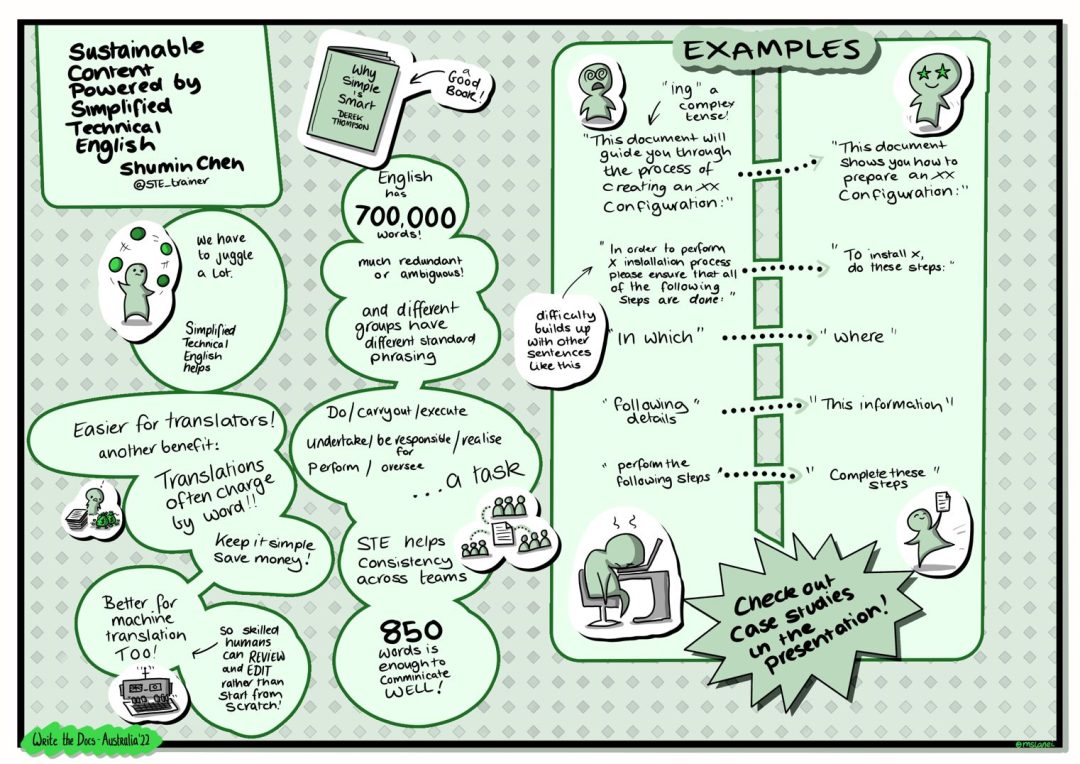
Simplified Technical English (STE) is a controlled language that is used in the aerospace and defense industries to simplify the language used in technical documents. Here are 9 best practices of Simplified Technical English:

  1. Use a limited vocabulary: STE restricts the vocabulary used in technical writing to a specific set of words. This helps to reduce ambiguity and ensures that the meaning of the text is clear.
  2. Use simple sentence structures: STE encourages the use of simple sentence structures that are easy to understand. Complex sentence structures can lead to confusion and misunderstandings.
  3. Use active voice: The active voice is preferred in STE because it is clearer and more concise than the passive voice when writing procedural text.
  4. Use present tense: Present tense is preferred in STE because it is more immediate and makes the text easier to understand.
  5. Use the imperative mood: The imperative mood is used in STE to give commands and instructions. This is because it is a clear and direct way of communicating.
  6. Use standardized terminology: STE requires the use of standardized terminology to avoid confusion and ensure consistency.
  7. Use clear headings and subheadings: Headings and subheadings should be clear and concise so that the reader can quickly identify the topic.
  8. Use illustrations: Illustrations can help to clarify complex concepts and make the text easier to understand.
  9. Comply with established STE guidelines: To ensure consistency and accuracy, it is important to follow established STE guidelines when writing technical documents. This will help to ensure that the text is clear and easy to understand.

Looking to advance your technical writing career? Our Simplified Technical English workshop is the perfect opportunity to enhance your skills and stand out from the crowd. Don’t miss your chance to master this essential skill with our workshop.


🌐 Learn more about this international writing standard at our upcoming lectures and writing workshops in Q2 2023:

Europe Online STE Workshop | 2-day Training Course

April 13 – April 14

US, Canada | Certified Simplified Technical English workshops

April 17 – April 19

Asia Pacific: 2-day certified online STE workshop (APAC)

April 24 – April 25

Middle East & Africa (MEA) Simplified Technical English Writing Workshop | A language for all industries

May 8 – May 9

▶️ Sign up now!

Protecting Digital Experiences through Clear Communication for Global Efficiency

Protecting Digital Experiences through Clear Communication for Global Efficiency

Clarity for a Connected World: Driving Digital Security and Performance

Client: Akamai Technologies

Industry: Content Delivery Network (CDN), Cybersecurity, Cloud Services

Challenge: Ensuring consistent, unambiguous, and highly effective technical documentation for complex and rapidly evolving digital experiences, impacting clarity for a global user base and efficiency for documentation teams.

Solution: Tailored ASD-STE100 (Issue 8) training delivered by Shufrans TechDocs.

Results: Significant enhancement in documentation precision, improved efficiency in content creation, and strengthened comprehension of intricate digital security and delivery concepts for a global audience.

The Challenge: Precision in the Digital Edge

Akamai Technologies stands at the forefront of powering and protecting life online, delivering and securing digital experiences across its vast global network. In an environment where milliseconds matter for performance and a single vulnerability can have widespread impact, the clarity and precision of technical documentation are not just important—they are critical to operational integrity, security, and user adoption.

Akamai faced the challenge of ensuring its comprehensive suite of solutions—spanning content delivery, cybersecurity, and cloud services—was explained with absolute consistency and unambiguous language across all documentation. This complexity was magnified by the rapid pace of technological innovation and a diverse, global customer base ranging from developers to enterprise IT professionals. Without a unified standard, there was a risk of:

  • Ambiguity in complex technical explanations, potentially leading to misconfigurations or security vulnerabilities.
  • Inconsistency in terminology and style across various product guides, API documentation, and security advisories.
  • Inefficiencies in the documentation workflow, impacting authoring and review cycles for new product releases.
  • Challenges in effectively onboarding users and partners to Akamai’s advanced platforms.

Akamai sought a solution that could standardise its technical language, ensuring every instruction, explanation, and security guideline was understood unequivocally, regardless of the reader’s technical background or native language.

The Solution: Targeted STE Training for Digital Clarity

Shufrans TechDocs partnered with Akamai to deliver a focused ASD-STE100 (Issue 8) training programme in November 2022.

This was an online training delivered to colleagues in Chile, Poland, Germany, and India. Recognising the pivotal role of clear communication in Akamai’s operations, the training was specifically tailored for technical writers, technical enablement managers, and instructional designers.

The programme focused on equipping these professionals with the practical rules and vocabulary of STE, enabling them to:

  • Apply STE Principles: Consistently implement the core rules of ASD-STE100 across all their documentation.
  • Simplify Complex Concepts: Translate intricate network architectures, cybersecurity protocols, and cloud functionalities into clear, concise, and unambiguous language.
  • Leverage Personal Pronouns: Understand and effectively utilise “You” and “We” to create direct, actionable instructions, particularly vital for user guides and procedural documentation.
  • Standardise Terminology: Adopt a controlled vocabulary to ensure consistent use of terms across all documents, reducing confusion and enhancing searchability.

Documentation Types and Job Roles That Benefited:

The STE training had a direct and positive impact on several critical documentation types and enhanced the capabilities of the participating job roles:

Documentation Types That Benefited:

  • Product Documentation: User manuals, installation guides, and configuration guides for Akamai’s CDN, security, and cloud computing products became significantly clearer and easier to follow.
  • API Documentation: For developers integrating with Akamai’s vast array of services, STE ensured that API calls, parameters, and responses were described with unparalleled precision, reducing integration errors and accelerating development.
  • Security Advisories and Bulletins: Unambiguous language in these high-stakes documents became vital for conveying security threats, vulnerabilities, and precise mitigation steps, directly impacting customer security posture.
  • Training Materials: Instructional designers applied STE principles to create highly effective and unambiguous training content, crucial for onboarding users and partners to Akamai’s complex platforms and solutions.
  • Solution Briefs and White Papers: Explaining intricate technical solutions to a broad audience, from technical experts to business stakeholders, became more concise and impactful.

Job Roles That Learnt a Lot:

  • Technical Writers: Gained mastery in crafting consistent, clear, and concise documentation for all of Akamai’s product lines, from web performance to advanced security.
  • Instructional Designers: Elevated their ability to design and develop highly effective and unambiguous training content, ensuring that users could quickly and accurately learn to utilise Akamai’s complex digital experience platforms.

The Results: Elevated Clarity, Enhanced Security, and Streamlined Global Operations

By investing in ASD-STE100 training with Shufrans TechDocs, Akamai Technologies achieved significant, measurable improvements in its technical communication:

  • Enhanced Clarity for Global Users: The application of STE principles led to documentation that was easier for Akamai’s global customers to understand, directly improving the reliability of their CDN services, the effectiveness of their cybersecurity defences, and the usability of their cloud solutions.
  • Improved Efficiency in Content Creation: Technical writers and instructional designers benefited from the structured approach of STE, leading to more efficient content creation, reduced rework, and greater consistency across their documentation portfolio.
  • Strengthened Security Posture: Unambiguous security documentation meant that critical security advisories and mitigation steps were understood precisely, enhancing Akamai’s and its customers’ ability to defend against sophisticated cyber threats.
  • Optimised Content for Translation: The inherent consistency and reduced ambiguity of STE-compliant source text facilitated faster, more accurate, and more cost-effective translations, crucial for Akamai’s global reach.

Testimonial

Kasia Lelonek, Technical Enablement Manager at Akamai Technologies, shared:

“The STE training was a truly eye-opening experience that definitely met my expectations. The trainer’s delivery was exceptionally professional, respectful, and flexible, adapting seamlessly to our specific needs. I particularly valued Rule 4.1, which focuses on writing short and clear sentences, as this is incredibly helpful when considering our diverse audience and their language proficiency. What stood out most was the trainer’s professionalism and readiness to tweak the material on-the-go, making the learning experience highly effective and engaging.”

Conclusion

Akamai’s proactive investment in STE training with Shufrans TechDocs has transformed its technical documentation into a strategic asset, reinforcing its commitment to delivering clear, reliable, and high-quality digital experiences worldwide. This success story underscores the power of targeted communication training in ensuring operational excellence and customer satisfaction in the rapidly evolving technology sector.

If your organisation faces similar challenges in achieving uncompromising clarity and operational excellence through precise communication, explore how Shufrans TechDocs can help. Learn more about our ASD-STE100 training and consulting services:

🗓️ View our training calendar.

www.shufrans.com


🆕 Asia Pacific (APAC) Online | Certified STE Masterclass

🆕 Asia Pacific (APAC) Online | Certified STE Masterclass


Write effective user manuals & instructions with Simplified Technical English (STE)

Certified STE Masterclass | Asia Pacific (APAC) Online

Dates:  2 & 3 March 2023

Time: 09:00 to 15:00 UTC/GMT +08:00 [APAC]

Length of training: 2 days

Course registration ends one week before training commences.

Course fee includes exercises, learning aids, certificate of completion, and 90-day post-training support.

Give those STE muscles a much needed stretch

Simplified Technical English (STE) or ASD-STE100 is a controlled technical English language that is used to write technical manuals in a way that they can be more easily understood by an international audience. STE helps to make translations cheaper and more accurate. Often a formal requirement for aircraft and defence maintenance documentation, STE can easily be adapted to all technical industries and beyond. Ms. Shumin Chen will help participants advance their technical writing skills in the correct and effective use of STE across industries and provide a customised learning experience at the same time.

The introduction was a good and concise way to familiarise yourself with STE basics. I’ve a background in plain language, so for example the rule on noun clusters makes perfect sense. I’m all about simplification, so substituting verbs like “eliminate” for verbs like “remove” or “stop” will be my new quest. The STE exercises were helpful in getting to grasp with STE during the training workshop. I’d very likely recommend this course to anyone planning to introduce STE as it’s got a great practical angle. Jenni Virtaluoto, PhD, Senior Lecturer, University of Jyväskylä, Finland

Certified STE Masterclass Course Outline*

This 2-day Certified Simplified Technical English (STE) Masterclass includes cross-industry case studies and in-depth analyses of participants’ own documents.

  • Day 1: Classroom Training with Exercises
    1. Business case studies: Benefits of adopting the STE international writing standard
    2. Writing rules and how to apply them across different documentation types
    3. How to use STE for various documentation types
    4. Customising your industry-specific terminology.
  • Day 2: STE Application & Review 
    1. Implementing STE with minimal disruption to on-going production and existing documentation
    2. Half-day rewriting workshop session of own documents
    3. Review, edit, and present own documents for learning reinforcement
    4. Group discussion and review of own documents.

* Shufrans also offers customised ASD-STE100 training solutions tailored to meet your specific requirements. These courses are normally provided at the customer’s premises.


Who should attend this Certified STE Masterclass?

Course participants must have fulfilled basic Simplified Technical English training organised by Master TCLoc, Shufrans TechDocs, TCTrainNet, or have prior experience working with this technical writing language standard.

  • Compliance managers
  • CIO, COO, CTO
  • Customer support managers
  • Documentation managers
  • Editors
  • Engineering managers
  • Engineers and SMEs who create documentation
  • Graphics specialists
  • ILS managers
  • Maintenance managers
  • Operation managers
  • Product managers
  • Project managers
  • Quality managers
  • Software research engineers
  • Technical illustrators
  • Technical writers
  • Translation managers
  • Translators.

What technical writing outcomes to expect?

Our interactive training, exercises and workshop, will teach participants to standardise content to:

ASD-STE100 Trainer’s qualifications

Ms. Shumin Chen, principal trainer & consultant at Shufrans TechDocs received her professional on-the-job training in the field of STE under the tutelage of Dr Frans Wijma, a linguist and documentation expert. Together as an experienced global team, they provided their combined knowledge and dedication to benefit customers worldwide. To date, they have provided training and consultancy services to over 200 companies. Shufrans TechDocs is the only company with such vast experience in providing certified STE training.

Shumin has supported various companies with their STE and other documentation needs, based on standards where possible. Although STE was developed for the aerospace industry, more specifically for aircraft maintenance documentation, she found that it made a lot of sense to apply the same principles to other industries and types of documents as well. Few -if any- changes to the specification are necessary to adapt STE to industrial sectors ranging from machinery to IT, automotive to medical equipment.