Write effective user manuals & instructions with Simplified Technical English
APAC | Online Certified ASD-STE100 Training Workshop Programme
Dates: 9 & 10 November 2026 (Alternative slot: 23 & 24 November 2026)
Time: 09:00 to 16:00 UTC/GMT+8:00 [APAC]
Length of training: 2 days
Group Size: Strictly capped at 5 participants for tailored, hands-on feedback
Course registration ends one week before training commences.
What’s Included: Course materials, practical exercises, learning aids, a certificate of completion, and 120 days of post-training support.
Group Discount: Save up to €500 when two or more colleagues register for the same cohort.
Bundle Offer: Receive a €210 discount when you also register for 🆕 Certified STE Masterclass | Asia Pacific (APAC) Online.
Why upstream standardisation matters
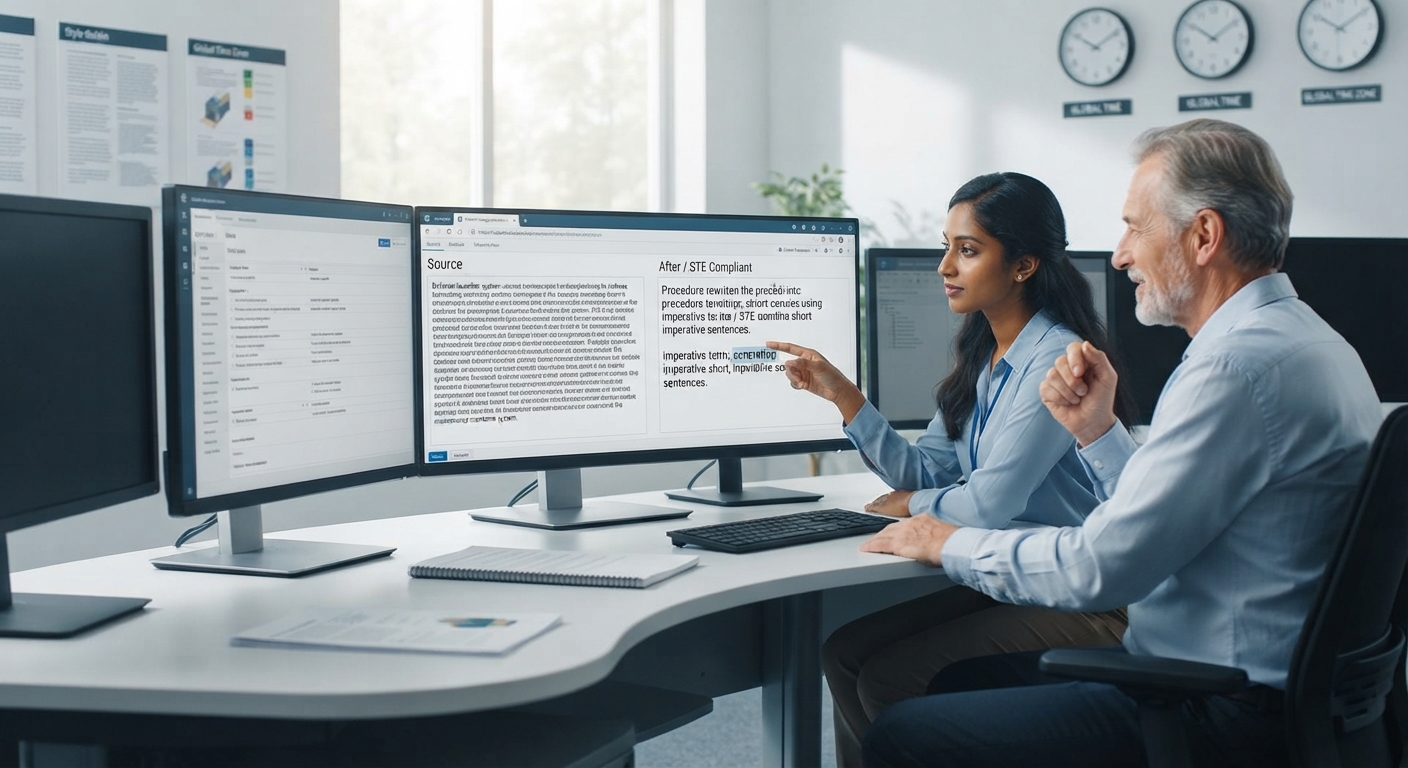
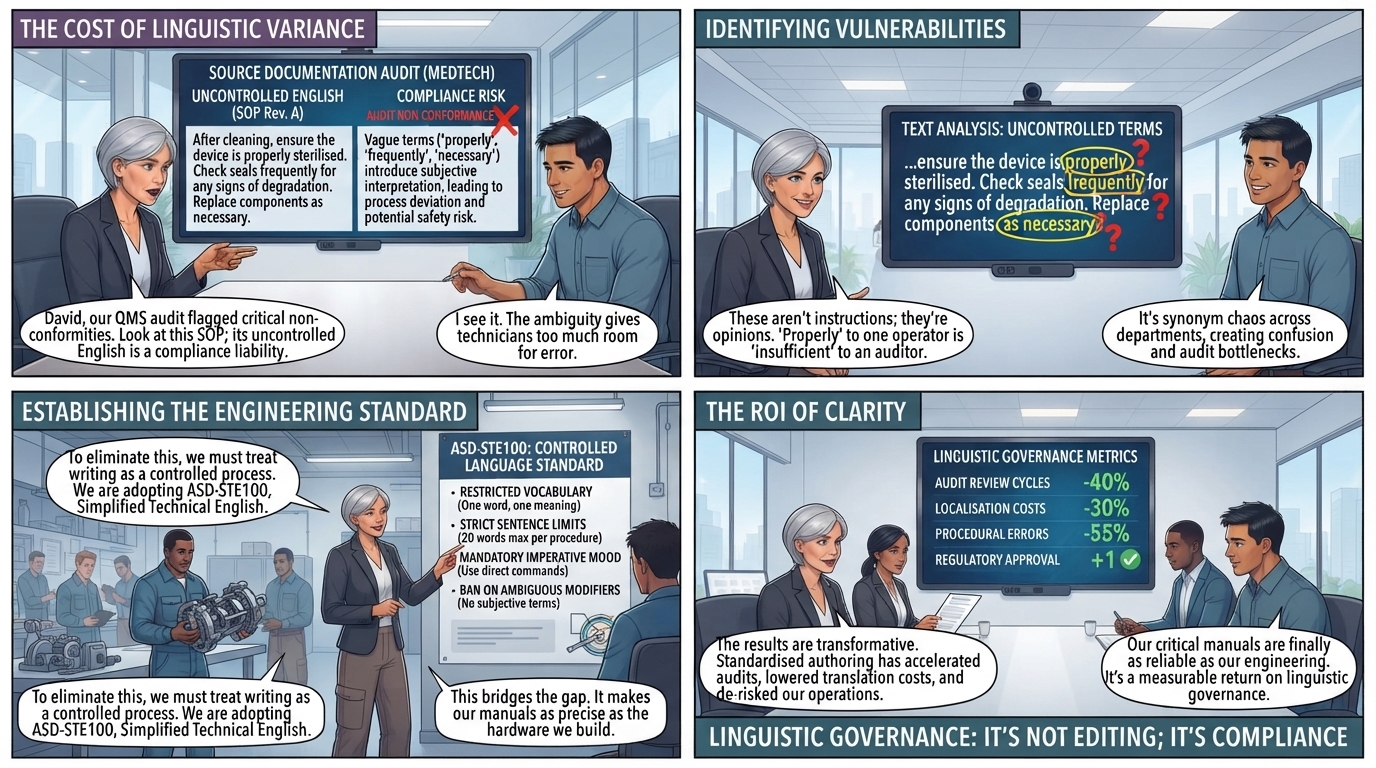
Simplified Technical English (ASD-STE100) is the internationally recognised controlled language specification designed to make complex technical manuals clear, unambiguous, and easily understood by a global audience. In today’s environment—where automated translation engines and generative tools can rapidly scale output but also multiply linguistic errors—upstream standardisation is more critical than ever. Consequently, by eliminating ambiguity and enforcing strict syntactic control, STE protects your documentation pipeline, cuts translation costs, and prevents operational risks.
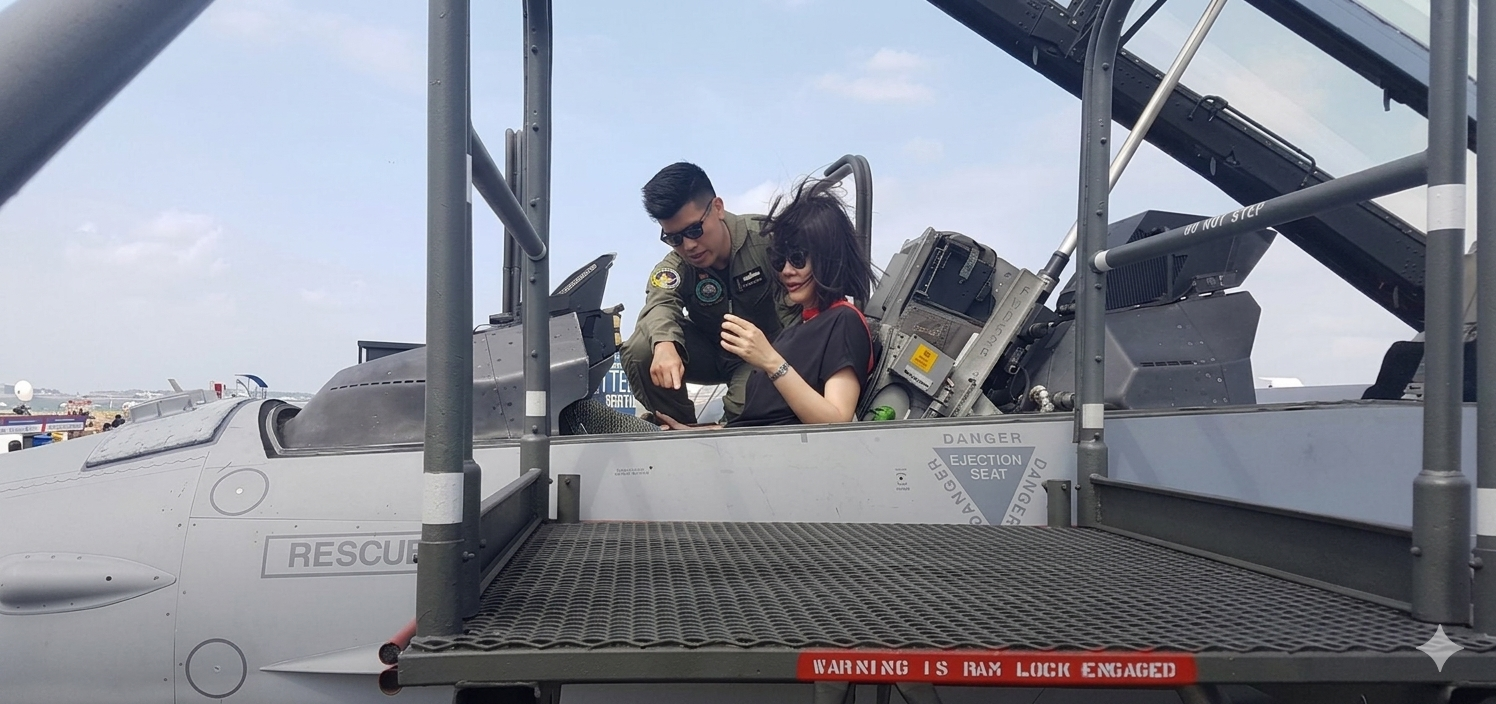
Applicable across aerospace, defence, engineering, and high-compliance industries, this foundational training is led by Shumin Chen. Designed for technical managers, directors, and senior writers, the programme ensures participants learn how to correctly and effectively apply STE rules in practice, navigate common writing pitfalls, and avoid frequent misinterpretations. Furthermore, you will learn how to correct guidelines that undermine technical quality.
Applicable across aerospace, defence, engineering, and high-compliance industries, this foundational training is led by Shumin Chen. Designed for technical managers, directors, and senior writers, the programme ensures participants learn how to correctly and effectively apply STE rules in practice, navigate common writing pitfalls, and correct the frequent misinterpretations of core guidelines that undermine technical quality.
What customers are saying..
I am giving this training a 10/10. There was a good introductory and explanation to describe the 2-day training seminar. Rule 1.1 0 lets me use words that are: approved in the dictionary / technical names / technical verbs and is one rule I like very much because of its flexibility.
I think rule 1.1 is the most critical and important for STE dictionary. Sometimes I have to use non-approved words as an exception, but I will try to keep this rule 1.1 in my documents for good measure.
Although some of the exercises were tricky, they remind me of each rule application at that time. So they were practical for my role as a technical writer.
I want to recommend this course to current technical writers in Korea or engineers who are interested in writing their own documents effectively. Seung Eun Lee, Technical Writer, DB HiTek
Online STE Workshop Outline*
We’re committed to providing the highest quality learning experience in all our online workshops. Therefore, we’ve made the decision to cap all our online workshop session sizes at just five participants, starting 5 May 2025.
This intimate virtual environment fosters richer discussions, more personalised feedback, and a greater overall impact on your understanding and application of key technical communication standards like Simplified Technical English. Learn better, communicate better, across all our courses. This two-day Online STE Workshop includes interactive training, exercises, and a 120-day post-training consultation.
Day 1: Classroom Training
- Practical overview of Simplified Technical English (ASD-STE100) and why strict structural control is essential for modern technical documentation.
- How STE ensures absolute clarity for both native and non-native speakers across global audiences.
- The direct risk-mitigation and cost benefits of adopting the STE international writing standard in high-compliance environments.
- Core writing rules and how to apply them systematically in daily practice.
- Mastering the general vocabulary lexicon: Approved and unapproved words, and the strict structural rationale behind them.
- Eliminating ambiguous phrasing, noun clusters, and syntactic drift that undermine technical accuracy.
- Establishing a rigorous baseline for clear, human-readable documentation that withstands automated review and translation workflows.
Day 2: Application, Review, & Exercises
- How to deal with industry-specific terminology and integrate specialized nouns safely into controlled writing.
- How to apply STE across various documentation types (such as maintenance manuals, service bulletins, and operating procedures).
- How to implement STE frameworks with minimal disruption to ongoing production and existing documentation archives.
- Practical hands-on workshop session for applying strict STE rules directly to your own company documents.
- Review, edit, and discuss participants’ own documents to reinforce learning through actual correction.
- Collaborative review of common error patterns and alternative phrasing solutions.
- Final classroom presentation and editorial breakdown of your documents to establish a repeatable, high-integrity quality standard for your team.
* Shufrans also offers customised ASD-STE100 training solutions tailored to meet your specific requirements. These courses are normally provided at the customer’s premises.
Why select a Simplified Technical English training with Shufrans?
Shumin is a very knowledgeable STE instructor. She kept the course interesting and was always open to our questions/feedback. The introduction to Simplified Technical English has been greatly beneficial for my understanding of what the specification entails. In terms of preferred rules, I cannot pinpoint a specific set of STE writing rules as they are all valuable. This was my favorite part of the course as I enjoyed analyzing how other writers went about using STE to best apply it to their line of work.
The rewriting workshop was my favorite part of the course as I enjoyed analyzing how other writers went about using STE to best apply it to their line of work. I would highly recommend this course to all technical writers. Shumin Chen takes the time to clearly explain the rules of STE. A very attentive instructor, indeed. If given the chance, I would really enjoy working along side her. Michael Palmieri, Documentation Specialist, AON3D | The Advanced Additive Manufacturing Platform
What technical writing outcomes to expect?
Our interactive training, exercises, and practical workshops will equip participants to standardise content and achieve measurable operational outcomes:
-
Enhanced Communication & Global Efficiency: Authors will master the structural discipline required to create clear, consistent, and easily translatable technical documentation, facilitating seamless communication across international markets and streamlining the authoring process.
-
Improved Operational Safety & Reduced Downtime: By applying rigorous STE principles, teams will eliminate ambiguity, minimise procedural misunderstandings, and directly safeguard operational safety while reducing costly equipment downtime and service delays.
-
Optimised Lifecycle Support & Cost Reduction: Structured drafting enables modular writing and efficient content reuse, maximizing long-term consistency, optimizing product lifecycle support, and significantly reducing the overall cost of creating and maintaining technical publications.