
When an engineering firm releases a complex system, product variants quickly follow. The core architecture remains identical, but a control panel shifts, a valve location moves, or a feature appears on one variant and not the next.
Documentation follows the same chaotic cycle. Early on, the technical author copies the previous manual, edits what changed, and ships. That approach holds up until the number of variants multiplies, at which point systemic symptoms appear. The same pressure-relief valve is described one way by the mechanical team and another by the electrical group. A safety correction made for a high-priority client never reaches the technical files being built alongside it. Superseded specifications survive in sections nobody reread.
Standardising the layout and table of contents solves part of the problem. But when technical manuals are written in natural English, layout standardisation only creates an orderly wrapper for unconstrained ambiguity.
True technical standardisation requires controlling the language itself through Simplified Technical English. Here are the core pillars required to fix documentation drift at the authoring stage.

Enforce Controlled Terminology and Single Meanings When the same physical component appears under different names across a product family, readers assume they are dealing with different parts. A retention bracket can easily pick up four distinct labels across three variant manuals without anyone deciding it should. Designate a single, approved term of record for every asset, part, and action. STE rules dictate that every approved word must have only one meaning, and every concept must be represented by only one term. As soon as a part carries synonyms, users hesitate, internal consistency collapses, and downstream localisation costs multiply.
Standardise Procedural Voice and Sentence Shape Natural technical writing varies wildly depending on who is at the keyboard. One writer prefers passive descriptions, another uses imperative commands mixed with conditional clauses. Enforce structural rules for sentence design. Instructions must always begin with an approved imperative verb, placing the action in the first word. Descriptive sentences must keep the active voice and name the object that acts. By fixing sentence patterns across the document, technical readers stop parsing ambiguous grammatical structures and focus entirely on operational changes.

Standardise Safety Information and Hazard Formats Safety warnings are the one area where writer discretion introduces lethal exposure. When safety messages vary across models of the same family, it creates severe compliance liabilities during third-party safety audits or product liability disputes. Combine standard safety hierarchy rules with strict STE constraints.
Standardise Baseline Content Blocks A maintenance procedure or system check that applies across a dozen variants does not need to be drafted twelve times by twelve different engineers. Isolate approved, STE-compliant blocks of procedural text and turn them into modular standard content. When a function behaves identically under the same conditions, the verified sentence structure becomes a reusable master asset. If a specific operational threshold differs on a variant, change only that parameter and leave the rest of the certified sentence untouched.

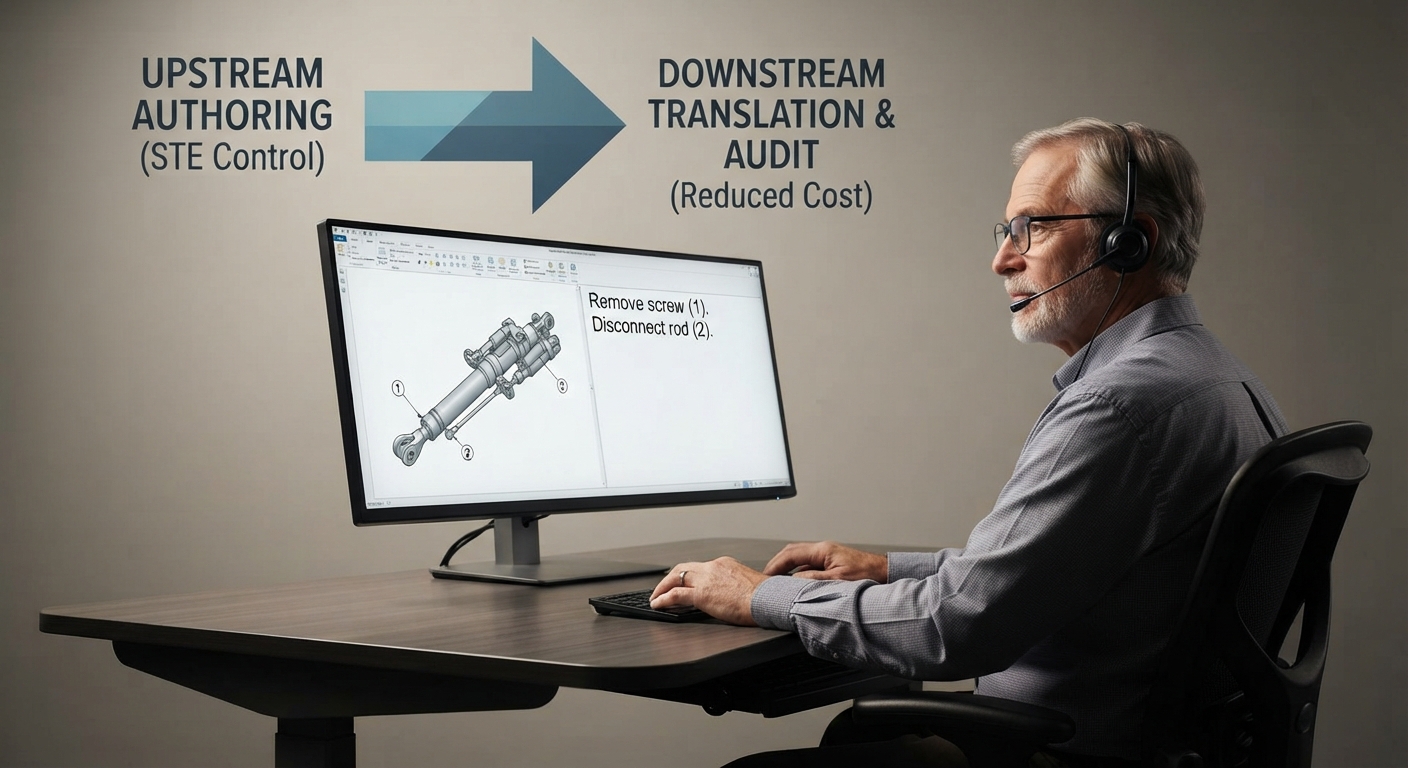
Establish Upstream Writing Rules Over Downstream Localisation Many engineering organisations treat technical standardisation as a translation problem, fixing errors only after the manual has been written and sent overseas. By then, the structural ambiguity is already baked into the source text. Publish an internal style guide based on ASD-STE100 before writing begins. Define approved technical verbs, prohibit vague modifiers, and mandate strict sentence length limits. When the source text is written under strict linguistic governance, downstream translation and technical audits require a fraction of the time and budget.
Standardising technical manuals comes down to imposing rules that govern how a product family is described from the ground up. With over twenty years of specialised experience delivering Simplified Technical English implementation and training across complex industrial sectors, Shufrans TechDocs helps engineering teams eliminate documentation drift at the authoring stage.
With an STE-based standard in place, authoring time drops, review cycles shorten, and the quality gap between different engineering teams disappears. More importantly, technical files stop triggering non-conformities during regulatory audits, ensuring that your operational documentation matches the absolute precision of the hardware you build.
🔗 Reserve a 30-min STE Feasibility Session: https://calendly.com/shufranstechdocs/30min


