

MRO Archives | Shufrans TechDocs Home // MRO Archives | Shufrans TechDocs

The Cost of Loose Language: Why Technical Documentation Fails at Scale

The Cost of Loose Language: Why Technical Documentation Fails at Scale

Across complex industrial operations—from commercial aerospace maintenance and energy plants to international engineering projects—the most persistent operational risk is rarely mechanical failure. It is linguistic failure.

When a manual instruction leaves room for interpretation, the human mind fills the gap. In high-stakes environments, that subjective judgment call turns into extended review cycles, execution variance, and heavy financial or safety exposure.

The Weight of Unspoken Words

Modern engineering ecosystems grow denser by the day. Complex supply chains span continents, multi-agency teams collaborate on technical missions, and field technicians execute intricate repairs under severe time pressures. Yet, the foundational medium connecting these moving parts remains human language.

When documentation relies on stylistic flair, varied vocabulary, or loose sentence structures, it creates a hidden cognitive tax. If three different technicians can interpret a single maintenance directive in three different ways, the system is fundamentally broken at the root.

The Root Cause of Operational Friction

In many organisations, technical writing is treated as an afterthought rather than a core engineering asset. Engineers focus heavily on the physical design or the software architecture, leaving the accompanying documentation to individual writing styles.

This decentralized approach leads to fragmented terminology across manuals, service bulletins, and training guides. Over time, these small inconsistencies accumulate, creating massive bottlenecks when teams try to scale their operations globally or onboard new partners.

What Linguistic Governance Solves

True operational efficiency begins with strict linguistic discipline. Proven frameworks like the ASD-STE100 specification strip away ambiguity. By enforcing a controlled vocabulary and strict structural rules, technical communication moves from an art form to a precise engineering instrument.

  • Eliminating Execution Variance: Clear procedures ensure that a technical instruction means precisely the same thing in Singapore, Copenhagen, or Toulouse.
  • Reducing Review Friction: Standardised writing cuts through endless editorial loops, allowing technical outputs to reach the field faster.
  • Protecting Operational Integrity: Precision in writing directly protects safety margins, ensuring that critical steps in MRO and energy plants leave zero room for error.

Operating at Modern Scale

Operating in today’s fast-paced industrial environment means volumes of documentation are expanding faster than ever. In an era where information velocity is at an all-time high, the sheer scale of technical output makes discipline harder to maintain, yet infinitely more vital. When organisations flood their ecosystems with raw volume without a governing standard, they scale up confusion rather than clarity.

Precision writing is no longer just about editing manuals. It is about protecting the entire operational chain from the ground up, ensuring that what is written on paper translates safely and accurately to the floor where the real work happens.

If you are curious about how these standards could look in your specific field, Shufrans TechDocs invites you to reserve a chat session.

🔗 Reserve a 30-min STE Feasibility Session: https://calendly.com/shufranstechdocs/30min

Let us make precision the new standard for technical success.

View our full training calendar and secure your spot here: https://www.shufrans-techdocs.com/events/
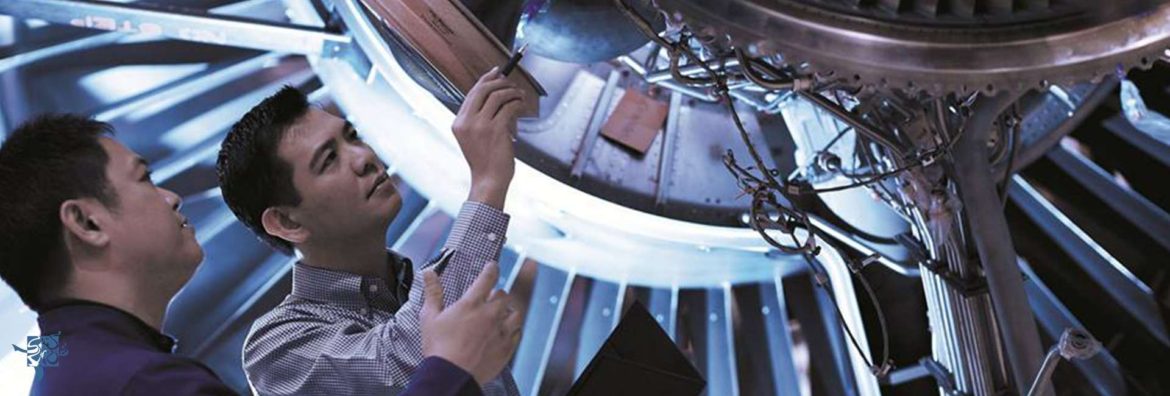
Join a certified ASD-STE100 Simplified Technical English training workshop in Auckland, New Zealand

Join a certified ASD-STE100 Simplified Technical English training workshop in Auckland, New Zealand

Quick facts

Dates: 19 – 20 April 2017

Location: Auckland, New Zealand

Length of training: 2 days

Fee: 1,850 NZD

Early bird registration: Before 28 March 2017

Sign up early to enjoy a 20% training discount

Deadline for registration: 10 April 2017

Summary

Simplified Technical English (STE) stresses on the use of unambiguous terminology where one word only has one meaning. This reduces the likelihood of using synonymous terms that can result in confusion. Optimum re-usability of technical terms on the word, phrase, and sentence levels is to be expected. This will greatly improve any product life-cycle management process.

Technical documentation that is written in STE becomes easier for non-native speakers of the English language to understand. The resulting text is much easier to translate which is especially relevant when machine translation is part of your localization strategy. Preparing your technical content with ASD-STE100 ensures quality at the source and prepares you for future-proof translation processes.

Said Ms Shumin Chen, principal ASD-STE100 trainer: “The benefits of implementing and writing in Simplified Technical English (STE) are manifold – audience engagement through high-quality content, improved product safety, lower life cycle cost and reduced logistics footprint!”

“The ASD-STE100 course I attended by Shumin was very intensive yet enjoyable. Besides the standard format and company templates used when creating documentation, STE rules helped me understand that there is an alternative approach to technical writing. Top Qualities: Effective, versatile, high-quality training delivery.” Manufacturing Engineer, FNSS Defence Systems

Course outline*

  • Practical overview of ASD-STE100 Simplified Technical English
  • How STE helps both native & non-native speakers of English
  • Writing rules and how to apply them in practice
  • How to use the general vocabulary
  • How to deal with industry-specific terminology
  • How to use STE for various documentation types
  • How to implement STE with minimal disruption to on-going production and existing documentation
  • Hands-on STE editing and review

Who should attend?

  • Compliance managers
  • CIO, COO, CTO
  • Customer support managers
  • Documentation managers
  • Editors
  • Engineering managers
  • Engineers and SMEs who create documentation
  • ILS managers
  • Maintenance managers
  • MRO personnel
  • Operation managers
  • Product managers
  • Project managers
  • Quality managers
  • Technical writers
  • Translation managers
  • Translators

What training outcomes to expect?

Ms. Shumin Chen will teach participants how to correctly and effectively use STE in practice. She will also address some of the mistakes commonly found in technical writing and the frequently incorrect use of common STE writing rules.

Our interactive training, exercises and workshop let participants standardise content to:

  • Author more efficiently
  • Communicate more effectively with a global audience
  • Improve operational safety
  • Reduce AOG / downtime
  • Facilitate modular writing and reuse
  • Facilitate teamwork
  • Facilitate translation
  • Maximise consistency
  • Optimise product lifecycle support
  • Reduce the cost of creating and maintaining technical publications

Trainer’s qualifications

Ms. Shumin Chen, principal trainer & consultant at Shufrans TechDocs received her professional on-the-job training in the field of STE under the tutelage of Dr Frans Wijma, a linguist and documentation expert. Together as an experienced global team, they provided their combined knowledge and dedication to benefit customers worldwide. To date, they have provided training and consultancy services to over 180 companies. Shufrans TechDocs is the only company with such vast experience in providing certified STE training.

Shumin has supported various companies with their STE and other documentation needs, based on standards where possible. Although STE was developed for the aerospace industry, more specifically for aircraft maintenance documentation, Shumin found that it made a lot of sense to apply the same principles to other industries and types of documents as well. Few -if any- changes to the specification are necessary to adapt STE to industries ranging from machinery to IT, automotive to medical equipment.

* Shufrans also offers customised ASD-STE100 training solutions tailored to meet your specific requirements. These courses are normally provided at the customer’s premises.