ASD-STE100 Archives | Page 3 of 4 | Shufrans TechDocs Home // ASD-STE100 Archives | Page 3 of 4 | Shufrans TechDocs

Can Simplified Technical English be used for various documentation types?

Can Simplified Technical English be used for various documentation types?

Remote webinar: Simplified Technical English

Dates: Wednesday, 28 August 2019

Time: 12:00 PM to 1:00 PM, Australian Eastern Standard Time (AEST)

Register

ASD-STE100 Simplified Technical English is a guideline that regulates the wording and writing style used in technical publications. Originally developed for the aerospace industry, it is now widely used also outside the aviation industry, including companies in the defence, machinery, electronics, semiconductor, medical equipment, IT, and hi-tech industries.

This presentation explores the usability of Simplified Technical English outside of maintenance documentation. We will discuss industry examples that demonstrate the versatility of this documentation standard that has been in active use since the 1980s.


APAC Online Workshop: Write effective user manuals & instructions with Simplified Technical English

APAC Online Workshop: Write effective user manuals & instructions with Simplified Technical English

Write effective user manuals & instructions with Simplified Technical English

Dates:  3 & 4 February 2020

Plan later: 

  1. 27 & 28 February 2020.

Time: 09:00 to 17:00 UTC/GMT +08:00 [Asia Pacific]

Length of training: 2 days

Course fee: 450 EUR**

Course registration ends one week before training commences.

**Course fee includes exercises, learning aids, certificate of completion, and 90-day post-training support.

Summary

Simplified Technical English (STE) is a controlled language that is used to write technical manuals in such a way that they can be more easily understood by an international audience. STE helps to make translations cheaper and more accurate. Often a formal requirement for aircraft and defence maintenance documentation, STE can easily be adapted to all technical industries and beyond. Ms. Shumin Chen will teach participants how to correctly and effectively use STE in practice. She will also address some of the mistakes commonly found in technical writing and the frequently incorrect use of common STE writing rules.

Shumin gave us a an all-rounded presentation to Simplified Technical English. Personally, rule 1.3: To use only approved words with their approved meaning holds the key to successful controlled language implementation. Rules 3.4, 3.6, 4.1, 5.3, and 5.5 are also among my favourites. The approved verb TO MAKE SURE THAT can come in very handy for technical writers as well. The presentation of STE rules offers quite a detailed overview that includes not only language rules but good, old technical authoring principles in general. It has been very helpful for us to learn and understand the concept of STE. I have found Shumin to be very competent in STE and will defnitely recommend her course! Eric, Head of Corporate Technical Documentation (CTD), Schindler Group.

Course outline*

  • Day 1: Classroom Training
    1. Practical overview of Simplified Technical English
    2. How STE helps both native & non-native speakers of English
    3. Benefits of adopting the STE international writing standard
    4. Writing rules and how to apply them in practice
    5. How to use the general vocabulary.
    6. Approved and non-approved words discussion and the rationale behind.
  • Day 2: Application, Review, & Exercises
    1. How to deal with industry-specific terminology
    2. How to use STE for various documentation types
    3. How to implement STE with minimal disruption to on-going production and existing documentation
    4. Practical workshop session for applying STE rules to your own documents
    5. Review, edit, and discuss participants’ own documents to reinforce learning
    6. Classroom presentation of own documents.

* Shufrans also offers customised ASD-STE100 training solutions tailored to meet your specific requirements. These courses are normally provided at the customer’s premises.

Who should attend?

  • Compliance managers
  • CIO, COO, CTO
  • Customer support managers
  • Documentation managers
  • Editors
  • Engineering managers
  • Engineers and SMEs who create documentation
  • Graphics specialists
  • ILS managers
  • Maintenance managers
  • Operation managers
  • Product managers
  • Project managers
  • Quality managers
  • Software research engineers
  • Technical illustrators
  • Technical writers
  • Translation managers
  • Translators.

What training outcomes to expect?

Our interactive training, exercises and workshop, will teach participants to standardise content to:

  • Author more efficiently
  • Communicate more effectively with a global audience
  • Improve operational safety
  • Reduce AOG / downtime
  • Facilitate modular writing and reuse
  • Facilitate teamwork
  • Facilitate translation
  • Maximise consistency
  • Optimise product lifecycle support
  • Reduce the cost of creating and maintaining technical publications.

Trainer’s qualifications

Ms. Shumin Chen, principal trainer & consultant at Shufrans TechDocs received her professional on-the-job training in the field of STE under the tutelage of Dr Frans Wijma, a linguist and documentation expert. Together as an experienced global team, they provided their combined knowledge and dedication to benefit customers worldwide. To date, they have provided training and consultancy services to over 180 companies. Shufrans TechDocs is the only company with such vast experience in providing certified STE training.

Shumin has supported various companies with their STE and other documentation needs, based on standards where possible. Although STE was developed for the aerospace industry, more specifically for aircraft maintenance documentation, Shumin found that it made a lot of sense to apply the same principles to other industries and types of documents as well. Few -if any- changes to the specification are necessary to adapt STE to industries ranging from machinery to IT, automotive to medical equipment.

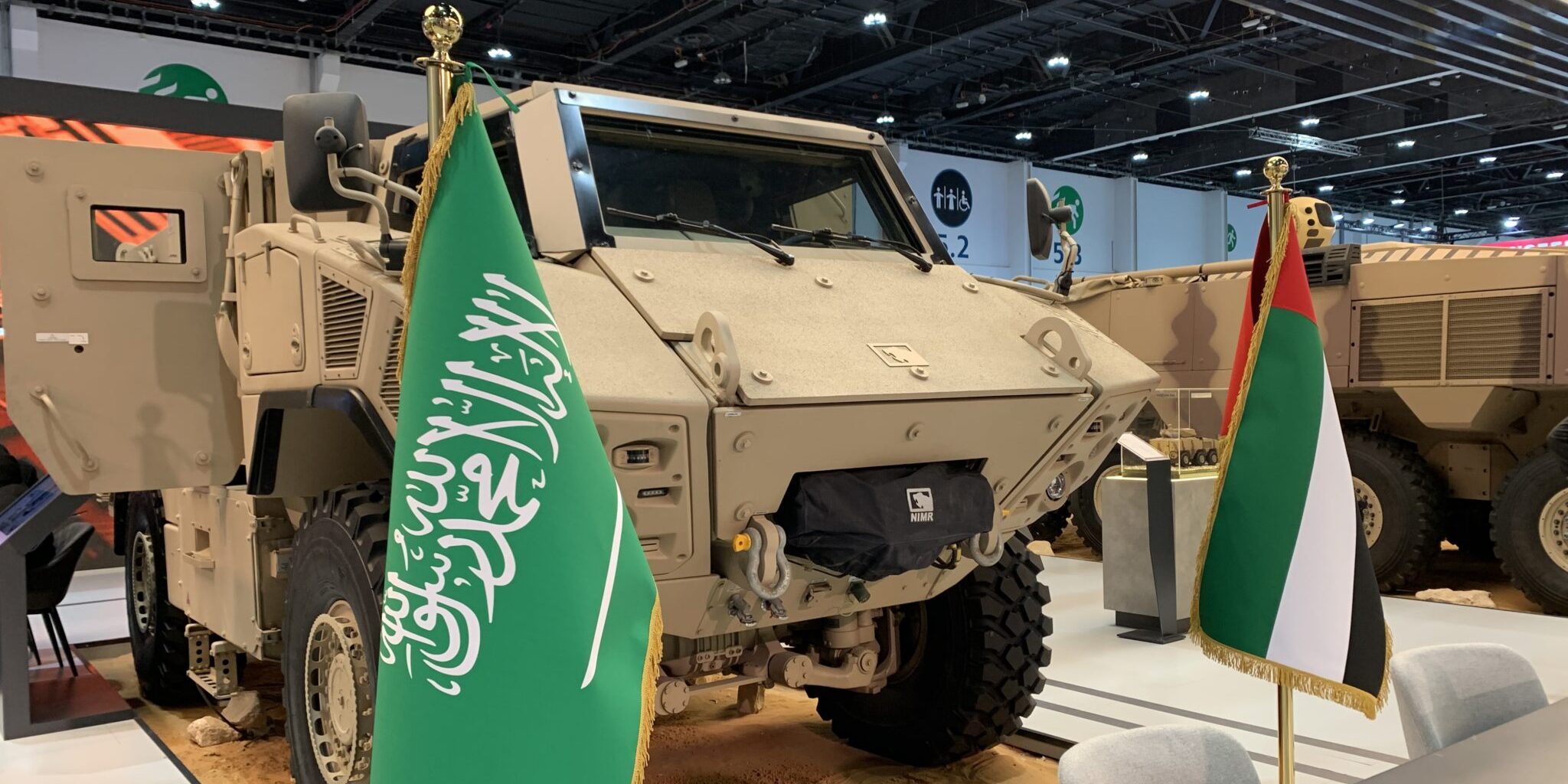
NIMR (EDGE Group): Enhancing Operational Readiness through On-Site STE Training

NIMR (EDGE Group): Enhancing Operational Readiness through On-Site STE Training

Clarity and Multilingual Efficiency in Critical Defence Documentation

Client: NIMR (A subsidiary of EDGE Group)

Industry: Defence Manufacturing & Technology

Location: Abu Dhabi, UAE (On-site Training)

Challenge: Ensuring absolute clarity, consistency, and a unified communication standard in critical technical and support documentation, vital for operational readiness, effective customer support, and seamless English-Arabic translation in the defence sector.

Solution: A bespoke, three-day on-site ASD-STE100 training programme delivered by Shufrans TechDocs to key personnel including Customer Support Officers, Field Engineers, Technical Writers, and Documentation Experts.

Results: Significant uplift in documentation precision, improved efficiency in field and customer support interactions, enhanced cross-functional communication, optimised translation processes, and accelerated professional development, directly contributing to NIMR’s mission of delivering mission-ready solutions.


The Challenge: Uncompromising Clarity in Defence Communications

NIMR, a leading manufacturer of wheeled military vehicles and a pivotal subsidiary within the UAE’s advanced technology and defence group, EDGE, operates in an environment where clarity is not merely beneficial—it is critical. The precision of technical documentation directly impacts the operational readiness, safety, and effectiveness of defence assets in demanding environments.

NIMR faced the challenge of ensuring that all its technical and support communications, from maintenance manuals to field service reports and customer interactions, adhered to an uncompromising standard of clarity and consistency. This was particularly complex given the diverse roles involved in creating and delivering this information, and the crucial requirement to translate documents accurately between English and Arabic for various customers and end-users:

  • Customer Support Officers: Needing to convey precise solutions and guidance efficiently to end-users, often in both English and Arabic.
  • Field Engineers & Technicians: Requiring unambiguous instructions for maintenance, troubleshooting, and on-site support of complex military vehicles, with the knowledge that these would be translated.
  • Technical Writers & Documentation Experts (from various backgrounds): Tasked with authoring and managing a vast array of critical technical content, with a direct impact on the quality of subsequent translations.

Any ambiguity could lead to misinterpretations in critical operational contexts, potentially compromising safety, delaying field repairs, impacting training effectiveness, or introducing errors during the English-Arabic translation process. NIMR sought a solution that would embed a culture of precise communication directly within their operational teams, with a clear benefit to their multilingual documentation needs.


The Results: A New Standard for Operational Clarity and Multilingual Efficiency

By investing in on-site ASD-STE100 training with Shufrans TechDocs, NIMR achieved significant, measurable improvements in its technical and support communications:

  • Enhanced Operational Clarity: A unified approach to language drastically minimised ambiguities in all forms of documentation, directly improving the understanding and execution of critical procedures by both internal teams and external customers.
  • Improved Field Efficiency: Field Engineers could more effectively diagnose issues and follow maintenance protocols, reducing downtime and ensuring rapid response in operational scenarios.
  • Streamlined Customer Support: Customer Support Officers provided clearer, more concise guidance, leading to reduced resolution times and enhanced customer satisfaction.
  • Boosted Documentation Quality: Technical Writers and Documentation Experts consistently produced high-quality, compliant content, streamlining workflows and reducing rework.
  • Optimised Translation Processes: With a consistent and unambiguous English source text, the translation of documents into Arabic became faster, more accurate, and more cost-effective, ensuring seamless communication with diverse customer bases.
  • Accelerated Professional Growth: The hands-on training significantly upskilled personnel across critical roles, fostering a collective commitment to precision communication and supporting their long-term professional development within the defence sector.
  • Strengthened Communication Chain: A common language standard facilitated seamless information exchange between engineering, documentation, field support, and translation teams, underpinning NIMR’s commitment to delivering superior defence solutions globally.

NIMR’s proactive investment in on-site STE training with Shufrans TechDocs has transformed its communication landscape, reinforcing its position as a leader in defence manufacturing through unparalleled clarity, operational excellence, and enhanced multilingual capabilities. This success story underscores the vital role of targeted communication training in ensuring readiness and reliability for critical industries operating on a global scale.

If your organisation faces similar challenges in achieving uncompromising clarity and operational readiness through precise communication, especially when translation between English and Arabic is a key requirement, discover how Shufrans TechDocs can help. Learn more about our ASD-STE100 training and consulting services:

🗓️ View our training calendar.

www.shufrans.com

ASD-STE100 Simplified Technical English workshop for all industries, 7 – 8 June 2018 in Istanbul, Turkey

ASD-STE100 Simplified Technical English workshop for all industries, 7 – 8 June 2018 in Istanbul, Turkey

Quick facts

Dates: 7 – 8 June 2018

Location: Istanbul, Turkey

Length of training: 2 days

Sign up early to enjoy a 20% training discount

Summary

ASD-STE100 Simplified Technical English (STE) is a controlled language that is used to write technical manuals in such a way that they can be more easily understood by an international audience. STE helps to make translations cheaper and more accurate. Often a formal requirement for aircraft and defence maintenance documentation, STE can easily be adapted to all technical industries and beyond. Ms. Shumin Chen will teach participants how to correctly and effectively use STE in practice. She will also address some of the mistakes commonly found in technical writing and the frequently incorrect use of common STE writing rules.

It is important that operation and management information be understandable to the target audience. Sometimes, operation information is conveyed through a less-than-optimum selection of words. The manufacturer’s technical language can result in incomprehensible operation documentation.

Course outline*

  • Practical overview of ASD-STE100 Simplified Technical English
  • How STE helps both native & non-native speakers of English
  • Writing rules and how to apply them in practice
  • How to use the general vocabulary
  • How to deal with industry-specific terminology
  • How to use STE for various documentation types
  • How to implement STE with minimal disruption to on-going production and existing documentation
  • Hands-on STE editing and review

* Shufrans also offers customised ASD-STE100 training solutions tailored to meet your specific requirements. These courses are normally provided at the customer’s premises.

Who should attend?

  • Compliance managers
  • CIO, COO, CTO
  • Customer support managers
  • Documentation managers
  • Editors
  • Engineering managers
  • Engineers and SMEs who create documentation
  • ILS managers
  • Maintenance managers
  • Operation managers
  • Product managers
  • Project managers
  • Quality managers
  • Technical writers
  • Translation managers
  • Translators

What training outcomes to expect?

Our interactive training, exercises and workshop, will teach participants to standardise content to:

  • Author more efficiently
  • Communicate more effectively with a global audience
  • Improve operational safety
  • Reduce AOG / downtime
  • Facilitate modular writing and reuse
  • Facilitate teamwork
  • Facilitate translation
  • Maximise consistency
  • Optimise product lifecycle support
  • Reduce the cost of creating and maintaining technical publications

Trainer’s qualifications

Ms. Shumin Chen, principal trainer & consultant at Shufrans TechDocs received her professional on-the-job training in the field of STE under the tutelage of Dr Frans Wijma, a linguist and documentation expert. Together as an experienced global team, they provided their combined knowledge and dedication to benefit customers worldwide. To date, they have provided training and consultancy services to over 170 companies. Shufrans TechDocs is the only company with such vast experience in providing certified STE training.

Shumin has supported various companies with their STE and other documentation needs, based on standards where possible. Although STE was developed for the aerospace industry, more specifically for aircraft maintenance documentation, Shumin found that it made a lot of sense to apply the same principles to other industries and types of documents as well. Few -if any- changes to the specification are necessary to adapt STE to industries ranging from machinery to IT, automotive to medical equipment.


Certified ASD-STE100 Simplified Technical English workshop in Hamburg

Certified ASD-STE100 Simplified Technical English workshop in Hamburg

Quick facts

Dates: 7 – 8 May 2018

Location: Hamburg, Germany

Length of training: 2 days

Early bird registration: Before 7 April 2018

Sign up early to enjoy a 20% training discount

Deadline for registration: 23 April 2018

Summary

ASD-STE100 Simplified Technical English (STE) is a controlled language that is used to write technical manuals in such a way that they can be more easily understood by an international audience. STE helps to make translations cheaper and more accurate. Often a formal requirement for aircraft and defence maintenance documentation, STE can easily be adapted to all technical industries and beyond. Ms. Shumin Chen will teach participants how to correctly and effectively use STE in practice. She will also address some of the mistakes commonly found in technical writing and the frequently incorrect use of common STE writing rules.

All our training materials are updated according to the ASD-STE100 Specification Issue 7, January 2017.

Course outline*

  • Practical overview of ASD-STE100 Simplified Technical English
  • How STE helps both native & non-native speakers of English
  • Writing rules and how to apply them in practice
  • How to use the general vocabulary
  • How to deal with industry-specific terminology
  • How to use STE for various documentation types
  • How to implement STE with minimal disruption to on-going production and existing documentation
  • Hands-on STE editing and review

* Shufrans also offers customised ASD-STE100 training solutions tailored to meet your specific requirements. These courses are normally provided at the customer’s premises.

“The Simplified Technical English course content and requirements provided by Shumin Chen were an absolute good fit with the TCLoc Master’s program. A technical communicator has to know about the existing specifications for technical documentation. Furthermore, this course helps the students to acquire new skills in order to enhance the accuracy and clarity of contents.” TCLoc Master’s Student, University of Strasbourg.

Who should attend?

  • Compliance managers
  • CIO, COO, CTO
  • Customer support managers
  • Documentation managers
  • Editors
  • Engineering managers
  • Engineers and SMEs who create documentation
  • Graphics specialists
  • ILS managers
  • Maintenance managers
  • Operation managers
  • Product managers
  • Project managers
  • Quality managers
  • Software research engineers
  • Technical illustrators
  • Technical writers
  • Translation managers
  • Translators

What training outcomes to expect?

Our interactive training, exercises and workshop, will teach participants to standardise content to:

  • Author more efficiently
  • Communicate more effectively with a global audience
  • Improve operational safety
  • Reduce AOG / downtime
  • Facilitate modular writing and reuse
  • Facilitate teamwork
  • Facilitate translation
  • Maximise consistency
  • Optimise product lifecycle support
  • Reduce the cost of creating and maintaining technical publications

Trainer’s qualifications

Ms. Shumin Chen, principal trainer & consultant at Shufrans TechDocs received her professional on-the-job training in the field of STE under the tutelage of Dr Frans Wijma, a linguist and documentation expert. Together as an experienced global team, they provided their combined knowledge and dedication to benefit customers worldwide. To date, they have provided training and consultancy services to over 180 companies. Shufrans TechDocs is the only company with such vast experience in providing certified STE training.

Shumin has supported various companies with their STE and other documentation needs, based on standards where possible. Although STE was developed for the aerospace industry, more specifically for aircraft maintenance documentation, Shumin found that it made a lot of sense to apply the same principles to other industries and types of documents as well. Few -if any- changes to the specification are necessary to adapt STE to industries ranging from machinery to IT, automotive to medical equipment.

ASD-STE100 Simplified Technical English training workshop for individual writers in Qatar

ASD-STE100 Simplified Technical English training workshop for individual writers in Qatar

Quick facts

Dates: 29 – 31 January 2018

Location: Doha, Qatar

Length of training: 1 to 3 days

Participants have the flexibility of attending a 1, 2, or 3-day training session with us.

Deadline for registration: 29 December 2017

Summary

ASD-STE100 Simplified Technical English (STE) is a controlled language that is used to write technical manuals in such a way that they can be more easily understood by an international audience. STE helps to make translations cheaper and more accurate. Often a formal requirement for aircraft and defence maintenance documentation, STE can easily be adapted to all technical industries and beyond. Ms. Shumin Chen will teach participants how to correctly and effectively use STE in practice. She will also address some of the mistakes commonly found in technical writing and the frequently incorrect use of common STE writing rules.

Course outline*

  • Participants have the flexibility of attending a 1, 2, or 3-day training session with us.
    • Day 1: Classroom Training
      1. Practical overview of ASD-STE100 Simplified Technical English
      2. How STE helps both native & non-native speakers of English
      3. Benefits of adopting the STE international writing standard
      4. Writing rules and how to apply them in practice
      5. How to use the general vocabulary.
    • Day 2: Application, Review, & Exercises
      1. Approved and non-approved words discussion and the rationale behind.
      2. How to deal with industry-specific terminology
      3. How to use STE for various documentation types
      4. How to implement STE with minimal disruption to on-going production and existing documentation
    • Day 3: Extended Writing Workshop
      1. Practical workshop session for applying STE rules to your own documents
      2. Review, edit, and discuss participants’ own documents to reinforce learning
      3. Classroom presentation of own documents.

* Shufrans also offers customised ASD-STE100 training solutions tailored to meet your specific requirements. These courses are normally provided at the customer’s premises.

Learning how to optimally use a documentation standard like ASD-STE100 is a substantial boost to our technical writing team’s capabilities and significantly improved our compliance rating! Raja Sureshbabu, Global Head of Aerospace Vertical, Tata Consultancy Services.

Who should attend?

  • Compliance managers
  • CIO, COO, CTO
  • Customer support managers
  • Documentation managers
  • Editors
  • Engineering managers
  • Engineers and SMEs who create documentation
  • Graphics specialists
  • ILS managers
  • Maintenance managers
  • Operation managers
  • Product managers
  • Project managers
  • Quality managers
  • Software research engineers
  • Technical illustrators
  • Technical writers
  • Translation managers
  • Translators

What training outcomes to expect?

Our interactive training, exercises and workshop, will teach participants to standardise content to:

  • Author more efficiently
  • Communicate more effectively with a global audience
  • Improve operational safety
  • Reduce AOG / downtime
  • Facilitate modular writing and reuse
  • Facilitate teamwork
  • Facilitate translation
  • Maximise consistency
  • Optimise product lifecycle support
  • Reduce the cost of creating and maintaining technical publications

Trainer’s qualifications

Ms. Shumin Chen, principal trainer & consultant at Shufrans TechDocs received her professional on-the-job training in the field of STE under the tutelage of Dr Frans Wijma, a linguist and documentation expert. Together as an experienced global team, they provided their combined knowledge and dedication to benefit customers worldwide. To date, they have provided training and consultancy services to over 180 companies. Shufrans TechDocs is the only company with such vast experience in providing certified STE training.

Shumin has supported various companies with their STE and other documentation needs, based on standards where possible. Although STE was developed for the aerospace industry, more specifically for aircraft maintenance documentation, Shumin found that it made a lot of sense to apply the same principles to other industries and types of documents as well. Few -if any- changes to the specification are necessary to adapt STE to industries ranging from machinery to IT, automotive to medical equipment.


Why S1000D recommends the use of Simplified Technical English, or ASD-STE100?

Why S1000D recommends the use of Simplified Technical English, or ASD-STE100?

ASD-STE100 is mandated by several commercial and military specifications (MIL-SPEC) that control the style and content of maintenance documentation. Military defence standards (MIL-SPEC / MIL-STD) such as MIL-STD-3048, as well as technical documentation standards like S1000D and ATA iSpec 2200 recommend the use of ASD-STE100.

Join us for a live conversation with Shumin Chen, Head of Training and ASD-STE100 Implementation at Shufrans TechDocs, on Tuesday July 26th, 2016 at 11:00AM (PDT) to learn more about this controlled English standard, and the online resources that are made freely available to you!


Future-proof your technical English writing skills

Future-proof your technical English writing skills

In this year’s economic slowdown, training budgets are often the first to shrink, if not, put on hold, as companies try to reduce costs in all areas. Unfortunately, businesses also start to see a direct impact on their level of competitiveness and overall success when they do not continue to invest in employee training.

Thankfully, many quality assurance (QA) managers know about the importance of documentation and the importance of standards to support their documentation.

QA managers recognise that to continue to deliver high quality services and products to their customers, their companies cannot stop investing in competence development to improve their employees’ skills, knowledge and career confidence. Motivated employees suggest a more promising outlook for any business’ future.

Reasons for acquiring Simplified Technical English (STE) writing skills as a professional asset

English happens to be a very rich language, meaning that, amongst other things, it has a huge vocabulary.

English has about three times as many words as French or German. However, in French or German you can say just the same things that you can say in English.

This implies that English has redundant or ambiguous words. Also, English grammar is a problem even for most native English speakers, and it can be highly confusing especially to people who speak English as a second language. Therefore, we want to try and do away with this huge, unnecessary part of the vocabulary, and we want to simplify grammar to what is essential to getting our message across.

Keeping your technical content concise yet precise – the basic principles of STE

1) Only use one word for one function, procedure or object.

2) Use each word in the ASD-STE100 dictionary based on its defined meaning and specific part of speech only.

3)Write only one instruction per sentence.

Most importantly, Simplified English is unique because this is a very balanced, and rather complete set of rules. It was not based on the personal preferences of just one or two people, but a whole committee that has developed this standard.

Working with great partners from all over the world to bring you high quality training workshop events

Certified STE workshops Spring 2016

Organised in collaboration with partners in Holland, Germany, Austria, India and Russia, our global Simplified Technical English (STE) workshops deliver high-quality training content that allows participants to create technical content in STE with great ease and 100% confidence.

Training offers in spring

Our STE training workshops equip technical communication professionals with the skills and confidence to create user-friendly and readable technical documentation, making it easier to translate, or doing away with the need for translations altogether. Refer to our STE training schedule below:

  1. Singapore, 3 – 4 March 2016
  2. Hyderabad & Bangalore, India, 10 – 15 March 2016
  3. Berlin, Germany, 4 – 5 April 2016
  4. Tiel, the Netherlands, 21 – 22 April 2016
  5. Helsinki, Finland, 9 – 10 May 2016
  6. St Petersburg, Russia, 19 – 20 May 2016

For more information on Shufrans’ training courses, please refer to our training page. Shufrans also offers customised ASD-STE100 training solutions that are tailored to meet your specific business requirements. These training workshops are usually conducted on-site at the customer’s premises or at our offices in Singapore.

To register for one of our open STE training classes, call +65 9777 4730 or email register@shufrans-techdocs.com.


Copyright © 2016 Shufrans TechDocs. All rights reserved. No part of this article may be reproduced or transmitted in any form or by any means whatsoever without express written permission from the author, except in the case of brief quotations embodied in critical articles and reviews. 

Are you ready to make STE your strategic partner?

Explore our FAQ section below.
Your Tactical Advantage | Emirates Defence Industries Company

Your Tactical Advantage | Emirates Defence Industries Company

STE as part of your global content strategy

Simplified Technical English as part of your content strategy

EDGE is creating opportunities in autonomous capabilities, directed energy, cyber-physical systems, advanced propulsion systems, robotics and smart materials, with artificial intelligence embedded across its products and services. Transforming how we live, and ensuring a more secure future, is what we do. Our mission is to bring innovative technologies and services to market with greater speed and efficiency.

ASD-STE100 Simplified Technical English (STE) is a controlled language that is used to write technical manuals in such a way that they can be more easily understood by an international audience. To put it across plainly, STE is a form of controlled language that is guided by 53 technical writing rules that were put together by a committee of linguists, engineers, and manufacturers who established over the years that these writing rules made sense and allowed them to re-write any of their existing documentation based on these rules, making their documentation easier to understand, while maintaining accuracy, safety, and validity.

Develop, deploy, and deliver documentation with STE

STE Quick facts

Background: With the widespread dissemination of user documentation published in various delivery formats across several language translations, the relevance of global information management has become greater in an attempt to stem terminology inconsistencies, mistranslations, and the disproportionate escalation of costs associated with the maintenance, reuse, and consumption of technical content.

Year: In use since 1986

Current Version: Issue 8, May 2021.

Technical writing rules: 53

Dictionary word entries: approx. 2400 terms.

The STE specification also includes a core vocabulary of around 930 approved words and 1500 non-approved words that let technical authors write just about everything that they need for for procedural and descriptive texts. Therefore, the use of approved words, compliance with the standard, and a language quality checker tool to complement your content strategy efforts is akin to pooling your most valuable resources where people, internal processes, and innovative technologies become more aligned.


The role of technical authors and technical documentation managers

Technical writers are the go-between for subject-matter-experts (SMEs), engineers, designers and the end-users of documentation. Consequently, the responsibility of creating effective documentation falls on technical authors who will then endeavour to send out a clear, unambiguous, and user-friendly message about their products and line of services.

At the level of global information management, technical writing professionals should consider short-term tactics and longer-term strategies to overcome the following:

  • An ever-increasing volume of words to write and translate
  • Snowballing translation and documentation management costs
  • Overlapping information across different versions of similar document types
  • Low comprehension levels for the English language jargon.

STE in practice

If this is your first time hearing about STE, the example that follows will hopefully shed more light on the principles and best practices that govern good STE writing. Here is an original piece of text presented in standard English writing:

THE SYNTHETIC LUBRICATING OIL USED IN THIS ENGINE CONTAINS ADDITIVES WHICH, IF ALLOWED TO COME INTO CONTACT WITH THE SKIN FOR PROLONGED PERIODS, CAN BE TOXIC THROUGH ABSORPTION.

And here it is again in STE:

THE OIL IS POISONOUS. DO NOT GET THE ENGINE OIL ON YOUR SKIN.  IT CAN GO THROUGH YOUR SKIN AND INTO YOUR BODY.

Making the comparison between the two types of writing above, you will see that the original writing is rather cumbersome in expression. It is also very likely that the person reading this sentence will have difficulties following the writer’s line of thought because of the longer sentence length and unnecessary information included. In contrast, the text written in STE is much more to the point and simply distils what is pertinent to the person doing this work:

  1. The oil is poisonous.
  2. I must always be careful not to touch oil without protection.

From this example, STE shows us that warnings and cautions must always start with a simple and clear command that is usually substantiated by a reasoning that comes before or after.  A command informs the user about the precautionary measures to take to avoid danger. Presenting information as if it were a general comment in the original writing obscures the importance of the message and is not specific enough.


What customers are saying.. | NIMR Automotive

Thuraya Al Mehrzi, Production Engineer, NIMR Automotive
“Shumin gave a good introduction to Simplified Technical English. Instead of writing long sentences that are difficult to read, I prefer the STE rule of presenting long sentences in a list that makes it much easier to understand the work that is required to be completed. The STE exercises were pretty engaging, and this is particularly so for day 2 of the rewriting workshop that gave the team a lot of insight into our documentation. Trainees also had the opportunity to replace many unapproved standard English words with STE ones that helped us better appreciate the application of STE rules in a real-world context. This is a training that I have rated 10/10 for.”

Nour Bazuhair, Engineer Trainee, NIMR Automotive “The introduction to Simplified Technical English (STE) was simple to follow and understand. Rule 1.4 to use only the approved forms of verbs and adjectives from the STE dictionary is something that I appreciate very much. Applying the rules faithfully was a challenging albeit enjoyable process. There is a lot of good writing rules to learn here. I’ve found the exercises to be very useful for learning reinforcement, and they have helped me to apply STE rules in a more efficient manner and I’ve gained a much better understanding of STE as a result. Shumin’s training methodology is easy to follow, and she offers us great technical writing advice and has simplified the process for us. Every aspect of this training is a 10/10 for me.”

Abdel Alazeem Arafah, Service Coordinator, NIMR Automotive “This was a great course with very useful and practical knowledge for my work. Simplified Technical English (STE) encourages users to always refer to the approved list of verbs and nouns in the STE dictionary before writing their technical documentation. The active voice is also a very useful and powerful tool in sending loud and clear instructions to our users. Starting a warning or caution with a simple and clear command is also very crucial in my line of work. Shumin’s delivery of the training is highly organised, and she has been most patient with our comments, questions, and feedback the whole time.”

An innovative approach to consider for your global documentation landscape

Over the last three decades, STE has emerged as a rather important and universal standard for technical English. Predictably, as a result of language standardisation, STE helps us to achieve a number of benefits. Technical writers become more consistent on a word level. This starts with the simple fact that we are going to use the same word whenever we refer to the same thing, so that means an improved level of consistency and consequently quality improvements.

Where can I learn more about STE?

Shufrans TechDocs regularly hosts online training workshops for technical writers, SMEs, and engineers at different time zones for your convenience. To learn more about our diverse course offerings and workshop customisations that we can do for you and your global technical documentation team, speak to us today!


Addressing human errors in the healthcare industry

Addressing human errors in the healthcare industry

It is important that operation and management information be understandable to the target audience. Sometimes, operation information is conveyed through a less-than-optimum selection of words. The manufacturer’s technical language can result in incomprehensible operation documentation.

Governance of Picture Archiving and Communications Systems: Data Security and Quality Management of Filmless Radiology, Carrison K.S. Tong, Eric T.T. Wong, Human Factors & Culture, 2009

English is the de facto language for almost all industries, including healthcare where communication is crucial to ensure operational efficiency and accuracy. Without good communication among healthcare professionals such as referring medical doctors, technologists, radiologists, clinicians, nurses, suppliers, maintenance and service engineers would imply that high quality standards become impossible to maintain.


Human errors can be expensive, lead to accidents, and risk product quality

More often than not, operation information is conveyed through a less-than-optimum selection of words. To cite a real-life example of a maintenance procedure where a certain step was ‘proscribed’ meaning prohibited, the technical personnel who read this instruction decided that the procedural step was ‘prescribed’ and hence recommended. Regrettably, he proceeded to carry out the prohibited action with dire consequences.

New manuals, job cards, operations and maintenance service bulletins are prime examples of documentation that must be proofread and beta-tested before being widely circulated. Proportionately, the labour costs involved in such documentation management processes can be immensely high.


Document complexity & volume

With the latest medical products and technology made available on the market, the increasing complexity and volume of medical data and healthcare information that must be created, recorded, integrated and managed cannot be avoided. Indeed, voluminous and complex writing that read very differently since they must have been supplied by various product manufacturers can negatively impact hospital’s operations when misread or misinterpreted. Volumes of user manuals from various sources with at times overlapping information also seem impossible to store and manage usefully.

A popular example in the aerospace industry is the well-known paper stack from aircraft manufacturers that supposedly exceeds the height of Mount Everest. Paper documentation support the work of aircraft operators. Airlines used to afford warehouses full of such paper stacks that document historical records of their aircraft maintenance. All of which proved too expensive to maintain later on.

Consequently, unmanageable volumes of text, document complexities, time-critical operations, as well as the growing proportion of healthcare workers whose first language is not English, all point to the need for a unifying English language standard that would allow the community to speak with one voice and convey critical information using fewer words.

Create manuals that speak with one voice

Safety begins with quality. Even the best product is only as good as its documentation and technical data, which allow the customer to use it safely and effectively.

Many incidents identified in the healthcare industry revealed poor technical understanding and communication due to missing user manuals, inadequately described operating instructions, and badly maintained  equipment that add to the series of errors and accident occurrences.

Let’s take a close look at the following case study excerpt. Our customer is a manufacturer of mobile X-ray based imaging solutions. They created an operator manual and a service manual in Standard English that was subsequently edited in a controlled language known as Simplified Technical English (STE).

Standard English: inconsistent tone and excessive use of words

Control Panel Both the C-arm stand and the monitor cart have a control panel. The two control panels always show the same screen, enabling you to use them for system operation.Depending on the selected function, other controls (buttons, input boxes, displays, etc.) will appear on the control panel screen.The Vision Center control panel is designed as a touch screen. For system operation, just press the desired button or option directly on the touch screen.

STE: uniform tone of voice and standardised sentence structure

Control Panel The C-arm stand and the monitor cart each have a control panel screen. These screens show the same control panel. Each panel lets you operate the system. The panels have different controls for different functions.The control panel is a touch screen. To operate the system, touch the correct button or option.

At the time our customer was writing a range of user and maintenance manuals  for their X-ray imaging equipment. Although the manuals were created and edited by more than 10 technical writers in a team, our customer wanted all manuals to read like they came from one single source. STE provided a cost-saving and easily implemented solution as evidenced by the rewritten STE sample text highlighted above.

ste_casestudy_chart.001

Say it better with fewer words

The implementation of STE in the healthcare sector proved to be a great success. Using a smaller number of words with defined meanings and parts of speech, while adopting a simplified English language structure meant that user manuals now provide a highly consistent and unambiguous tone of voice with a 20% reduction in text volume. Above all, healthcare professionals depend on reliable documentation to operate medical devices and equipment safely and efficiently. STE therefore helps medical equipment manufacturers meet documentation compliance requirements, and can also increase the efficiency and productivity of their employees.

To summarise, an instruction found in a technical procedure must never become a case of interpretation. Work instructions communicated in technical manuals must be concise and let the user or maintenance personnel do their jobs properly, putting patient safety first and foremost.

Copyright © 2015 Shufrans TechDocs. All rights reserved. No part of this article may be reproduced or transmitted in any form or by any means whatsoever without express written permission from the author, except in the case of brief quotations embodied in critical articles and reviews.

Are you ready to make STE your strategic partner?

Explore our FAQ section below.