Blog | Page 8 of 8 | Shufrans TechDocs Home // Blog | Page 8 of 8 | Shufrans TechDocs

Optimise what is between the tags

Optimise what is between the tags

Depending on your industry and requirements, it normally is a great step forward to implement DITA or S1000D to standardise on your information structure and facilitate re-use from a technical point of view. Now, learn how ASD-STE100 Simplified Technical English can help you take things to the next level, thus preparing your content for optimum re-use, readability and translatability.

Data Protection Solutions STE

Simplified Technical English (STE) deconstructed – a textual analysis

In the textual analysis that follows, we will underline unapproved words (according to the ASD-STE100 specification) in the Standard English text and then provide the corresponding approved words in STE underlined where possible.

A general misconception might be that STE rewriting is mostly a word for word replacement. However, this is clearly not the case as illustrated in the examples here:

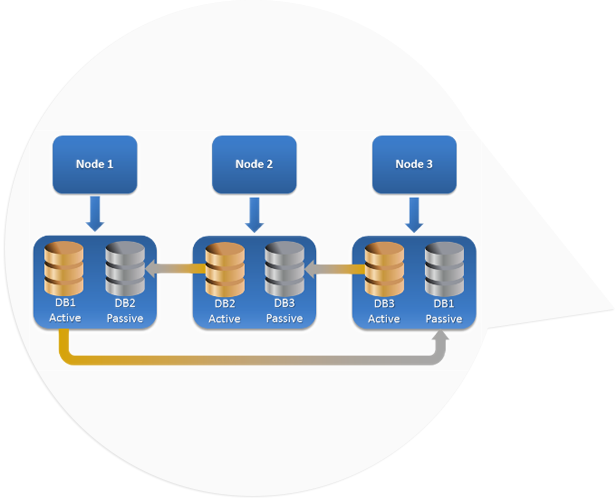
1a) Standard English: The main idea of Exchange clusters is to provide high database availability with fast failover and no data loss.

1b) STE: Exchange clusters have high database availability with fast failover and no data loss.

Analysis: In this above sentence pair, we removed redundant words that do not add meaning to the sentence. The result is a concise, more direct sentence.

2a) Standard English: Usually, it is achieved by having one or more copies of databases or storage groups on the members of the cluster (cluster nodes).

2b) STE: There normally are one or more copies of databases or storage groups on the cluster nodes.

Analysis: ‘Achieved by’ is a passive verb form that is not approved in STE since it hides the doer of the action. By simply stating that ‘there are one or more copies of databases or storage groups ..’ already supports the first sentence.

In the ASD-STE100 specification, Issue 6, January 2013, rule 1.12, writers are advised not to use different technical names for the same thing. In Standard English, ‘members of the cluster’ was presented synonymously alongside ‘cluster nodes’. This is a clear violation of the rule 1.12 that can cause potential readability issues.

In this case, a good technical writing professional must already decide at the outset which technical term to use and then consistently apply the same term when describing the same thing.

3a) Standard English: If the cluster node hosting the active database copy or the active database copy itself fails, the other node hosting the passive copy automatically takes over the operations of the failed node and provides access to Exchange services with minimal downtime.

3b) STE: If there is a problem with the active database copy or its cluster node, a different node with a passive copy automatically replaces the unavailable node and gives access to Exchange services after a short time.

Analysis: ‘Host’ qualifies as an approved technical verb based on the nature of this text. However, in STE, only a limited group of verb tenses is allowed. The –ing form or present participle verb form is not used in STE unless it is part of a technical name. For instance: lighting, missing, servicing. From the STE example, notice that the verb ‘hosting’ is not necessary since we used the possessive determiner ‘its’ to indicate the association between the active database and the cluster node.

It is also not common to use phrasal verbs in STE as each individual verb could hold a different meaning from the phrasal verb itself. We substituted ‘takes over’ with ‘replaces’ and that adds to one less word count – a win-win. ‘Provides’ as an unapproved STE verb is replaced with ‘gives’, a verb with a more direct and clear definition.

4a) Standard English: Thus, the clusters are already serving as a disaster recovery solution themselves.

4b) STE:

Analysis: The last sentence is a summary of all that has been described and is considered repetitive in STE.


The case for STE – concluding points

From the brief analysis provided, it is clear by now that STE when implemented properly lets you have:

  • Higher documentation quality due to increased comprehensibility and readability
  • Standardised, concise and meaningful content
  • Reduced translation costs thanks to better source texts.

STE allows technical writers to achieve their professional goals in a timely manner with mastery of this specification in less than three training days. When correctly applied, STE writing rules help the technical author present complex information in a well-thought-out and developed style.


Copyright © 2015 Shufrans TechDocs. All rights reserved. No part of this article may be reproduced or transmitted in any form or by any means whatsoever without express written permission from the author, except in the case of brief quotations embodied in critical articles and reviews.
Using ASD-STE100 to apply Lean Six Sigma concepts to your documentation processes

Using ASD-STE100 to apply Lean Six Sigma concepts to your documentation processes

By Ms. Shumin Chen and Dr. Frans Wijma

ASD-STE100 Simplified Technical English and Six Sigma

Below, we will outline the basic synergy between Six Sigma and Simplified Technical English.

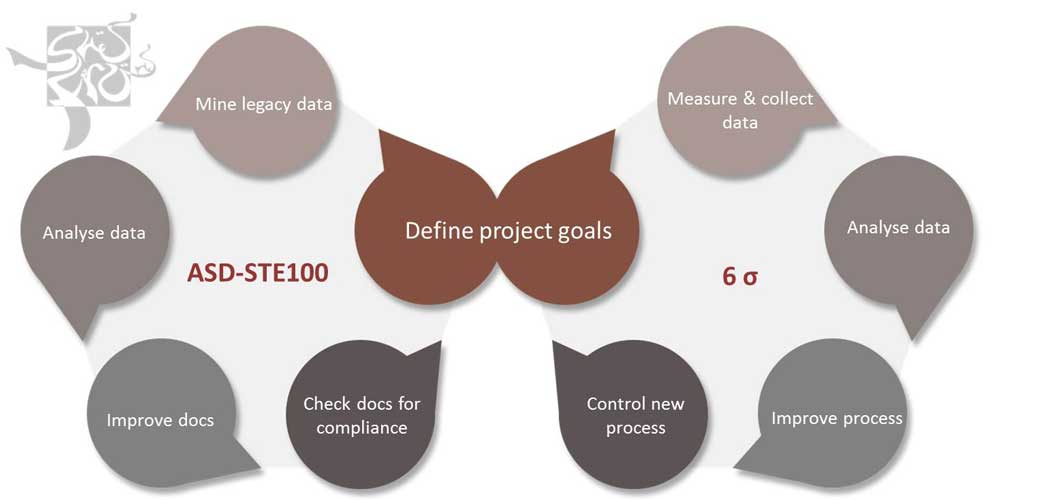
An important Six Sigma method is known as DMAIC:

  • Define the project goals
  • Measure key aspects of the current process and collect relevant data
  • Analyse the data to identify root defects
  • Improve or optimise the current process based on the data collected
  • Control the new process to ensure that any deviations from target are corrected before they result in defects

In the domain of ASD-STE100 Simplified Technical English in relation to content creation and content management (authoring, editing, change management, version management), the basic parallel is:

  • Define the writing rules
  • Mine legacy data
  • Analyse the data to identify the common violations
  • Improve the documentation by applying the relevant rules
  • Check the documentation to ensure correct and consistent use of the rules, thus reducing the number of violations and improving output quality


Our ASD-STE100 working model

Shufrans-six-sigma-ste-small

ASD-STE100 Simplified Technical English provides the baseline set of writing rules that can be used as objective parameters to measure content quality. Shufrans TechDocs can extract relevant error information from your legacy publications, helping to identify the main problem areas. We then train your staff in effectively applying the rules that remedy these problems.The delivered content aims to provide key decision support for further STE implementation across departments and future technical writing projects.

Finally, we help you to implement and form of Simplified Technical English checker software to monitor and control the content creation and output. The exact implementation will be based on your existing or planned documentation process and entails many variables.


Your bottom line impact

ASD-STE100 Simplified Technical English involves all aspects of the documentation life cycle. It looks to make significant improvements in your content creation and content management workflow. Typically, text written in Simplified Technical English will show a 20 to 30% reduction in text volume without any information loss and at least a 60% increase in readability and user-friendliness. As the text volume is reduced by at least 20% and the remaining text becomes more repetitive, the use of Simplified Technical English typically results in 30 to 40% less translation cost.

After all, the best product is only as good as its documentation and technical data allow the customer to make optimum use of it without stretching the budget too far.

Copyright © 2015 Shufrans TechDocs. All rights reserved. No part of this article may be reproduced or transmitted in any form or by any means whatsoever without express written permission from the author, except in the case of brief quotations embodied in critical articles and reviews.

Streamlining your documentation processes with a practical content strategy

Streamlining your documentation processes with a practical content strategy

Safety starts with quality. The best product is only as good as its documentation and technical data made available to the customer.

Case study

Our customer, the Finn-Power Group, established in 1969, is a multinational group of companies specialising in sheet metal working technology with 2 manufacturing sites in Italy, 1 in the US and 1 in Finland.


Industry concerns

Customer documentation is a vital and integral part of Finn-Power’s comprehensive range of machinery. Most crucially, the documentation needs to do its part to ensure the safe and correct use of the product by providing complete, accurate and effective information.

Additionally, with the EU machinery directive in place and the EU now comprising of 28 countries, there is a regulatory need for clear and accurate translation into many different languages as well as specific, safety-related content.


Using Simplified Technical English ASD-STE100 to create user content 

To make content easier to understand as well as faster and cheaper to translate, Dr Frans Wijma gave training to Finn-Power’s team of technical translators, writers and documentation manager in the rules and practical application of this international standard. Course participants did a complete rewrite of selected sample documents in Simplified Technical English.

Finn-Power has successfully implemented ASD-STE100 since 2010 with the continuous support from the team at Shufra.

ASD-STE100 standardises vocabulary, grammar and style, while letting companies control their specific terminology (Technical Names). The ASD-STE100 standard is widely used in industries ranging from aerospace to IT, consumer electronicsautomotive and machinery.


The next step – formulating/designing a useful information structure

Taking on the other important aspect of documentation is the structural reuse of content and optimizing technical means for reuse. With all their business requirements in mind, Finn-Power was looking for a highly intuitive, low-threshold content management solution (CMS).

We tapped into our partner network and found Author-it to be the perfect fit with the customer’s requirements as it includes a translation management module that allows users to efficiently and effectively manage multilingual content. Author-it allows you to reuse content with a high level of granularity. While most CMS systems just let you reuse whole blocks of text, Author-it allows for text reuse on the sentence level, doing away with the need to define portions of text intended for reuse.

Said Ms Hanna Korpinen, Manager of R&D and Documentation:

Now that we have also taken on this other important aspect of documentation, we are better positioned to provide quality documentation to our customers on-time and within budget!


Copyright © 2013 Shufra Consultancy. All rights reserved. No part of this article may be reproduced or transmitted in any form or by any means whatsoever without express written permission from the author, except in the case of brief quotations embodied in critical articles and reviews. 
Ready to learn more?

Make STE your strategic partner today!

STE training & consultancy
Turkish Aerospace Industries ensures ASD-STE100 compliance

Turkish Aerospace Industries ensures ASD-STE100 compliance

Turkish Aerospace Industries (TAI/TUSAŞ) is Turkey’s centre of technology in design, development, modernisation, manufacturing, integration and lifecycle support of integrated aerospace systems, including fixed-wing and rotary-wing aircraft, UAVs and satellites.

TAI asked Shufra to assess the level of compliance of its documentation with the ASD-STE100 specification. Based on the findings, Shufra delivered an advanced training course for the technical writers and other people in the ILS department, providing them with new insights to take compliance to the next level. Writers especially liked the workshop that allowed participants to review and rewrite their own document samples under the guidance of the experienced Dr Frans Wijma who is widely regarded as the leading expert in Simplified Technical English, aviation documentation and multilingual documentation.


He gave ASD-STE100 training to over 130 companies worldwide. Customers include Black & Decker, Boeing, Microsoft, Rolls-Royce and Samsung. Said ILS specialist Mr Halil Kan: “TAI hired Frans to work with our experienced team and help them to improve their ASD-STE100 Simplified Technical English skills. Frans helped us to identify areas for improvement both in our own documents and in those supplied by our customers and partners. At the end of the training, we all had learned simple yet effective methods to improve the quality, readability and compliance of our writing. Most importantly, we learned how to scrutinize text for commonly made mistakes and how to balance compliance with optimum readability. We enjoyed working with Frans, who has a pleasant personality and an open mind. I am happy to recommend him to any company that wants to improve its documentation, be it for compliance reasons or to facilitate translation.”

Hear more from our satisfied customers.

Tata Consultancy Services hired Shufra to maximise customer satisfaction in terms of compliance with ASD-STE100 Simplified Technical English.

Tata Consultancy Services hired Shufra to maximise customer satisfaction in terms of compliance with ASD-STE100 Simplified Technical English.

ASD-STE100 was originally developed to make maintenance documentation for aircraft and their components easier to understand for a global audience. Over time, use of the specification was increasingly required for other types of manuals in the electronics, automotive and IT industries. Amongst them is Tata Consultancy Services (TCS), a subsidiary of the Tata Group. By 2012 revenues, TCS is one of India’s most valuable companies, and the largest India-based IT services company.


Tata’s services include technical publications for major aircraft manufacturers and their suppliers, who require compliance with relevant standards such as ASD-STE100.

Airbus is widely known to have strict STE quality checks that are difficult to meet for outside suppliers. Head of Aerospace Vertical, Mr Sureshbabu says: “Amidst the financial turmoil of 2008, India continues to offer new business opportunities. At TCS, we constantly keep up with high quality standards and keep our customers happy. Learning how to optimally use a documentation standard like ASD-STE100 is a substantial boost to our technical writing team’s capabilities and significantly improved our compliance rating.”

Said Dr Frans Wijma, Shufra’s principal trainer: “To date, Shufra has trained 20 technical writers and SMEs at TCS and we expect many more companies in India to take this leap forward.”

Hear more from our satisfied customers.