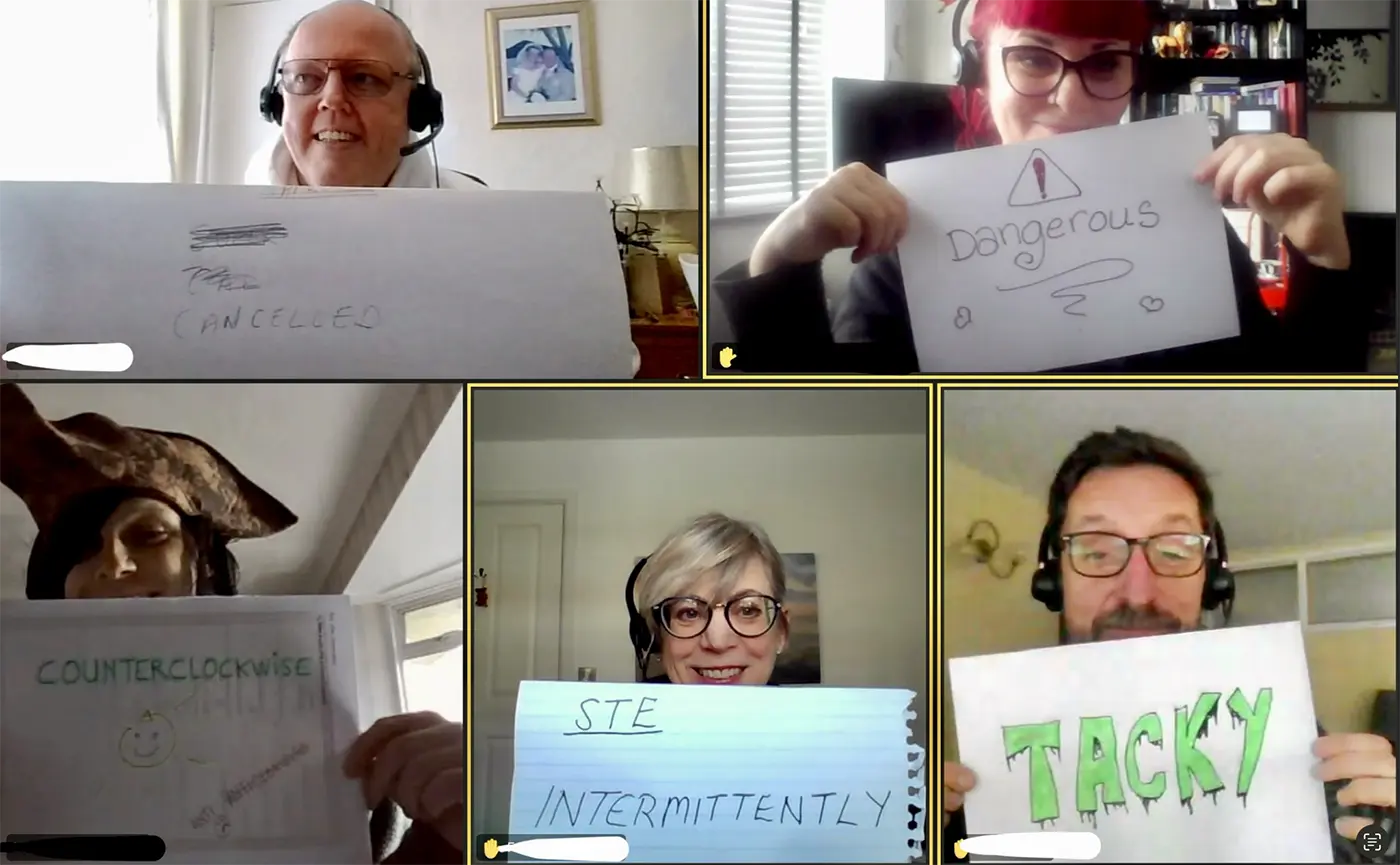
by Shufrans Techdocsin BlogComments Off on Make Technical Writing Simple Again: How Simplified Technical English is Changing the Game
Simplified Technical English (STE) is a writing standard that is gaining popularity in the technical writing industry. It is designed to help writers create clear and concise technical documentation that is easily understood by a wide audience. If you’re a technical writer who is hesitant about using STE, here are some reasons why you should consider giving it a try.
First and foremost, using STE can improve the clarity of your writing. Technical documents can often be dense and difficult to understand, especially for those who are not familiar with the subject matter. By using STE, you can simplify your language, making it easier for readers to understand what you are trying to convey. This is especially important for industries such as aviation, where misinterpretation of technical documentation can have serious consequences.
In addition to improving clarity, using STE can also make your writing more consistent. The language rules of STE provide a standardized way of writing technical documentation, ensuring that all documents follow the same format and style. This can be especially useful for companies that produce a large volume of technical documentation, as it can help to ensure that all documents are consistent and easy to understand.
When writing technical documentation, it can be time-consuming and costly to have to constantly edit and revise your work to make it clearer and more concise. By using STE, you can reduce the amount of time and money you spend on editing and revision, as your writing will be clear and concise from the outset.
Using STE in technical documentation can also help ensure compliance with regulations and standards. For example, the European Union Aviation Safety Agency (EASA) mandates the use of STE in the documentation of safety-critical systems and equipment in aerospace. Similarly, the International Electrotechnical Commission (IEC) and the International Organization for Standardization (ISO) require the use of STE in their standards for electrical and electronic equipment where possible.
Simplified Technical English is a game changer in the field of technical writing. It improves the clarity and consistency of technical documentation, makes it more accessible to a wider audience, reduces the risk of misinterpretation, and can save organizations time and money. As more and more industries adopt STE, it is clear that this controlled language will continue to play an important role in technical communication for years to come.
by Shufrans Techdocsin BlogComments Off on Don’t let confusing technical jargon get in the way of your customers’ success!
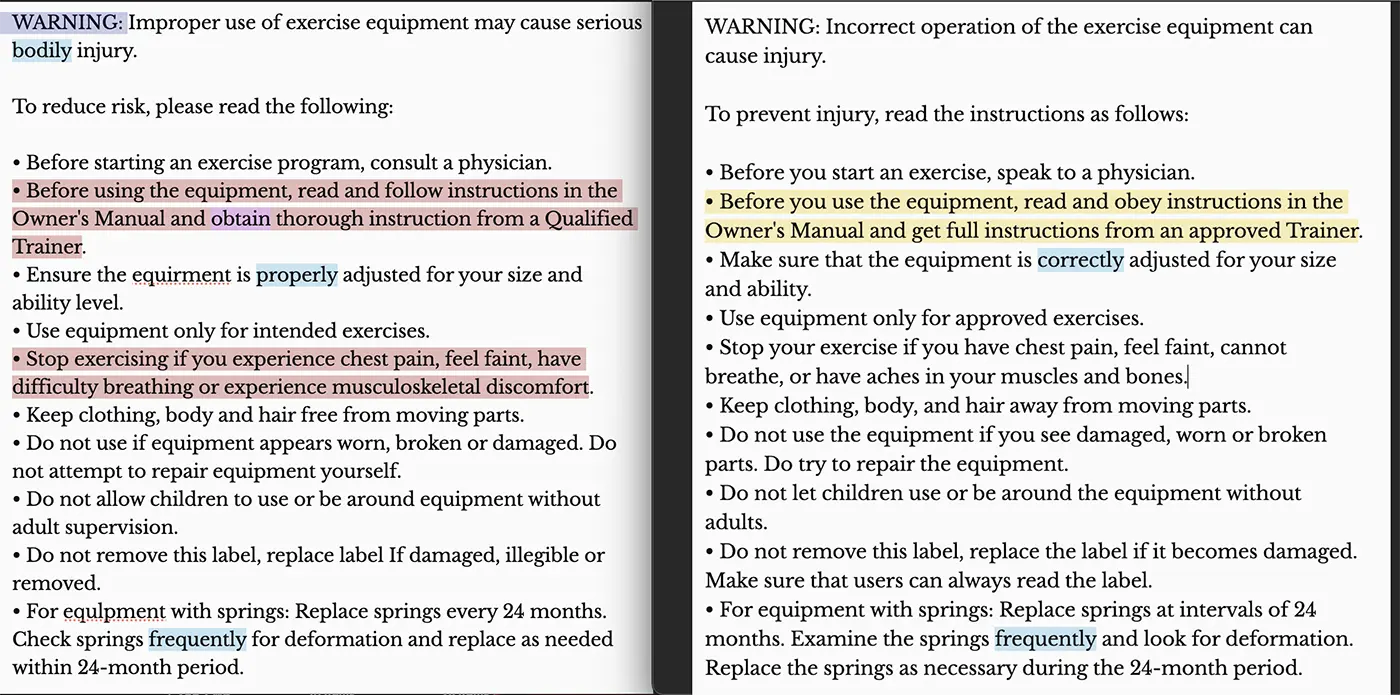
The writing style of the original text is highly technical and precise, which is suitable for conveying important safety information regarding the use of exercise equipment. The language used is formal, and the tone is serious, emphasizing the importance of safety precautions.
However, technical jargon can sometimes make it challenging for customers to understand the instructions and warnings, leading to improper use of equipment, which may result in serious injuries.
For instance, phrases such as “musculoskeletal discomfort” isn’t quite easily understood by customers who are not familiar with medical terminology. Similarly, terms like “Qualified Trainer” may not be clear to some users.
To avoid such issues, it is crucial to communicate safety information in a way that is easy to understand and accessible to the general public. It is important to use simple, clear, and concise language that is understandable by a broad audience.
Moreover, providing visual aids such as diagrams, pictures, and videos can be helpful in supplementing written instructions and enhancing customer understanding. Using a conversational tone, instead of a formal or technical one, can also make safety information more accessible and relatable.
In conclusion, while technical jargon is essential in certain contexts, it can hinder customer understanding in safety-related matters. Therefore, it is crucial to communicate safety information in a way that is easy to understand and accessible to a broad audience. This can be achieved through the use of Simplified English, clear and simple instructions, and avoiding technical terms or jargon wherever possible. By doing so, customers can more easily understand the instructions and use the equipment safely and efficiently.
by Shufrans Techdocsin BlogComments Off on Simplified Technical English (STE) saves businesses time and money. Here are 4 compelling reasons why.
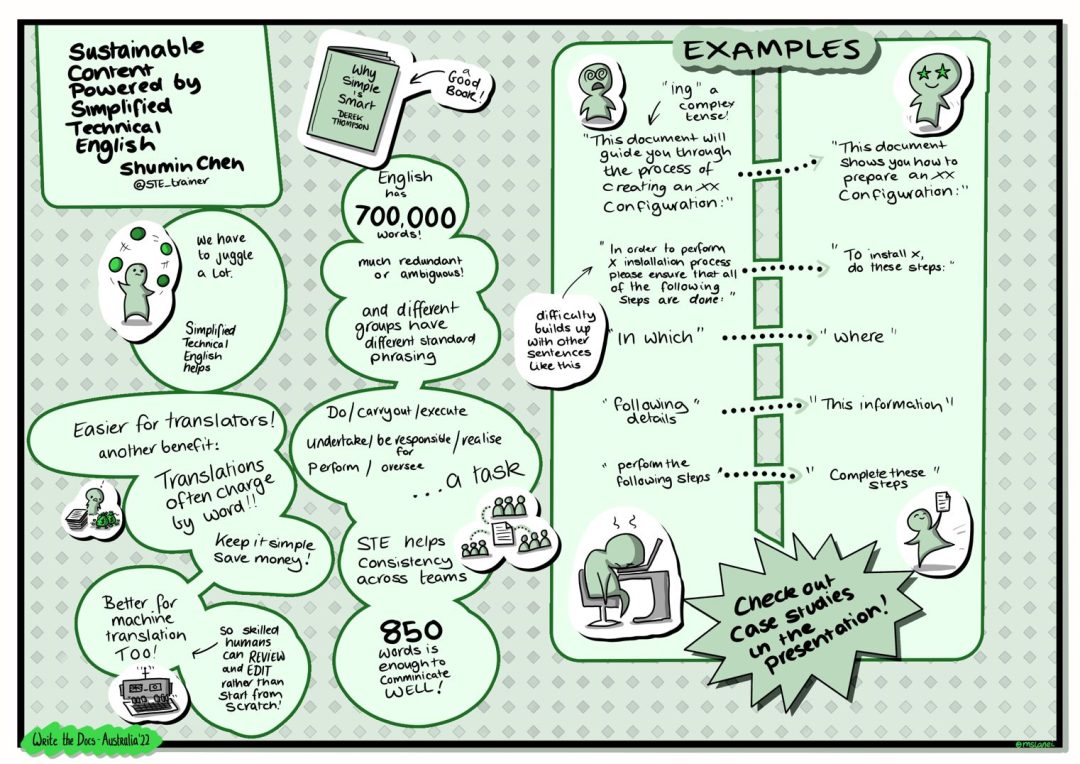
🚜 🛫 🚛 Simplified Technical English (STE) is a controlled language that aims to make technical documentation easier to understand for non-native English speakers and those with limited language proficiency. It is used widely in various industries such as aerospace, defense, and transportation.
Here are some reasons why investing in Simplified Technical English can be a good decision:
Clear communication: STE provides a standard vocabulary and grammar, making technical documentation clear and concise, and reducing ambiguity. This can lead to more efficient communication and better understanding between technical writers, engineers, and end-users.
Improved safety: In high-risk industries such as aerospace and defense, using STE can help reduce the risk of accidents caused by misunderstandings in technical documentation. By ensuring clear and unambiguous instructions, STE can contribute to improving safety and reducing risk.
Cost-effective: Simplified Technical English can help reduce the cost of translation and localization of technical documents. By using a standardized language, companies can simplify the translation process and reduce the need for costly and time-consuming revisions.
Compliance: STE is widely recognized as an industry standard for technical documentation in many sectors, and its use can help companies comply with industry regulations and standards. This can be particularly important for companies operating in highly regulated industries.
In summary, investing in Simplified Technical English can improve communication, increase safety, reduce costs, and support regulatory compliance. By adopting STE, companies can ensure that their technical documentation is clear, concise, and effective, which can ultimately contribute to their success and competitiveness in the global market.
by Shufrans Techdocsin BlogComments Off on Do you struggle to communicate technical information to your audience? Here are 9 Simplified Technical English best practices.
Simplified Technical English (STE) is a controlled language that is used in the aerospace and defense industries to simplify the language used in technical documents. Here are 9 best practices of Simplified Technical English:
Use a limited vocabulary: STE restricts the vocabulary used in technical writing to a specific set of words. This helps to reduce ambiguity and ensures that the meaning of the text is clear.
Use simple sentence structures: STE encourages the use of simple sentence structures that are easy to understand. Complex sentence structures can lead to confusion and misunderstandings.
Use active voice: The active voice is preferred in STE because it is clearer and more concise than the passive voice when writing procedural text.
Use present tense: Present tense is preferred in STE because it is more immediate and makes the text easier to understand.
Use the imperative mood: The imperative mood is used in STE to give commands and instructions. This is because it is a clear and direct way of communicating.
Use standardized terminology: STE requires the use of standardized terminology to avoid confusion and ensure consistency.
Use clear headings and subheadings: Headings and subheadings should be clear and concise so that the reader can quickly identify the topic.
Use illustrations: Illustrations can help to clarify complex concepts and make the text easier to understand.
Comply with established STE guidelines: To ensure consistency and accuracy, it is important to follow established STE guidelines when writing technical documents. This will help to ensure that the text is clear and easy to understand.
Looking to advance your technical writing career? Our Simplified Technical English workshop is the perfect opportunity to enhance your skills and stand out from the crowd. Don’t miss your chance to master this essential skill with our workshop.
🌐 Learn more about this international writing standard at our upcoming lectures and writing workshops in Q2 2023:
Challenge: Ensuring consistent, unambiguous, and highly effective technical documentation for complex and rapidly evolving digital experiences, impacting clarity for a global user base and efficiency for documentation teams.
Solution: Tailored ASD-STE100 (Issue 8) training delivered by Shufrans TechDocs.
Results: Significant enhancement in documentation precision, improved efficiency in content creation, and strengthened comprehension of intricate digital security and delivery concepts for a global audience.
The Challenge: Precision in the Digital Edge
Akamai Technologies stands at the forefront of powering and protecting life online, delivering and securing digital experiences across its vast global network. In an environment where milliseconds matter for performance and a single vulnerability can have widespread impact, the clarity and precision of technical documentation are not just important—they are critical to operational integrity, security, and user adoption.
Akamai faced the challenge of ensuring its comprehensive suite of solutions—spanning content delivery, cybersecurity, and cloud services—was explained with absolute consistency and unambiguous language across all documentation. This complexity was magnified by the rapid pace of technological innovation and a diverse, global customer base ranging from developers to enterprise IT professionals. Without a unified standard, there was a risk of:
Ambiguity in complex technical explanations, potentially leading to misconfigurations or security vulnerabilities.
Inconsistency in terminology and style across various product guides, API documentation, and security advisories.
Inefficiencies in the documentation workflow, impacting authoring and review cycles for new product releases.
Challenges in effectively onboarding users and partners to Akamai’s advanced platforms.
Akamai sought a solution that could standardise its technical language, ensuring every instruction, explanation, and security guideline was understood unequivocally, regardless of the reader’s technical background or native language.
The Solution: Targeted STE Training for Digital Clarity
Shufrans TechDocs partnered with Akamai to deliver a focused ASD-STE100 (Issue 8) training programme in November 2022.
This was an online training delivered to colleagues in Chile, Poland, Germany, and India. Recognising the pivotal role of clear communication in Akamai’s operations, the training was specifically tailored for technical writers, technical enablement managers, and instructional designers.
The programme focused on equipping these professionals with the practical rules and vocabulary of STE, enabling them to:
Apply STE Principles: Consistently implement the core rules of ASD-STE100 across all their documentation.
Simplify Complex Concepts: Translate intricate network architectures, cybersecurity protocols, and cloud functionalities into clear, concise, and unambiguous language.
Leverage Personal Pronouns: Understand and effectively utilise “You” and “We” to create direct, actionable instructions, particularly vital for user guides and procedural documentation.
Standardise Terminology: Adopt a controlled vocabulary to ensure consistent use of terms across all documents, reducing confusion and enhancing searchability.
Documentation Types and Job Roles That Benefited:
The STE training had a direct and positive impact on several critical documentation types and enhanced the capabilities of the participating job roles:
Documentation Types That Benefited:
Product Documentation: User manuals, installation guides, and configuration guides for Akamai’s CDN, security, and cloud computing products became significantly clearer and easier to follow.
API Documentation: For developers integrating with Akamai’s vast array of services, STE ensured that API calls, parameters, and responses were described with unparalleled precision, reducing integration errors and accelerating development.
Security Advisories and Bulletins: Unambiguous language in these high-stakes documents became vital for conveying security threats, vulnerabilities, and precise mitigation steps, directly impacting customer security posture.
Training Materials: Instructional designers applied STE principles to create highly effective and unambiguous training content, crucial for onboarding users and partners to Akamai’s complex platforms and solutions.
Solution Briefs and White Papers: Explaining intricate technical solutions to a broad audience, from technical experts to business stakeholders, became more concise and impactful.
Job Roles That Learnt a Lot:
Technical Writers: Gained mastery in crafting consistent, clear, and concise documentation for all of Akamai’s product lines, from web performance to advanced security.
Instructional Designers: Elevated their ability to design and develop highly effective and unambiguous training content, ensuring that users could quickly and accurately learn to utilise Akamai’s complex digital experience platforms.
The Results: Elevated Clarity, Enhanced Security, and Streamlined Global Operations
By investing in ASD-STE100 training with Shufrans TechDocs, Akamai Technologies achieved significant, measurable improvements in its technical communication:
Enhanced Clarity for Global Users: The application of STE principles led to documentation that was easier for Akamai’s global customers to understand, directly improving the reliability of their CDN services, the effectiveness of their cybersecurity defences, and the usability of their cloud solutions.
Improved Efficiency in Content Creation: Technical writers and instructional designers benefited from the structured approach of STE, leading to more efficient content creation, reduced rework, and greater consistency across their documentation portfolio.
Strengthened Security Posture: Unambiguous security documentation meant that critical security advisories and mitigation steps were understood precisely, enhancing Akamai’s and its customers’ ability to defend against sophisticated cyber threats.
Optimised Content for Translation: The inherent consistency and reduced ambiguity of STE-compliant source text facilitated faster, more accurate, and more cost-effective translations, crucial for Akamai’s global reach.
Testimonial
Kasia Lelonek, Technical Enablement Manager at Akamai Technologies, shared:
“The STE training was a truly eye-opening experience that definitely met my expectations. The trainer’s delivery was exceptionally professional, respectful, and flexible, adapting seamlessly to our specific needs. I particularly valued Rule 4.1, which focuses on writing short and clear sentences, as this is incredibly helpful when considering our diverse audience and their language proficiency. What stood out most was the trainer’s professionalism and readiness to tweak the material on-the-go, making the learning experience highly effective and engaging.”
Conclusion
Akamai’s proactive investment in STE training with Shufrans TechDocs has transformed its technical documentation into a strategic asset, reinforcing its commitment to delivering clear, reliable, and high-quality digital experiences worldwide. This success story underscores the power of targeted communication training in ensuring operational excellence and customer satisfaction in the rapidly evolving technology sector.
If your organisation faces similar challenges in achieving uncompromising clarity and operational excellence through precise communication, explore how Shufrans TechDocs can help. Learn more about our ASD-STE100 training and consulting services:
by Shufrans Techdocsin Blog, News & EventsComments Off on Green, safe, and reliable power | DEIF
STE as part of your global content strategy
The role of technical authors and technical documentation managers
Technical writers are the go-between for subject-matter-experts (SMEs), engineers, designers and the end-users of documentation. Consequently, the responsibility of creating effective documentation falls on technical authors who endeavour to send out a clear, unambiguous, and user-friendly message about their products and line of services.
At the level of global information management, technical writing professionals should consider short-term tactics and longer-term strategies to overcome the following:
An ever-increasing volume of words to write and translate
Snowballing translation and documentation management costs
Overlapping information across different versions of similar document types
Low comprehension levels for the English language jargon.
Simplified Technical English as part of your content strategy
Established in Denmark in 1933, today the DEIF Group is a global market leader in green, safe and reliable control solutions for decentralised power production on land or at sea. In simple terms, DEIF makes sure that power is always available.
ASD-STE100 Simplified Technical English (STE) is a controlled language that is used to write technical manuals in such a way that they can be more easily understood by an international audience. To put it across plainly, STE is a form of controlled language that is guided by 53 technical writing rules that were put together by a committee of linguists, engineers, and manufacturers who established over the years that these writing rules made sense and allowed them to re-write any of their existing documentation based on these rules, making their documentation easier to understand, while maintaining accuracy, safety, and validity.
Develop, deploy, and deliver documentation with STE
STE Quick facts
Background: With the widespread dissemination of user documentation published in various delivery formats across several language translations, the relevance of global information management has become greater in an attempt to stem terminology inconsistencies, mistranslations, and the disproportionate escalation of costs associated with the maintenance, reuse, and consumption of technical content.
The STE specification also includes a core vocabulary of around 930 approved words and 1500 non-approved words that let technical authors write just about everything that they need for for procedural and descriptive texts. Therefore, the use of approved words, compliance with the standard, and a language quality checker toolto complement your content strategy efforts is akin to pooling your most valuable resources where people, internal processes, and innovative technologies become more aligned.
STE in practice
If this is your first time hearing about STE, the example that follows will hopefully shed more light on the principles and best practices that govern good STE writing. Here is an original piece of text presented in standard English writing:
THE SYNTHETIC LUBRICATING OIL USED IN THIS ENGINE CONTAINS ADDITIVES WHICH, IF ALLOWED TO COME INTO CONTACT WITH THE SKIN FOR PROLONGED PERIODS, CAN BE TOXIC THROUGH ABSORPTION.
And here it is again in STE:
THE OIL IS POISONOUS. DO NOT GET THE ENGINE OIL ON YOUR SKIN. IT CAN GO THROUGH YOUR SKIN AND INTO YOUR BODY.
Making the comparison between the two types of writing above, you will see that the original writing is rather cumbersome in expression. It is also very likely that the person reading this sentence will have difficulties following the writer’s line of thought because of the longer sentence length and unnecessary information included. In contrast, the text written in STE is much more to the point and simply distils what is pertinent to the person doing this work:
The oil is poisonous.
I must always be careful not to touch oil without protection.
From this example, STE shows us that warnings and cautions must always start with a simple and clear command that is usually substantiated by a reasoning that comes before or after.
A command informs the user about the precautionary measures to take to avoid danger. Presenting information as if it were a general comment in the original writing obscures the importance of the message and is not specific enough.
Where can I learn more about STE?
Shufrans TechDocs regularly hosts online training workshops for technical writers, SMEs, and engineers at different time zones for your convenience. To learn more about our diverse course offerings and workshop customisations that we can do for you and your global technical documentation team, speak to us today!
What customers are saying.. | DEIF A/S
Helene Birkebaek, Technical Writer, DEIF | Power Efficiency “Shumin’s delivery was really good. The STE specification contains a lot of information and she managed to condense it into manageable chunks. This made it easier to grasp the different rules and concepts.
Complex verbs, noun clusters, “ing” words and using the active voice. These are my favourites, because our documents can benefit from using these rules, as these are some of the “common offenders” in terms of STE. I have realised reading through the documentation, that we tend to use complex verbs a great deal along with “ing” words.
The course was brilliant, but for me the biggest benefit was re-writing our own documentation, so I wish I could have spent a bit more time focusing on that. The workshop was managed really well, and this was my favourite part of the course. It was brilliant that Shumin had time to go through some of the re-written text and provide feedback.
Just wanted to say that you have been absolutely brilliant. Not only throughout the course, but also providing brilliant feedback afterwards. Thank you!”
Jeanine Shepstone, Senior Technical Writer, DEIF | Power Efficiency “I love and hate the list of Simplified Technical English (STE) approved and non-approved verbs list. IMHO it’s the strongest tool in STE to stop bad behaviour. The quizzes, worksheets, and exercises were good, but I’d like to have more of them.
With regards to the rewriting workshop, it was great to be able to work on our own content, and to get Shumin’s input as we did so. Thank you! Overall a good course which I’d most likely recommend. Some rework of the way the exercises are done would push the course to be among the very best! Once again, thank you.”
An innovative approach to consider for your global documentation landscape
Over the last three decades, STE has emerged as a rather important and universal standard for technical English. Predictably, as a result of language standardisation, STE helps us to achieve a number of benefits. Technical writers become more consistent on a word level. This starts with the simple fact that we are going to use the same word whenever we refer to the same thing, so that means an improved level of consistency and consequently quality improvements.
by Shufrans Techdocsin Blog, News & EventsComments Off on Precision motion control & automation | Aerotech Inc.
STE as part of your global content strategy
The role of technical authors and technical documentation managers
Technical writers are the go-between for subject-matter-experts (SMEs), engineers, designers and the end-users of documentation. Consequently, the responsibility of creating effective documentation falls on technical authors who endeavour to send out a clear, unambiguous, and user-friendly message about their products and line of services.
At the level of global information management, technical writing professionals should consider short-term tactics and longer-term strategies to overcome the following:
An ever-increasing volume of words to write and translate
Snowballing translation and documentation management costs
Overlapping information across different versions of similar document types
Low comprehension levels for the English language jargon.
Simplified Technical English as part of your content strategy
Since 1970, Aerotech has been solving motion control and automation challenges for the most complex applications in the world’s most demanding industries. Aerotech’s depth and breadth of experience reducestechnical and business risk and total cost of ownership. Aerotech is the global precision motion control and automation industry leader. Aerotech’s solutions enable manufacturing, testing, and inspection processes on a micrometer and nanometer scale. Aerotech is the only company offering solutions for every motion challenge.
As your precision motion partner, Aerotech works closely with your team to improve your processes, products and productivity. The depth and breadth of their experience means they’ve likely seen your motion challenge before – and they’ve probably already solved it.
ASD-STE100 Simplified Technical English (STE) is a controlled language that is used to write technical manuals in such a way that they can be more easily understood by an international audience. To put it across plainly, STE is a form of controlled language that is guided by 53 technical writing rules that were put together by a committee of linguists, engineers, and manufacturers who established over the years that these writing rules made sense and allowed them to re-write any of their existing documentation based on these rules, making their documentation easier to understand, while maintaining accuracy, safety, and validity.
Develop, deploy, and deliver documentation with STE
STE Quick facts
Background: With the widespread dissemination of user documentation published in various delivery formats across several language translations, the relevance of global information management has become greater in an attempt to stem terminology inconsistencies, mistranslations, and the disproportionate escalation of costs associated with the maintenance, reuse, and consumption of technical content.
The STE specification also includes a core vocabulary of around 930 approved words and 1500 non-approved words that let technical authors write just about everything that they need for for procedural and descriptive texts. Therefore, the use of approved words, compliance with the standard, and a language quality checker toolto complement your content strategy efforts is akin to pooling your most valuable resources where people, internal processes, and innovative technologies become more aligned.
STE in practice
If this is your first time hearing about STE, the example that follows will hopefully shed more light on the principles and best practices that govern good STE writing. Here is an original piece of text presented in standard English writing:
THE SYNTHETIC LUBRICATING OIL USED IN THIS ENGINE CONTAINS ADDITIVES WHICH, IF ALLOWED TO COME INTO CONTACT WITH THE SKIN FOR PROLONGED PERIODS, CAN BE TOXIC THROUGH ABSORPTION.
And here it is again in STE:
THE OIL IS POISONOUS. DO NOT GET THE ENGINE OIL ON YOUR SKIN. IT CAN GO THROUGH YOUR SKIN AND INTO YOUR BODY.
Making the comparison between the two types of writing above, you will see that the original writing is rather cumbersome in expression. It is also very likely that the person reading this sentence will have difficulties following the writer’s line of thought because of the longer sentence length and unnecessary information included. In contrast, the text written in STE is much more to the point and simply distils what is pertinent to the person doing this work:
The oil is poisonous.
I must always be careful not to touch oil without protection.
From this example, STE shows us that warnings and cautions must always start with a simple and clear command that is usually substantiated by a reasoning that comes before or after. A command informs the user about the precautionary measures to take to avoid danger. Presenting information as if it were a general comment in the original writing obscures the importance of the message and is not specific enough.
Where can I learn more about STE?
Shufrans TechDocs regularly hosts online training workshops for technical writers, SMEs, and engineers at different time zones for your convenience. To learn more about our diverse course offerings and workshop customisations that we can do for you and your global technical documentation team, speak to us today!
What customers are saying.. | Aerotech Inc.
Senior Technical Writer, Aerotech Inc. “The presentation on rules clarified a lot of things of which I was unaware. I have a much better understanding of how to format lists with colons, when to use obey vs. comply, and the differences between notes, cautions, and warnings. Moving forward, I will be able to utilize the ASD-STE rules more effectively to write better documents.
I appreciated the exercises because they helped me immediately practice and enforce the ASD-STE rules. I like the fact that they were timed. Writing under time constraints forced me to think quickly and fully concentrate on my writing.
I will definitely recommend this training to writers of many fields, especially technical fields. The material, presentation, and instructor are fantastic. I learned a lot about ASD-STE. Even though I’ve been using this writing convention for almost eight years, formal training brought much clarity and comprehension that I had not previously realized. I now know that an aptitude for writing and a copy of the STE rules is a good start, but not enough. This course takes your understanding to a professional level.”
Lauren Gelli, Senior Technical Writer, Aerotech Inc. “The introduction provided a well-rounded history of ASD-STE, the types of industries that use it, and how they use it. I now have a better understanding of what ASD-STE is and how our company should be using it.
My favourite writing rule is Rule 1.3 (Use approved words only with their approved meanings.) This rule is the heart of STE. It makes consistency, clarity, and comprehension ubiquitous across all documents regardless of who writes them. It is the main rule that unifies writers with one voice.
My favourite STE verbs are Apply, Attach, Make Sure, and Show. The verb Apply has multiple use cases for our documents. The verb Attach is a great utility verb because common alternatives like “mount” are not approved. The verb “make sure” is extremely helpful in cautions and warnings, also in some procedural steps. Finally, the verb “show” is extremely helpful when I write about background processes and how things work in general.”
Kelly Walsh, Technical Writer, Aerotech Inc. “The course intro was helpful. Shumin used examples, videos, and asked us questions to introduce the material. Knowing that the subject matter could be dry, she tried to counteract that by varying the presentation. The information itself was useful for what we did later in the course.
My favourite rules are the word count rules. That sounds lame, but I tend to write too long of sentences that don’t get to the point. The exercises were really helpful in demonstrating the rules that we had talked about / gone over. I got the most out of doing the exercises and working on the examples that we submitted.
I would definitely recommend the course to someone considering or currently using STE. Shumin catered the course to our needs and familiarity level. She was very knowledgeable and was happy to help us through trouble spots and answer our questions.”
An innovative approach to consider for your global documentation landscape
Over the last three decades, STE has emerged as a rather important and universal standard for technical English. Predictably, as a result of language standardisation, STE helps us to achieve a number of benefits. Technical writers become more consistent on a word level. This starts with the simple fact that we are going to use the same word whenever we refer to the same thing, so that means an improved level of consistency and consequently quality improvements.
by Shufrans Techdocsin Blog, News & EventsComments Off on Unrivalled quality and reliability | Komatsu Mining
STE as part of your global content strategy
Simplified Technical English as part of your content strategy
Since 1921, Komatsu has stood for unrivalled quality and reliability. These defining principles, along with an emphasis on safety, compliance, and social responsibility, remain part of our Komatsu DNA. With each brand and company added to the Komatsu family, we expand our capabilities, leveraging our global teams to push beyond what can be done to create what can be imagined.
ASD-STE100 Simplified Technical English (STE) is a controlled language that is used to write technical manuals in such a way that they can be more easily understood by an international audience. To put it across plainly, STE is a form of controlled language that is guided by 53 technical writing rules that were put together by a committee of linguists, engineers, and manufacturers who established over the years that these writing rules made sense and allowed them to re-write any of their existing documentation based on these rules, making their documentation easier to understand, while maintaining accuracy, safety, and validity.
Develop, deploy, and deliver documentation with STE
STE Quick facts
Background: With the widespread dissemination of user documentation published in various delivery formats across several language translations, the relevance of global information management has become greater in an attempt to stem terminology inconsistencies, mistranslations, and the disproportionate escalation of costs associated with the maintenance, reuse, and consumption of technical content.
The STE specification also includes a core vocabulary of around 930 approved words and 1500 non-approved words that let technical authors write just about everything that they need for for procedural and descriptive texts. Therefore, the use of approved words, compliance with the standard, and a language quality checker toolto complement your content strategy efforts is akin to pooling your most valuable resources where people, internal processes, and innovative technologies become more aligned.
The role of technical authors and technical documentation managers
Technical writers are the go-between for subject-matter-experts (SMEs), engineers, designers and the end-users of documentation. Consequently, the responsibility of creating effective documentation falls on technical authors who will endeavour to send out a clear, unambiguous, and user-friendly message about their products and line of services.
At the level of global information management, technical writing professionals should consider short-term tactics and longer-term strategies to overcome the following:
An ever-increasing volume of words to write and translate
Snowballing translation and documentation management costs
Overlapping information across different versions of similar document types
Low comprehension levels for the English language jargon.
STE in practice
If this is your first time hearing about STE, the example that follows will hopefully shed more light on the principles and best practices that govern good STE writing. Here is an original piece of text presented in standard English writing:
THE SYNTHETIC LUBRICATING OIL USED IN THIS ENGINE CONTAINS ADDITIVES WHICH, IF ALLOWED TO COME INTO CONTACT WITH THE SKIN FOR PROLONGED PERIODS, CAN BE TOXIC THROUGH ABSORPTION.
And here it is again in STE:
THE OIL IS POISONOUS. DO NOT GET THE ENGINE OIL ON YOUR SKIN. IT CAN GO THROUGH YOUR SKIN AND INTO YOUR BODY.
Making the comparison between the two types of writing above, you will see that the original writing is rather cumbersome in expression. It is also very likely that the person reading this sentence will have difficulties following the writer’s line of thought because of the longer sentence length and unnecessary information included. In contrast, the text written in STE is much more to the point and simply distils what is pertinent to the person doing this work:
The oil is poisonous.
I must always be careful not to touch oil without protection.
From this example, STE shows us that warnings and cautions must always start with a simple and clear command that is usually substantiated by a reasoning that comes before or after. A command informs the user about the precautionary measures to take to avoid danger. Presenting information as if it were a general comment in the original writing obscures the importance of the message and is not specific enough.
Where can I learn more about STE?
Shufrans TechDocs regularly hosts online training workshops for technical writers, SMEs, and engineers at different time zones for your convenience. To learn more about our diverse course offerings and workshop customisations that we can do for you and your global technical documentation team, speak to us today!
What customers are saying.. | Komatsu Mining
Keiko Kawamura, In-house translator, Komatsu Ltd. “I was really satisfied with Shumin Chen‘s easy-to-understand explanation and delivery on the subject of Simplified English. My favourites are “Rule 4.1 Write short and clear sentences.” and “Rule 4.3 Use a vertical list for complex test.” because we can change our long and ambiguous sentences drastically for the better! It was great to have this kind of opportunity to rewrite our documents as a core team because we were able to rediscover gaps between our documentation and STE to be bridged. The rewriting workshop was totally up to my expectations. Shumin, we, all of us, very much appreciate your support! We are very satisfied with your training and eager to learn more about the STE Specification going forward.”
Leonard Smith, Technical writer, Komatsu Mining Corporation “The trainer felt competent and confident in her delivery on the subject matter Simplified English (STE) and its wider application in the industry. The introduction to the STE specification has been very useful for my understanding and application at work. In terms of STE writing rules that demonstrate flexibility, rule 1.6 – Use a word that is unapproved in the dictionary only when it is s technical name or part of a technical name lets us incorporate technical names and verbs unique to Komatsu Mining to be used as part of our industry- and project-specific terminology.
As STE is a new way of writing for us, it is too early to make a judgement at this point. I enjoyed the training, and standards were aligned with expectations. The rewriting exercise was challenging as we had to think in STE terms, the exercise was a learning experience based on our own material which we related to. Shumin, I enjoyed your course, thank you for helping me better understand!”
Kenichi Nagashima, Simplified Technical English (STE) evangelist, Komatsu Ltd. “As the global coordinator who creates and spreads rules to write Simplified English in our company, I am fully aware of the benefits of STE and have found the trainer’s delivery on the subject matter to be very useful. Because I am not a writer, it is difficult to remember all STE rules. When there are any other important rules, rule 3.6 which promotes the use of active voice in procedural sentences making sentences easy to understand is my favourite rule. The rewriting workshop was very useful for me in two ways. I could recognise that the quality of our documents is not satisfactory, and I learned how to make them better. I feel that Shumin Chen has great ability to rewrite sentences in our field (construction equipment), and it is very likely that I will want to recommend this course to others.”
An innovative approach to consider for your global documentation landscape
Over the last three decades, STE has emerged as a rather important and universal standard for technical English. Predictably, as a result of language standardisation, STE helps us to achieve a number of benefits. Technical writers become more consistent on a word level. This starts with the simple fact that we are going to use the same word whenever we refer to the same thing, so that means an improved level of consistency and consequently quality improvements.
by Shufrans Techdocsin Blog, News & EventsComments Off on Making sense together | AMADA Automation
STE as part of your global content strategy
Simplified Technical English as part of your content strategy
AMADA Automation Europe Ltd. is committed in the delivery of superior automation solutions for material handling. We believe that Occupational Health and Safety is an important quality indicator. Our vision is that everyone should be able to work and retire healthy. This is achieved by continuously and systematically improving an already safe and secure working environment. It is the basis of all our operations.
ASD-STE100 Simplified Technical English (STE) is a controlled language that is used to write technical manuals in such a way that they can be more easily understood by an international audience. To put it across plainly, STE is a form of controlled language that is guided by 53 technical writing rules that were put together by a committee of linguists, engineers, and manufacturers who established over the years that these writing rules made sense and allowed them to re-write any of their existing documentation based on these rules, making their documentation easier to understand, while maintaining safety, accuracy, and validity.
Develop, deploy, and deliver documentation with STE
STE Quick facts
Background: With the widespread dissemination of user documentation published in various delivery formats across several language translations, the relevance of global information management has become greater in an attempt to stem terminology inconsistencies, mistranslations, and the disproportionate escalation of costs associated with the maintenance, reuse, and consumption of technical content.
The STE specification also includes a core vocabulary of around 930 approved words and 1500 non-approved words that let technical authors write just about everything that they need for for procedural and descriptive texts. Therefore, the use of approved words, compliance with the standard, and a language quality checker toolto complement your content strategy efforts is akin to pooling your most valuable resources where people, internal processes, and innovative technologies become more aligned.
The role of technical authors and technical documentation managers
Technical writers are the go-between for subject-matter-experts (SMEs), engineers, designers and the end-users of documentation. Consequently, the responsibility of creating effective documentation falls on technical authors who will endeavour to send out a clear, unambiguous, and user-friendly message about their products and line of services.
At the level of global information management, technical writing professionals should consider short-term tactics and longer-term strategies to overcome the following:
An ever-increasing volume of words to write and translate
Snowballing translation and documentation management costs
Overlapping information across different versions of similar document types
Low comprehension levels for the English language jargon.
STE in practice
If this is your first time hearing about STE, the example that follows will hopefully shed more light on the principles and best practices that govern good STE writing. Here is an original piece of text presented in standard English writing:
THE SYNTHETIC LUBRICATING OIL USED IN THIS ENGINE CONTAINS ADDITIVES WHICH, IF ALLOWED TO COME INTO CONTACT WITH THE SKIN FOR PROLONGED PERIODS, CAN BE TOXIC THROUGH ABSORPTION.
And here it is again in STE:
THE OIL IS POISONOUS. DO NOT GET THE ENGINE OIL ON YOUR SKIN. IT CAN GO THROUGH YOUR SKIN AND INTO YOUR BODY.
Making the comparison between the two types of writing above, you will see that the original writing is rather cumbersome in expression. It is also very likely that the person reading this sentence will have difficulties following the writer’s line of thought because of the longer sentence length and unnecessary information included. In contrast, the text written in STE is much more to the point and simply distils what is pertinent to the person doing this work:
The oil is poisonous.
I must always be careful not to touch oil without protection.
From this example, STE shows us that warnings and cautions must always start with a simple and clear command that is usually substantiated by a reasoning that comes before or after. A command informs the user about the precautionary measures to take to avoid danger. Presenting information as if it were a general comment in the original writing obscures the importance of the message and is not specific enough.
Rasmus Kempe, Technical writer, AMADA automation Ltd “The trainer is well informed on the subject at hand, professional, and to the point. The rule for splitting up noun clusters is such an easy fix (even for standard English) to make text more readable and understandable. Exercise and practice are the only way to learn. This is especially true for this kind of relearning the way we are taught to write in school. I think it was good that real-time assistance was rendered to both teams in an effective manner. I certainly would recommend this course to technical writers and documentation managers who are looking to improve the quality and clarity of their written documentation!”
Jonas Ena, AMADA Automation Europe Ltd “The introduction to Simplified Technical English was very information and highly educative. Writing rule 1.1 to only use approved STE words in the dictionary is a powerful tool that facilitates STE implementation. The rewriting workshop was well managed and lived up to our expectations. I’d recommend this training to anyone who plans to introduce clear writing to their documentation using the principles of Simplified English.”
Ronny Flink, Machine Safety Expert and Documentation foreman, Amada Automation “The introduction to Simplified Technical English has been most useful for my understanding of what the specification entails and how it can be applied to our daily work. The trainer’s delivery on the subject matter has been very good. To use only STE valid words is an easy to remember technical writing rule that also yields the greatest benefit for our documentation processes. Overall, the presentation style was clear and easy to understand, and I would most definitely recommend this course to colleagues who wish to implement a robust documentation support work culture within their organisations.”
An innovative approach to consider for your global documentation landscape
Over the last three decades, STE has emerged as a rather important and universal standard for technical English. Predictably, as a result of language standardisation, STE helps us to achieve a number of benefits. Technical writers become more consistent on a word level. This starts with the simple fact that we are going to use the same word whenever we refer to the same thing, so that means an improved level of consistency and consequently quality improvements.
Where can I learn more about STE?
Shufrans TechDocs regularly hosts online training workshops for technical writers, SMEs, and engineers at different time zones for your convenience. To learn more about our diverse course offerings and workshop customisations that we can do for you and your global technical documentation team, speak to us today!
by Shufrans Techdocsin Blog, News & EventsComments Off on Safety, cost efficiency, & reliable performance | HIAB Loader Cranes
STE as part of your global content strategy
Simplified Technical English as part of your content strategy
Hiab loader cranes promise safety, cost efficiency and reliable performance. World class safety features keep operators safe and in control, minimising risk to individuals or the environment. State-of-the-art design and build is covered by Hiab’s service and maintenance contracts that guarantee the longevity of your investment.
ASD-STE100 Simplified Technical English (STE) is a controlled language that is used to write technical manuals in such a way that they can be more easily understood by an international audience. To put it across plainly, STE is a form of controlled language that is guided by 53 technical writing rules that were put together by a committee of linguists, engineers, and manufacturers who established over the years that these writing rules made sense and allowed them to re-write any of their existing documentation based on these rules, making their documentation easier to understand, while maintaining safety, accuracy, and validity.
Develop, deploy, and deliver documentation with STE
STE Quick facts
Background: With the widespread dissemination of user documentation published in various delivery formats across several language translations, the relevance of global information management has become greater in an attempt to stem terminology inconsistencies, mistranslations, and the disproportionate escalation of costs associated with the maintenance, reuse, and consumption of technical content.
The STE specification also includes a core vocabulary of around 930 approved words and 1500 non-approved words that let technical authors write just about everything that they need for for procedural and descriptive texts. Therefore, the use of approved words, compliance with the standard, and a language quality checker toolto complement your content strategy efforts is akin to pooling your most valuable resources where people, internal processes, and innovative technologies become more aligned.
The role of technical authors and technical documentation managers
Technical writers are the go-between for subject-matter-experts (SMEs), engineers, designers and the end-users of documentation. Consequently, the responsibility of creating effective documentation falls on technical authors who will endeavour to send out a clear, unambiguous, and user-friendly message about their products and line of services.
At the level of global information management, technical writing professionals should consider short-term tactics and longer-term strategies to overcome the following:
An ever-increasing volume of words to write and translate
Snowballing translation and documentation management costs
Overlapping information across different versions of similar document types
Low comprehension levels for the English language jargon.
STE in practice
If this is your first time hearing about STE, the example that follows will hopefully shed more light on the principles and best practices that govern good STE writing. Here is an original piece of text presented in standard English writing:
THE SYNTHETIC LUBRICATING OIL USED IN THIS ENGINE CONTAINS ADDITIVES WHICH, IF ALLOWED TO COME INTO CONTACT WITH THE SKIN FOR PROLONGED PERIODS, CAN BE TOXIC THROUGH ABSORPTION.
And here it is again in STE:
THE OIL IS POISONOUS. DO NOT GET THE ENGINE OIL ON YOUR SKIN. IT CAN GO THROUGH YOUR SKIN AND INTO YOUR BODY.
Making the comparison between the two types of writing above, you will see that the original writing is rather cumbersome in expression. It is also very likely that the person reading this sentence will have difficulties following the writer’s line of thought because of the longer sentence length and unnecessary information included. In contrast, the text written in STE is much more to the point and simply distils what is pertinent to the person doing this work:
The oil is poisonous.
I must always be careful not to touch oil without protection.
From this example, STE shows us that warnings and cautions must always start with a simple and clear command that is usually substantiated by a reasoning that comes before or after. A command informs the user about the precautionary measures to take to avoid danger. Presenting information as if it were a general comment in the original writing obscures the importance of the message and is not specific enough.
VICTOR MARTINEZ YAGÜE, Certified STE Masterclass participant, Hiab Cranes SL “During the introduction to Simplified Technical English STE, Shumin explained to us the relevance of using a controlled English standard and how this could improve our documentation quality. We reviewed and discussed several STE and non-STE examples to help reinforce our learning and memory. Although the rewriting process of our documents was arduous, the trainer tried to make the learning process as enjoyable as possible. Overall, I liked the rewriting workshop and working group review because we got to apply our learning and practised writing in STE a lot. I’d most likely recommend this course to technical writers who are looking to advance, polish, or refine their STE writing skills as part of their career progression.”
Mauro Rovinetti, Technical Data Manager, Hiab – Effer loader cranes “The trainer’s delivery and introduction to Simplified English is very good as she helped us understand what the specification entails and its relevance to my work. The training workshop and overall delivery of Simplified Technical English content has been simply explained, yet complete and exhaustive. Clear English writing is the way to go also for a non-native English speaking audience who may have difficulty understanding the language at times.”
Ricardo Belsue, Technical Support & Documentation Engineer, HIAB Loader Cranes “The introduction to Simplified Technical English was quite useful for my understanding of what the specification entails and how it can be applied to our daily work, with very good materials shared during the workshop. I like STE rule.3.6 Use of active voice. Because sometimes it is not easy to identify when to use active or passive voice, mainly for non-native english speakers. With this rule, it makes more clear when you have to write technical texts.”
An innovative approach to consider for your global documentation landscape
Over the last three decades, STE has emerged as a rather important and universal standard for technical English. Predictably, as a result of language standardisation, STE helps us to achieve a number of benefits. Technical writers become more consistent on a word level. This starts with the simple fact that we are going to use the same word whenever we refer to the same thing, so that means an improved level of consistency and consequently quality improvements.
Where can I learn more about STE?
Shufrans TechDocs regularly hosts online training workshops for technical writers, SMEs, and engineers at different time zones for your convenience. To learn more about our diverse course offerings and workshop customisations that we can do for you and your global technical documentation team, speak to us today!