
February 2019
Enhancing Teams and Optimising Documentation Across Maersk Drilling Maintenance Support's Global Offshore Operations
Client: Maersk Drilling Maintenance Support (MDMS)
Industry: Offshore Drilling
Location: Singapore (On-site Training)
Challenge: Inconsistent technical documentation and a need to improve the standard of maintenance instructions for end-users, affecting safety and compliance.
Solution: Comprehensive on-site ASD-STE100 training and half a year of dedicated on-site technical writing support.
Results: Significant improvement in technical writing standard, enhanced clarity in documentation, and strengthened operational safety and compliance through precise communication.

In the demanding environment of offshore drilling, precision in communication is not merely beneficial; it is fundamental to operational safety and strict compliance. Shufrans TechDocs partnered with Maersk Drilling Maintenance Support (MDMS) to address this critical need by providing comprehensive support in Simplified Technical English (STE).
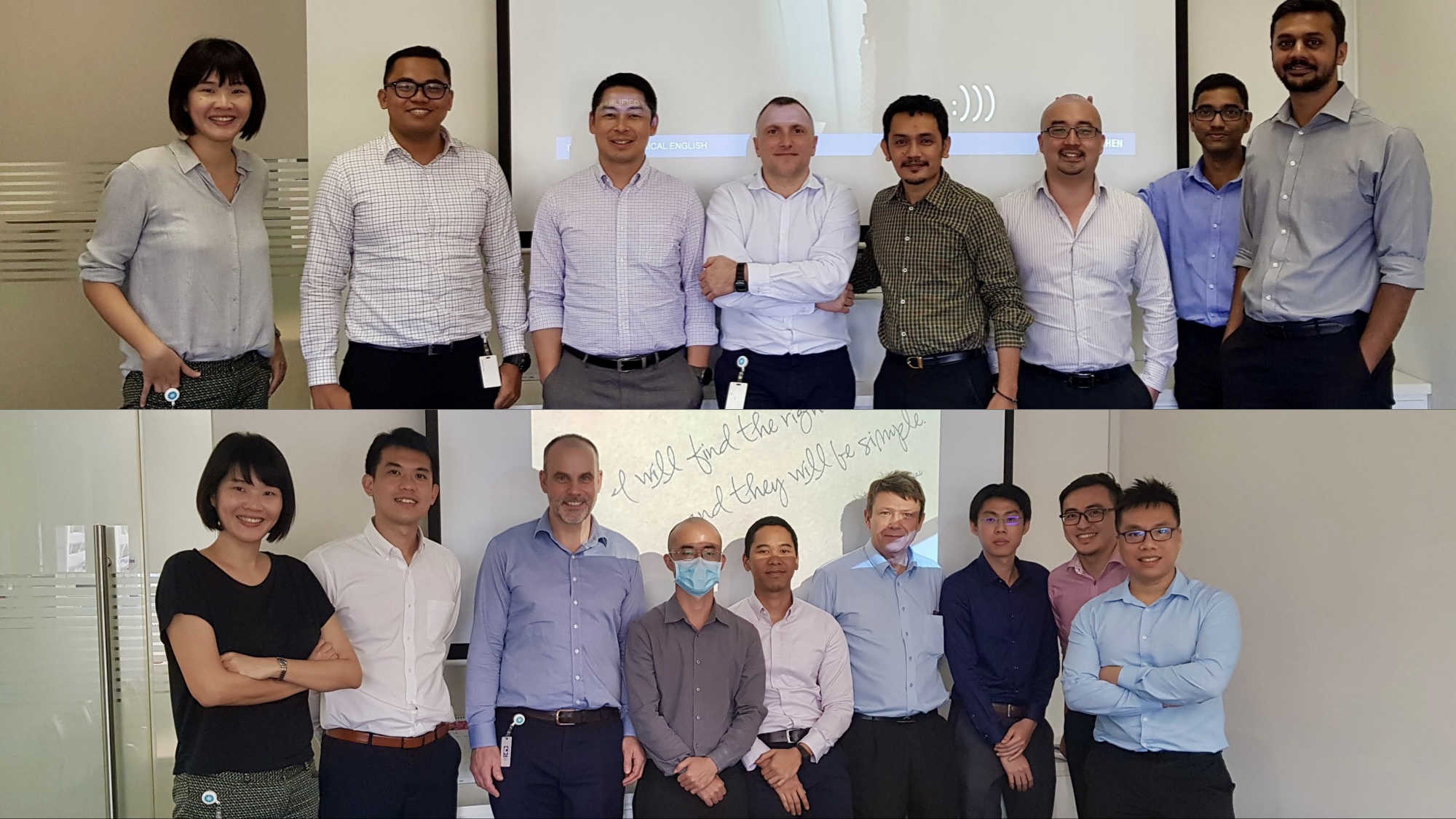
Over 20 personnel from MDMS participated in this transformative programme, which was designed to significantly improve their technical writing standard and enhance overall clarity in documentation for end-users.
How STE Improves Safety and Compliance
The offshore drilling industry operates with complex machinery and high-risk procedures. Ambiguity in technical documentation can lead to severe consequences. STE directly tackles these challenges by:
- Reducing Ambiguity: STE’s controlled vocabulary and stringent writing rules eliminate phrases that can have multiple interpretations. This ensures that critical instructions, whether in maintenance procedures or safety guidelines, are understood uniformly by every individual, regardless of their native language or technical background, thereby minimising human error.
- Improving Clarity for Critical Procedures: By enforcing concise sentences, active voice, and a single instruction per sentence, STE makes complex procedural steps easy to follow. In high-pressure situations on a rig, such clear, unambiguous steps are vital for correct and safe execution.
- Ensuring Consistency: STE promotes the consistent use of terminology for equipment, processes, and actions across all documentation. This reduces confusion, streamlines training, and makes it simpler for personnel to find and apply correct information, which is also crucial for regulatory compliance.
- Facilitating Compliance: Many industry standards and regulations implicitly or explicitly require clear, unambiguous documentation. Adhering to STE allows companies to more easily demonstrate compliance, reducing the risk of non-conformance and associated penalties.
- Streamlining Audits and Investigations: In the event of an incident, clear and consistently written documentation is essential for accurate investigations. STE-compliant documents make it easier to trace actions, understand procedures, and identify root causes, supporting both compliance efforts and continuous improvement.
- Enhancing Equipment Service Descriptions (CMMS): STE principles directly support the creation of precise and consistent equipment service descriptions for Computerised Maintenance Management Systems (CMMS). As per Maersk Drilling’s guidelines (e.g., Process Instructions), these descriptions must be accurate, consistent, and limited to 40 characters, structured by elements such as Noun, Type, Function, Main Equipment/System, and Physical Location. STE’s emphasis on controlled vocabulary, direct language, and conciseness significantly aids in:
- Achieving Brevity and Precision: STE’s rules promote succinct phrasing, helping adhere to character limits while maintaining clarity.
- Standardising Terminology: By using approved words consistently for nouns, types, and functions, STE ensures descriptions are uniform, improving searchability and avoiding duplicates in the CMMS.
- Eliminating Ambiguity: Clear, unambiguous language guarantees that each component of the description is understood precisely, which is critical for accurate equipment identification and effective maintenance planning.
Relevance Across Job Roles
The STE standard proved highly relevant for various specialists within MDMS, directly impacting their daily tasks:
- Marine Superintendents: Gained clarity in documentation related to vessel stability, mooring operations, and navigational procedures, reducing the risk of errors in critical marine operations.
- Technical Coordinators: Benefitted from unambiguous documentation for planning and overseeing maintenance, ensuring correct parts procurement and procedure execution, thus optimising uptime and reducing costly rework.
- Equipment Support Coordinators: Found STE invaluable for understanding equipment specifications, troubleshooting guides, and spare parts information, leading to more efficient equipment sourcing and improved support for the rigs. This also directly applies to creating and interpreting precise CMMS equipment service descriptions.
- Senior Superintendents: As leaders of operational teams, STE provided the linguistic consistency needed to ensure their crews understood and followed procedures perfectly, fostering a culture of safety and precision.
- Technical Inspectors: For inspection protocols and reporting, STE ensured that observations and requirements were recorded with absolute clarity, leaving no room for misinterpretation during audits or follow-up actions.
Key Inspection Standards Enhanced by STE
Beyond general procedures, Shufrans TechDocs’ STE training also covered specific inspection methodologies crucial for maintaining offshore rig integrity, as exemplified in Maersk Drilling’s Valve Overhaul documentation. Clarity in these areas directly impacts safety and compliance:
- API (American Petroleum Institute) Requirements/Reporting: In the context of critical equipment like well control components, adherence to API standards is paramount. STE ensures that all well control equipment failures are reported to the OEM precisely and accurately, as mandated by API guidelines. This systematic reporting fosters industry-wide learning and continuous safety improvements.
- LPI (Liquid Penetrant Inspection): This Non-Destructive Testing (NDT) method is used to identify surface-breaking flaws such as cracks or porosity in non-porous materials. During valve overhauls, STE ensures the step-by-step instructions for performing LPI (e.g., on valve components after cleaning) are crystal clear, guaranteeing accurate detection of defects that could compromise safety.
- MPI (Magnetic Particle Inspection): Another vital NDT technique, MPI detects surface and near-surface flaws in ferromagnetic materials. For steel valve components, STE ensures that instructions for conducting MPI are unambiguous, allowing inspectors to precisely identify hidden defects. The clear documentation of these procedures is critical for preventing in-service failures of high-pressure components.
Improved Document Types
Shufrans TechDocs specifically focused on enhancing the following crucial document types for offshore rigs:
- Standard Operational Procedures (SOPs) / Standard Job Procedures (SJPs): This included critical well control procedures, paramount for managing well pressure and preventing blowouts, where absolute clarity is non-negotiable for safety.
- Well Control Equipment PM (Preventative Maintenance) documents: Ensuring that maintenance on vital well control equipment is performed correctly and consistently, which directly impacts equipment reliability and overall safety.
- General Maintenance Instructions: Improving the clarity of routine and complex repair procedures for various rig equipment, making operations more efficient and less prone to error.
The support programme included three intensive on-site STE workshops and half a year of dedicated on-site technical writing assistance, demonstrating Shufrans TechDocs’ commitment to long-term client success. By implementing STE, MDMS has significantly enhanced its technical communication, contributing to a safer, more efficient, and more compliant operational environment.
Ready to transform your technical documentation for enhanced safety and compliance? Contact Shufrans TechDocs today to learn how our specialised STE training and support can benefit your organisation.
🗓️ View our training calendar.


