safety Archives | Shufrans TechDocs Home // safety Archives | Shufrans TechDocs

The Language of the Digital Thread: Clarity is Your Most Valuable Asset

The Language of the Digital Thread: Clarity is Your Most Valuable Asset

In the complex landscape of modern engineering and manufacturing, the concept of a digital thread is no longer a futuristic vision—it’s a fundamental requirement. From initial design to in-service maintenance, the digital thread connects vast amounts of data, enabling a seamless flow of information that drives efficiency, safety, and innovation. But what happens when this critical thread is woven with ambiguous, inconsistent language?

The answer is simple: its integrity is compromised.

While we invest heavily in cutting-edge technology—from machine learning to generative AI—we often overlook the most basic and powerful component of our data ecosystem: language. The quality of your data depends on its source. If that source is human-generated text, full of synonyms, idioms, and complex sentence structures, your advanced systems are built on an unreliable foundation. This is the “garbage in, garbage out” problem, and it directly undermines data integrity.

This is where a controlled language, specifically Simplified Technical English (STE), becomes your most valuable asset.

Beyond Documentation: STE as a Data Enabler

Many see STE as a tool for technical writing—a way to make manuals clearer and reduce translation costs. While this is true, it misses the far more profound strategic value. For Data Architects, Knowledge Engineers, and Information Architects, STE is a data standard.

  • Fuelling the Knowledge Graph: A knowledge graph maps relationships between entities. It thrives on clear, unambiguous data. By enforcing a single, controlled vocabulary, STE ensures that concepts are described consistently across all documents. For example, “install a pump” will never be confused with “fit a pump.” This linguistic consistency provides a clean, structured source from which a knowledge graph can accurately infer relationships, leading to a richer, more reliable network of knowledge.
  • Strengthening the Digital Thread: The digital thread’s power lies in its continuity. A consistent description of a component in a design specification, for example, must carry through to the assembly instructions, maintenance procedures, and even a fault report. STE acts as the linguistic backbone of this thread, ensuring that every piece of information remains clear and connected. This continuity is vital for predictive maintenance, supply chain optimisation, and efficient lifecycle management.
  • Accelerating Machine Learning & NLP: Unstructured data is the biggest bottleneck for machine learning and natural language processing (NLP). The time and effort spent cleaning, normalising, and disambiguating text data is a significant cost. STE bypasses this problem entirely. By providing a pre-cleaned, logically structured dataset, it dramatically reduces the overhead for training AI models, allowing organisations to derive actionable insights faster and with greater confidence.

A Strategic Advantage

The strategic adoption of STE is not just an incremental improvement; it’s a step-change in how an organisation manages its knowledge. A commitment to data integrity from the linguistic layer upwards offers a significant competitive advantage.

It’s about a holistic approach—from the engineers who create the initial specifications to the product managers who oversee the lifecycle, and the compliance officers who need to ensure every step is traceable. STE is the common language that binds these roles together, ensuring that clarity, safety, and efficiency are built into the very fabric of the data itself.

The synergy of STE with modern data systems is undeniable. It’s the simple, consistent effort that delivers exponential returns, transforming small improvements into a powerful, enduring competitive advantage.

To learn more and begin your journey towards a more robust digital future, we invite you to explore the international standard and its practical application at www.asd-ste100.net.

Contact us today to explore how a partnership with Shufrans TechDocs can elevate your team to the next level of STE mastery.

🗓️ View our training calendar.

www.shufrans.com


Weatherford: Optimising Global Communication in Oilfield Services with STE

Weatherford: Optimising Global Communication in Oilfield Services with STE

Driving Unambiguous Communication for Enhanced Safety and Efficiency in Global Onshore Operations

Client: Weatherford (Global Operations)

Industry: Onshore Drilling & Energy Services

Location: Global (Online Training across Europe, US & Canada, APAC timezones)

Challenge: Ensuring consistent, unambiguous, and safe technical communication across diverse global teams and critical documentation, particularly concerning complex onshore drilling operations and other highly sensitive well completion activities.

Solution: Multiple batches of online ASD-STE100 training programmes delivered by Shufrans TechDocs, tailored for professionals across various timezones.

Results: Improved clarity and precision in technical documentation, enhanced safety protocols for critical operations, streamlined global communication, and professional development for a diverse range of technical roles.


The Challenge: Precision in High-Stakes Global Operations

Weatherford, a prominent global energy services company, operates at the forefront of onshore drilling and well completion. In such a high-stakes environment, which often involves highly sensitive downhole operations, the clarity and accuracy of technical documentation are not merely regulatory requirements but fundamental pillars of safety, operational efficiency, and environmental responsibility.

Maintaining a unified standard of communication across a globally dispersed workforce, with teams operating in different time zones (Europe, US & Canada, APAC), presents a significant challenge. Ambiguity in crucial documents, especially those related to complex drilling procedures or sensitive well completion activities, could lead to:

  • Serious safety incidents or operational errors.
  • Increased downtime and costly operational inefficiencies.
  • Misinterpretations during complex well interventions.
  • Challenges in compliance with diverse international regulations.
  • Difficulties in efficient knowledge transfer and training.

Weatherford sought a scalable solution that could standardise their technical language, ensuring every instruction was understood unambiguously, regardless of the reader’s location or native language, with particular emphasis on the critical safety aspects of their operations.

The Solution: Targeted Online STE Training for a Global Workforce

Shufrans TechDocs partnered with Weatherford to implement a comprehensive ASD-STE100 training programme delivered entirely online, accommodating their global presence and various time zones. This approach ensured accessibility and consistency across their international teams. The training was delivered in multiple batches for participants from Europe, the US & Canada, and the APAC regions.

While a significant portion of the participants were engineers, the training was highly beneficial for several other key roles crucial to Weatherford’s operations:

  • Technical Writers/Documentation Specialists: Direct authors of manuals and procedures, ensuring consistency and clarity from the source.
  • Field Service Technicians/Operators: Directly implement procedures; clear instructions are paramount for safe and effective high-risk operations.
  • Safety Officers/Compliance Specialists: Ensure adherence to safety protocols and regulatory standards, benefiting from unambiguous documentation.
  • Training & Development Personnel: Responsible for creating clear and effective training materials for new hires and ongoing professional development.
  • Supply Chain & Logistics Personnel: Who interpret specifications for equipment and materials, where precision avoids errors in ordering and handling.


The training focused on real-world application, working on the types of documents most critical to Weatherford’s operations:

  • Drilling Procedures & Protocols: For various onshore drilling techniques, ensuring step-by-step clarity.
  • Safety Procedures & High-Risk Operation Manuals: Covering all critical safety aspects, including the precise handling of specialised and sensitive materials used in well completion.
  • Tool Operation & Maintenance Manuals: For specialised drilling tools and equipment.
  • Technical Specifications & Data Sheets: Ensuring precise definitions for components and performance characteristics.
  • Emergency Response Procedures: Where immediate and clear understanding can mitigate severe risks.
  • Field Service Reports: For consistent and accurate reporting of observations and actions from the field.

The Results: Elevated Clarity, Enhanced Safety, and Optimised Global Operations

By embracing ASD-STE100 online training with Shufrans TechDocs, Weatherford achieved significant improvements across its technical communication landscape:

  • Enhanced Safety & Reduced Risk: The primary benefit, especially for sensitive and high-risk operations, was a drastic reduction in ambiguity, leading to clearer, safer operational procedures and a lower risk of misinterpretation.
  • Improved Operational Efficiency: Clearer procedures streamlined onshore drilling operations, reducing downtime and costly errors.
  • Strengthened Global Consistency: A unified language standard ensured that documentation was consistently understood by diverse teams worldwide, regardless of geographical location or native language.
  • Optimised Knowledge Transfer: Training materials became more effective, accelerating the onboarding of new personnel and improving ongoing professional development for all technical roles.
  • Facilitated Compliance: Adherence to STE principles supported compliance with stringent industry regulations and safety standards globally.

Weatherford’s investment in STE training has transformed their technical documentation into a strategic asset, reinforcing their commitment to safety, efficiency, and operational excellence across their global onshore drilling and energy services.

If your organisation faces similar challenges in achieving uncompromising clarity and operational readiness through precise communication, discover how Shufrans TechDocs can help. Learn more about our ASD-STE100 training and consulting services:

🗓️ View our training calendar.

www.shufrans.com


The Strategic Clarity of Simplified Technical English: Why Less Grammar Means More Precision

The Strategic Clarity of Simplified Technical English: Why Less Grammar Means More Precision

In the complex world of technical documentation, the pursuit of clarity is paramount. Yet, many still perceive “simplified” language as a reduction in sophistication. However, for those familiar with ASD-STE100 Simplified Technical English (STE), its precisely defined grammar—particularly the constrained use of verb tenses—is not a limitation, but a powerful feature designed to eliminate ambiguity and minimise errors.

At the heart of STE’s effectiveness is its disciplined approach to verb tenses. Unlike the vast array of options in general English, STE limits writers to a specific, unambiguous set: Present Tense, Past Tense, Infinitive, Future Tense, Past Participle (used as an adjective), and the Imperative. This intentional restriction drives immense benefits across an organisation, impacting everything from operational efficiency to strategic communication.

Precision for the Front Lines: How Limited Tenses Empower Technicians and Engineers

For the individuals directly interacting with products, machinery, and complex systems—your technicians and engineers—the clarity afforded by STE’s simplified tenses is transformative. When every instruction must be perfectly understood, ambiguity can lead to costly errors, safety hazards, and downtime.

  • Reduces Ambiguity: Complex or rarely used tenses in general English can lead to different interpretations, especially for non-native English speakers. By using simpler, direct tenses, STE ensures that instructions in maintenance manuals, operational procedures, and troubleshooting guides are understood universally and unequivocally. “PRESS THE START BUTTON” leaves no room for doubt about the action or its timing.
  • Faster Comprehension: Less cognitive load means quicker understanding. Engineers and technicians can rapidly grasp instructions without needing to parse intricate grammatical structures, leading to more efficient task execution.
  • Minimises Operational Mistakes: Clear, unambiguous commands directly translate to fewer errors in the field. This is critical in safety-sensitive industries, where a single misinterpretation can have severe consequences. Simplified tenses mean the intent of the author is preserved, every time.
  • Improved Efficiency: Time spent deciphering poorly written documents is time wasted. STE’s simplified tenses enable a smooth workflow, allowing technical staff to focus on their core tasks rather than struggling with linguistic complexities.

Elevating Insights: STE in White Papers and Technical Reports 

There’s a common misconception that simplification equates to “dumbing down” content, particularly in high-level documents like white papers and technical reports where managers seek sophistication. However, the true sophistication in such documents lies in precision, conciseness, and impactful clarity, not linguistic embellishment. STE’s principles, including its tense limitations, enhance these qualities.

  • Enhanced Precision: By advocating for direct statements and avoiding vague phrasing, STE encourages writers to express technical concepts with utmost accuracy. This avoids misinterpretation of data, findings, or recommendations. A report written in STE is lean, impactful, and analytically rigorous, free of unnecessary complexity.
  • Improved Readability for Decision-Makers: Managers and executives are busy. They need to quickly extract key insights and make informed decisions. Reports that are direct, factual, and easy to consume—thanks to simplified tenses and consistent vocabulary—facilitate faster understanding, leading to more timely and effective strategic choices.
  • Stronger Argumentation: When ideas are presented with unambiguous language, arguments become more compelling and defensible. The focus shifts from deciphering the writing style to understanding the presented facts and analysis.
  • Increased Credibility: Documents free from grammatical slips, awkward phrasing, or linguistic ambiguities inherently appear more authoritative and trustworthy. This bolsters the credibility of the presented technical concepts and the expertise of the authors.

Broadening Reach: The Usefulness of STE in Marketing and Corporate Communication

While STE is a controlled language for technical documentation, its underlying principles of clarity, conciseness, and consistent messaging are invaluable in broader communication contexts for technical industries and businesses. Applying STE’s ethos to marketing and corporate communications can significantly enhance their effectiveness.

  • Marketing & Product Communication: For technical products, clearly articulating features and benefits to a diverse audience (both technical and non-technical) is crucial. Simplified language in marketing materials, product descriptions, and user guides ensures that the value proposition is immediately understood, reducing customer support queries and increasing user adoption.
  • Consistent Brand Voice: Adopting a “simplified English” approach, informed by STE principles, ensures a consistent and approachable voice across all internal and external communications. This is particularly important for global companies where messaging can get diluted or misinterpreted across different regions and languages.
  • Enhanced Internal Communication: From HR policies to inter-departmental memos and internal training materials, applying principles of clarity and conciseness ensures that all employees—regardless of their primary language or technical background—understand critical information, fostering a more efficient and cohesive workforce.

The Verdict: Strategic Simplicity for a Complex World

The strength of ASD-STE100 Simplified Technical English lies not in dumbing down complex ideas, but in stripping away linguistic barriers that hinder comprehension and introduce errors. Its disciplined approach to verb tenses is a prime example of how structured simplification leads to profound gains in clarity, accuracy, and efficiency across an entire organisation. From the factory floor to the boardroom, and across your marketing efforts, leveraging STE is a strategic investment that pays dividends in reduced costs, improved safety, and enhanced global reach.

Ready to unlock the full potential of your organisation’s knowledge assets? Explore Shufrans Techdocs worldwide online instructor-led training sessions. We equip your professionals with the practical skills to implement STE, enabling them to create precise, compliant, and highly effective documentation. Plus, you’ll benefit from 120 days of post-training support to ensure lasting success.


Ready to explore how human expertise and strategic frameworks like STE can elevate your technical communication? Connect with Shufrans TechDocs today.

🗓️ View our training calendar.
www.shufrans.com

Celebrating a milestone in Simplified Technical English: ASD-STE100 Issue 9

Celebrating a milestone in Simplified Technical English: ASD-STE100 Issue 9

The release of ASD-STE100 Issue 9 is a significant advancement in Simplified Technical English (STE). This latest issue reinforces STE’s position as the leading controlled language for creating clear, concise, and consistent technical documentation across diverse industries.

The Importance of Simplified Technical English

In today’s interconnected world, technical documentation must be readily understood by a global audience, regardless of language proficiency. STE addresses this challenge by providing a structured set of writing rules and a controlled vocabulary that minimizes ambiguity and maximizes comprehension. This results in improved safety, increased efficiency, and reduced translation costs. STE is widely adopted in sectors such as aerospace, defense, manufacturing, energy, and increasingly, in other technical fields.

Key Improvements in Issue 9

ASD-STE100 Issue 9, developed and maintained by the ASD Simplified Technical English Management Group (STEMG), builds upon previous versions with key improvements designed to meet the evolving needs of the technical communication landscape. A primary focus of this release has been the comprehensive review and modernization of legacy terminology. Terms established in the 1980s during the early development of AECMA Simplified English have been meticulously examined and updated, ensuring alignment with contemporary usage and international standards, including ISO 1087-1:2019. This terminological refinement included the reclassification of technical nouns and verbs, enhancing precision and consistency within specific subject domains.

Refining the STE Standard 

While Issue 9 does not introduce entirely new rules, it features important revisions to the wording of 31 of the existing 53 rules. These changes reflect current best practices in technical communication and ensure clarity and ease of application. Furthermore, 555 entries in the STE dictionary, comprising words, definitions, and illustrative examples, have been updated to reflect the latest linguistic and technical conventions.

A Collaborative and Rigorous Development Process

The development of ASD-STE100 Issue 9 exemplifies the collaborative nature of the STE community. STEMG worked closely with academic experts and STE users worldwide throughout the process. A two-month global feedback period allowed for extensive review and input from practitioners, ensuring that the final release is robust and validated by real-world application.

McLaren Receives First Official Copy

In a demonstration of STE’s broad applicability, the first official copy of ASD-STE100 Issue 9 was presented to McLaren, the 2024 Formula 1 Constructors’ World Champions. As a pinnacle of high-performance engineering, McLaren understands the critical importance of precise and unambiguous technical communication. This presentation highlights STE’s value in complex, technically demanding environments beyond the traditional aerospace and defense sectors.

STE is widely adopted in sectors such as aerospace, defense, manufacturing, and energy.

2018 ASD-STE100 Simplified Technical English training workshops in Singapore

2018 ASD-STE100 Simplified Technical English training workshops in Singapore

Write effective user manuals & instructions with Simplified Technical English

18 – 19 April 2018

13 – 14 August 2018

3 – 4 December 2018

Location: Singapore

Length of training: 2 days

Deadline: Registration ends two weeks before the commencement of every workshop

Summary

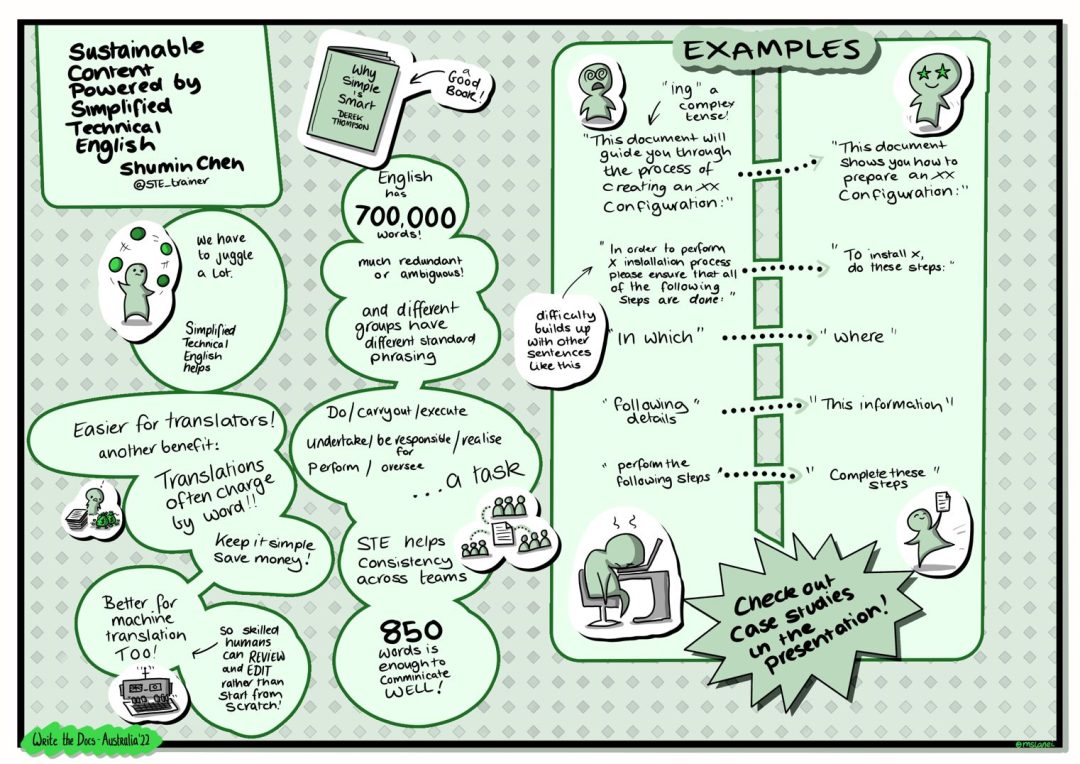
ASD-STE100 Simplified Technical English (STE) is a controlled language that is used to write technical manuals in such a way that they can be more easily understood by an international audience. STE helps to make translations cheaper and more accurate.

This two-day professional training course is intended for technical authors to familiarise themselves with the ASD-STE100 controlled language specification through a series of classroom- and workshop-type instruction and interaction.

STE improves quality, both in the aviation and defence industries, where it is often mandatory for safety & security reasons, and in any other technical industries. 

We use the latest version of the ASD-STE100 specification: Issue 7, January 2017.

Course outline*

  • Practical overview of ASD-STE100 Simplified Technical English
  • How STE helps both native & non-native speakers of English
  • Writing rules and how to apply them in practice
  • How to use the general vocabulary
  • How to deal with industry-specific terminology
  • How to use STE for various documentation types
  • How to implement STE with minimal disruption to on-going production and existing documentation
  • Hands-on STE editing and review

* Shufrans also offers customised ASD-STE100 training solutions tailored to meet your specific requirements. These courses are normally provided at the customer’s premises.

“The introduction to the ASD-STE100 gave me a nice and clear overview of what to expect in the two training days that followed. Consistent language and spelling in STE are the rules I like best. The list of approved and unapproved verbs was a nice surprise for me. Shumin gave a highly practical STE training using relevant and pragmatic examples that relate closely to our field of work.” Maikel Kornuit, Technical Author, Triview.

This training workshop is organised in collaboration with Asia Technical Services Pte Ltd, our preferred training partner in the ASEAN region.

Who should attend?

  • Compliance managers
  • CIO, COO, CTO
  • Customer support managers
  • Documentation managers
  • Editors
  • Engineering managers
  • Engineers and SMEs who create documentation
  • ILS managers
  • Maintenance managers
  • Operation managers
  • Product managers
  • Project managers
  • Quality managers
  • Technical writers
  • Translation managers
  • Translators

What will I learn?

Ms. Shumin Chen will teach participants how to correctly and effectively use STE in practice. She will also address some of the mistakes commonly found in technical writing and the frequently incorrect use of common STE writing rules.

Our interactive training, exercises and workshop, will teach participants to standardise content to:

  • Author more efficiently
  • Communicate more effectively with a global audience
  • Improve operational safety
  • Reduce AOG / downtime
  • Facilitate modular writing and reuse
  • Facilitate teamwork
  • Facilitate translation
  • Maximise consistency
  • Optimise product lifecycle support
  • Reduce the cost of creating and maintaining technical publications

Trainer’s qualifications

Ms. Shumin Chen, principal trainer & consultant at Shufrans TechDocs received her professional on-the-job training in the field of STE under the tutelage of Dr Frans Wijma, a linguist and documentation expert. Together as an experienced global team, they provided their combined knowledge and dedication to benefit customers worldwide. To date, they have provided training and consultancy services to over 180 companies. Shufrans TechDocs is the only company with such vast experience in providing certified STE training.

Shumin has supported various companies with their STE and other documentation needs, based on standards where possible. Although STE was developed for the aerospace industry, more specifically for aircraft maintenance documentation, Shumin found that it made a lot of sense to apply the same principles to other industries and types of documents as well. Few -if any- changes to the specification are necessary to adapt STE to industries ranging from machinery to IT, automotive to medical equipment.


Case Study: Achieving Clarity and Consistency in Technical Documentation for Schindler Elevators

Case Study: Achieving Clarity and Consistency in Technical Documentation for Schindler Elevators

A Strategic Approach to Unambiguous Communication and Operational Excellence

Industry: Urban Mobility (Elevators, Escalators, Moving Walks)

Client: Schindler Group

Training Locations: Ebikon, Switzerland (on-site) & Shanghai, China (online)

Service Provided: Simplified Technical English (STE) Training & Documentation Rewriting

Introduction

Clear, unambiguous, and consistent technical documentation is paramount in the complex and safety-critical world of urban mobility. This case study highlights a successful engagement with Schindler Group, a global leader in elevators, escalators, and related services, focused on achieving their technical communication through comprehensive Simplified Technical English (STE) implementation.

Client Background

Schindler Group, headquartered in Ebikon, Switzerland, is renowned for its innovative and sustainable mobility solutions. With a vast international presence and a diverse workforce, ensuring that technical manuals, maintenance procedures, and product documentation are universally understood is a strategic imperative, particularly for safety and operational efficiency.

The Challenge

Prior to the engagement, Schindler, like many multinational corporations, faced the inherent challenges of technical documentation:

  • Ambiguity: Standard English, with its rich vocabulary and complex grammatical structures, can lead to misinterpretations, especially among non-native English speakers.
  • Inconsistency: Multiple authors and external vendors, potentially across different regions, could result in varied writing styles and terminology, hindering clarity and increasing translation costs.
  • Translation Efficiency: Complex source texts often led to higher translation costs and potential errors in localised versions, impacting global operations.
  • Safety Criticality: In the elevator and escalator industry, any misunderstanding in technical instructions can have severe safety implications.

Schindler recognised the need for a standardised approach to technical English to mitigate these risks and improve the overall quality and efficiency of their documentation.

Phase 2: Document Rewriting and Refinement Following the initial training, a direct engagement commenced with key personnel to apply STE principles to existing documentation. This involved close collaboration with:

  • Principal Corporate Technical Author: To ensure the practical application of STE rules and to establish internal champions for the standard.
  • Head of Corporate Technical Documentation: To oversee the strategic implementation and integration of STE into Schindler’s documentation workflows.

This hands-on rewriting process ensured that the theoretical knowledge gained during training was immediately put into practice, demonstrating tangible improvements in clarity and consistency.

Phase 3: Global Expansion of Training Recognising the success and the need for global consistency, the training was extended to other critical regions. A dedicated online training session was conducted for:

  • Corporate Technical Documentation colleagues in Shanghai, China: This expanded the reach of STE adoption, ensuring that documentation produced in a key international hub also conformed to the new global standard.

www.shufrans.com

Key Stakeholders and Organisational Impact

The success of this initiative was a testament to the collaborative effort across various departments and external partners, demonstrating how STE benefits different parts of the organisation:

  • Leadership and Management: Gained strategic alignment and understanding of STE’s business value in achieving safety, efficiency, and global reach.
  • Engineering and Product Development Teams (including Subject Matter Experts): Benefited from improved clarity in technical specifications, design documents, and maintenance requirements, ensuring precise input and reduced ambiguity from the source.
  • Technical Documentation Teams (in-house and external partners): Acquired practical skills in applying STE rules, leading to more consistent, unambiguous, and efficient content creation for manuals, procedures, and other technical assets.
  • Terminology and Language Specialists: Enhanced their ability to manage and control technical vocabulary, ensuring consistency across all documentation and facilitating improved translation quality.
  • Translation Teams: Experienced streamlined translation processes due to the reduced ambiguity and increased consistency of STE-compliant source texts.

Results and Impact

The implementation of STE at Schindler Group yielded significant benefits:

  • Achieved Clarity and Readability: Documents became easier to understand for a global audience, including non-native English speakers, reducing the risk of misinterpretation.
  • Improved Consistency: A unified writing style and controlled vocabulary ensured consistency across all technical documentation, regardless of the author or origin.
  • Increased Efficiency: Streamlined writing processes and clearer source texts led to more efficient documentation creation and review cycles.
  • Reduced Translation Costs: The unambiguous nature of STE significantly lowered translation costs and improved the quality of translated materials.
  • Strengthened Safety: By eliminating ambiguity in critical instructions, the overall safety of operations and maintenance procedures was achieved.


Testimonials

This impact was echoed by participants:

Roland Kiser, Terminology Coordinator at Schindler, noted: “This course shares a good overview of structure, purpose, history, and contextual information about STE. The limited vocabulary and restricted list of words, short sentence constructions, active voice, and imperative verb usage are valuable takeaways messages to act upon in Simplified English. The examples used in this training are quite realistic and it is very likely that I will recommend this STE training to someone else.”

Cécile Roos, Corporate Translation Manager, added: “Entertaining, short, and clear presentation of the STE specification and rule sets. Overall, a good mix of rules, examples, and exercises. The course was very much on point and encouraged me to write in a more structured way. This will help the readers to properly understand my message even in business writing. Shumin had a very calm way of leading all of us through the training. Her style of teaching is rather empathetic and she keeps the group working effectively with timely breaks in between. Thanks Shumin for an enjoyable course with the perfect score of 10/10 in terms of trainer evaluation.”

Marco Valtangoli, Senior Corporate Technical Author at Schindler, also provided valuable feedback: “A very important and highlighted point during the introduction is that STE is an English language specification that is not only applicable for companies in the aerospace & defence industry. Rule 5.2 where you only have one instruction per sentence is important to us. Not being able to use the verb “CHECK’ that is only used as an approved STE noun poses a challenge to me all the time. I really appreciate the STE writing rules that give us the possibility to improve the consistency of our documents. The workshop exercises were of high interest value and drive home the point that it is important to learn by doing. Although a time-consuming process, the writing workshop impressed on me that the need to prioritise the analysis of our internal documents. Shumin is a competent trainer who does not only focus on explaining and enforcing the “writing rules”, but is always available to understand and empathise with the training needs of the class.”

Conclusion

The comprehensive STE training and document rewriting initiative with Schindler Group stands as a strong example of how strategic investment in technical communication can drive operational excellence, improve safety, and foster global consistency within a leading industrial enterprise. By empowering their diverse teams with the tools and knowledge of Simplified Technical English, Schindler reinforced its commitment to delivering clear, reliable, and high-quality documentation worldwide.

If your organisation faces similar challenges in achieving uncompromising clarity and operational readiness through precise communication, discover how Shufrans TechDocs can help. Learn more about our ASD-STE100 training and consulting services:

🗓️ View our training calendar.


Your Tactical Advantage | Emirates Defence Industries Company

Your Tactical Advantage | Emirates Defence Industries Company

STE as part of your global content strategy

Simplified Technical English as part of your content strategy

EDGE is creating opportunities in autonomous capabilities, directed energy, cyber-physical systems, advanced propulsion systems, robotics and smart materials, with artificial intelligence embedded across its products and services. Transforming how we live, and ensuring a more secure future, is what we do. Our mission is to bring innovative technologies and services to market with greater speed and efficiency.

ASD-STE100 Simplified Technical English (STE) is a controlled language that is used to write technical manuals in such a way that they can be more easily understood by an international audience. To put it across plainly, STE is a form of controlled language that is guided by 53 technical writing rules that were put together by a committee of linguists, engineers, and manufacturers who established over the years that these writing rules made sense and allowed them to re-write any of their existing documentation based on these rules, making their documentation easier to understand, while maintaining accuracy, safety, and validity.

Develop, deploy, and deliver documentation with STE

STE Quick facts

Background: With the widespread dissemination of user documentation published in various delivery formats across several language translations, the relevance of global information management has become greater in an attempt to stem terminology inconsistencies, mistranslations, and the disproportionate escalation of costs associated with the maintenance, reuse, and consumption of technical content.

Year: In use since 1986

Current Version: Issue 8, May 2021.

Technical writing rules: 53

Dictionary word entries: approx. 2400 terms.

The STE specification also includes a core vocabulary of around 930 approved words and 1500 non-approved words that let technical authors write just about everything that they need for for procedural and descriptive texts. Therefore, the use of approved words, compliance with the standard, and a language quality checker tool to complement your content strategy efforts is akin to pooling your most valuable resources where people, internal processes, and innovative technologies become more aligned.


The role of technical authors and technical documentation managers

Technical writers are the go-between for subject-matter-experts (SMEs), engineers, designers and the end-users of documentation. Consequently, the responsibility of creating effective documentation falls on technical authors who will then endeavour to send out a clear, unambiguous, and user-friendly message about their products and line of services.

At the level of global information management, technical writing professionals should consider short-term tactics and longer-term strategies to overcome the following:

  • An ever-increasing volume of words to write and translate
  • Snowballing translation and documentation management costs
  • Overlapping information across different versions of similar document types
  • Low comprehension levels for the English language jargon.

STE in practice

If this is your first time hearing about STE, the example that follows will hopefully shed more light on the principles and best practices that govern good STE writing. Here is an original piece of text presented in standard English writing:

THE SYNTHETIC LUBRICATING OIL USED IN THIS ENGINE CONTAINS ADDITIVES WHICH, IF ALLOWED TO COME INTO CONTACT WITH THE SKIN FOR PROLONGED PERIODS, CAN BE TOXIC THROUGH ABSORPTION.

And here it is again in STE:

THE OIL IS POISONOUS. DO NOT GET THE ENGINE OIL ON YOUR SKIN.  IT CAN GO THROUGH YOUR SKIN AND INTO YOUR BODY.

Making the comparison between the two types of writing above, you will see that the original writing is rather cumbersome in expression. It is also very likely that the person reading this sentence will have difficulties following the writer’s line of thought because of the longer sentence length and unnecessary information included. In contrast, the text written in STE is much more to the point and simply distils what is pertinent to the person doing this work:

  1. The oil is poisonous.
  2. I must always be careful not to touch oil without protection.

From this example, STE shows us that warnings and cautions must always start with a simple and clear command that is usually substantiated by a reasoning that comes before or after.  A command informs the user about the precautionary measures to take to avoid danger. Presenting information as if it were a general comment in the original writing obscures the importance of the message and is not specific enough.


What customers are saying.. | NIMR Automotive

Thuraya Al Mehrzi, Production Engineer, NIMR Automotive
“Shumin gave a good introduction to Simplified Technical English. Instead of writing long sentences that are difficult to read, I prefer the STE rule of presenting long sentences in a list that makes it much easier to understand the work that is required to be completed. The STE exercises were pretty engaging, and this is particularly so for day 2 of the rewriting workshop that gave the team a lot of insight into our documentation. Trainees also had the opportunity to replace many unapproved standard English words with STE ones that helped us better appreciate the application of STE rules in a real-world context. This is a training that I have rated 10/10 for.”

Nour Bazuhair, Engineer Trainee, NIMR Automotive “The introduction to Simplified Technical English (STE) was simple to follow and understand. Rule 1.4 to use only the approved forms of verbs and adjectives from the STE dictionary is something that I appreciate very much. Applying the rules faithfully was a challenging albeit enjoyable process. There is a lot of good writing rules to learn here. I’ve found the exercises to be very useful for learning reinforcement, and they have helped me to apply STE rules in a more efficient manner and I’ve gained a much better understanding of STE as a result. Shumin’s training methodology is easy to follow, and she offers us great technical writing advice and has simplified the process for us. Every aspect of this training is a 10/10 for me.”

Abdel Alazeem Arafah, Service Coordinator, NIMR Automotive “This was a great course with very useful and practical knowledge for my work. Simplified Technical English (STE) encourages users to always refer to the approved list of verbs and nouns in the STE dictionary before writing their technical documentation. The active voice is also a very useful and powerful tool in sending loud and clear instructions to our users. Starting a warning or caution with a simple and clear command is also very crucial in my line of work. Shumin’s delivery of the training is highly organised, and she has been most patient with our comments, questions, and feedback the whole time.”

An innovative approach to consider for your global documentation landscape

Over the last three decades, STE has emerged as a rather important and universal standard for technical English. Predictably, as a result of language standardisation, STE helps us to achieve a number of benefits. Technical writers become more consistent on a word level. This starts with the simple fact that we are going to use the same word whenever we refer to the same thing, so that means an improved level of consistency and consequently quality improvements.

Where can I learn more about STE?

Shufrans TechDocs regularly hosts online training workshops for technical writers, SMEs, and engineers at different time zones for your convenience. To learn more about our diverse course offerings and workshop customisations that we can do for you and your global technical documentation team, speak to us today!


Turkish Aerospace Industries ensures ASD-STE100 compliance

Turkish Aerospace Industries ensures ASD-STE100 compliance

Turkish Aerospace Industries (TAI/TUSAŞ) is Turkey’s centre of technology in design, development, modernisation, manufacturing, integration and lifecycle support of integrated aerospace systems, including fixed-wing and rotary-wing aircraft, UAVs and satellites.

TAI asked Shufra to assess the level of compliance of its documentation with the ASD-STE100 specification. Based on the findings, Shufra delivered an advanced training course for the technical writers and other people in the ILS department, providing them with new insights to take compliance to the next level. Writers especially liked the workshop that allowed participants to review and rewrite their own document samples under the guidance of the experienced Dr Frans Wijma who is widely regarded as the leading expert in Simplified Technical English, aviation documentation and multilingual documentation.


He gave ASD-STE100 training to over 130 companies worldwide. Customers include Black & Decker, Boeing, Microsoft, Rolls-Royce and Samsung. Said ILS specialist Mr Halil Kan: “TAI hired Frans to work with our experienced team and help them to improve their ASD-STE100 Simplified Technical English skills. Frans helped us to identify areas for improvement both in our own documents and in those supplied by our customers and partners. At the end of the training, we all had learned simple yet effective methods to improve the quality, readability and compliance of our writing. Most importantly, we learned how to scrutinize text for commonly made mistakes and how to balance compliance with optimum readability. We enjoyed working with Frans, who has a pleasant personality and an open mind. I am happy to recommend him to any company that wants to improve its documentation, be it for compliance reasons or to facilitate translation.”

Hear more from our satisfied customers.