
Innovation Archives | Shufrans TechDocs Home // Innovation Archives | Shufrans TechDocs

VMI Group: Standardising Content for Enhanced Operational Excellence in High-Tech Machinery with Simplified Technical English

VMI Group: Standardising Content for Enhanced Operational Excellence in High-Tech Machinery with Simplified Technical English

Transforming Technical Communication and Training for Global Efficiency in Manufacturing

Client: VMI Group (Global Operations)

Industry: High-Tech Machinery (Tyre, Rubber, Can, and Care Industries)

Location: Epe, The Netherlands (On-site Training)

Challenge: Ensuring consistent, unambiguous technical documentation and training materials across diverse global teams and specialised functions within a complex machinery manufacturing environment.

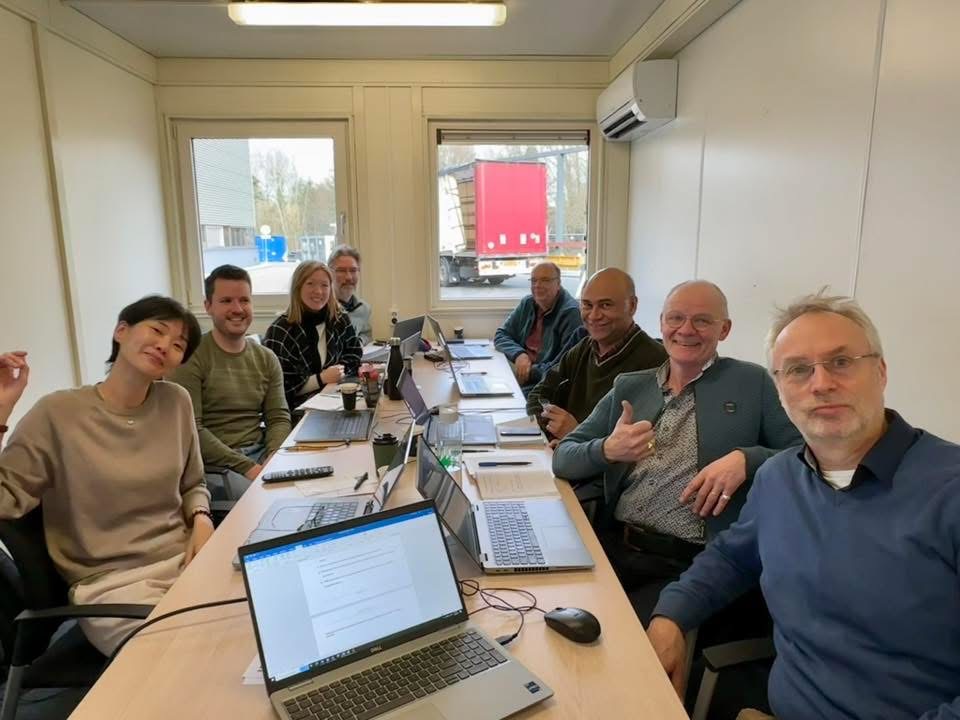
Solution: A focused, three-day ASD-STE100 training and masterclass delivered by Shufrans TechDocs to a mixed group of technical communication and instructional design professionals. The third day was exclusively for masterclass participants who had previously completed an STE course.

Results: Enhanced clarity in documentation, improved efficiency in content creation, and strengthened precision in training delivery, directly impacting product lifecycle support and global communication.


The Challenge: Precision in a World of Complex Machinery

VMI Group stands as a global leader in designing and manufacturing high-tech machinery for demanding industries, including tyre, rubber, can, and care products. Their sophisticated equipment requires technical documentation and training materials of the highest clarity and precision to ensure operational safety, efficient maintenance, and effective knowledge transfer across their worldwide customer base and internal teams.

However, as with many global enterprises dealing with intricate technology, VMI Group faced the challenge of maintaining absolute consistency and unambiguous language across their varied documentation outputs. This complexity was compounded by a diverse team of professionals involved in content creation, including:

  • Instructional Designers & Curriculum Developers: Responsible for creating training materials that must be universally understood by operators and technicians.
  • Technical Writers & Senior Technical Writers: Tasked with authoring detailed manuals, specifications, and service guides for highly specialised machinery.
  • Linguists: Critical for ensuring accuracy in content that would inevitably be translated for international markets.
  • Engineers: Providing essential technical input that needed to be integrated into clear, actionable documentation.

Inconsistencies or ambiguities in any part of this documentation chain could lead to inefficiencies, rework, increased translation costs, and, crucially, potential operational errors in the field.


The Solution: Shufrans TechDocs’ Tailored STE Training & Masterclass

VMI Group partnered with Shufrans TechDocs for a comprehensive, three-day ASD-STE100 training and masterclass. Understanding the mixed bag of roles and diverse work areas (including extrusion processes) involved, Shufrans TechDocs delivered a programme designed to provide both foundational STE principles and advanced application for VMI Group’s specific needs.

The training was structured as follows:

  • Days 1 & 2 (Core STE Training): Covered fundamental STE principles, writing rules, and controlled vocabulary. This section was open to all participants.
  • Day 3 (Masterclass for Advanced Participants): Exclusively for individuals who had previously completed an STE course, this session delved into more complex scenarios, nuanced application, and advanced best practices for implementing STE across varied technical content.

The training emphasised practical application, utilising VMI Group’s own documentation examples where relevant, to ensure immediate and tangible skill transfer. Shufrans TechDocs’ expertise in ASD-STE100 ensured that VMI Group’s teams were equipped with the latest standards and best practices.

The Results: Unifying Communication, Enhancing Operational Excellence

By undertaking the ASD-STE100 training and masterclass with Shufrans TechDocs, VMI Group achieved measurable advancements in its technical communication:

  • Enhanced Documentation Clarity: All participants gained a unified understanding and application of STE, drastically minimising ambiguity in their technical documents and training materials. This directly translates to safer and more efficient machine operation and maintenance.
  • Improved Content Efficiency: Technical writers and instructional designers could create content more quickly and with greater consistency, reducing drafting time and internal review cycles.
  • Optimised Translation Workflows: Linguists gained highly consistent and unambiguous source text, leading to faster, more accurate, and more cost-effective translations for VMI Group’s global reach.
  • Stronger Cross-Functional Understanding: Engineers and field experts, now familiar with STE, could provide more precise input, fostering better collaboration with documentation teams.
  • Accelerated Professional Development: The training upskilled a broad range of professionals, enhancing their capabilities in critical communication, which is vital for continuous improvement in a high-tech manufacturing environment.

VMI Group’s investment in STE training with Shufrans TechDocs has proven to be a strategic move, empowering their teams to produce clear, consistent, and highly effective technical documentation and training materials, thereby supporting their commitment to innovation and global operational excellence.

If your organisation faces similar challenges in global technical communication, discover how Shufrans TechDocs can help. Learn more about our ASD-STE100 training and consulting services:

🗓️ View our training calendar.

www.shufrans.com

Simplified Technical English and AI: Optimising Your Documentation for the Era of Large Language Models

Simplified Technical English and AI: Optimising Your Documentation for the Era of Large Language Models

Preparing Your Knowledge Base for the Future of Intelligent Systems with STE

The landscape of information is rapidly transforming. Large Language Models (LLMs) and Generative AI are no longer concepts of tomorrow but powerful tools reshaping how we create, process, and consume knowledge today. Yet, the true potential of these AI systems hinges on one critical factor: the quality of the data they are fed. As the adage goes, “Garbage In, Garbage Out” applies more strongly than ever to Artificial Intelligence.


What Makes Documentation “AI-Ready”?

For AI models to perform optimally – whether generating content, answering complex queries, or translating vast amounts of text – they demand specific characteristics from their input documentation:

  • Unambiguity: AI struggles with interpretation. A single word or phrase with multiple meanings can lead to incorrect inferences or “hallucinations”.
  • Consistency: Predictable sentence structures, consistent terminology, and uniform phrasing enable AI to learn patterns more effectively and retrieve information accurately.
  • Structured Language: While LLMs can handle unstructured text, highly structured, logical content allows for more precise analysis and generation.
  • Controlled Vocabulary: A limited and defined set of words reduces synonymy (multiple words for the same thing) and homography (one word with multiple meanings), which are common challenges for AI.

This is where the principles of clear human communication unexpectedly converge with the demands of artificial intelligence.


Simplified Technical English: The Original AI-Friendly Language

Long before the current AI revolution, Simplified Technical English (STE), formalised as ASD-STE100, was meticulously developed to enhance clarity and reduce ambiguity for human readers, particularly non-native English speakers. It achieves this through a carefully selected controlled vocabulary and a set of precise writing rules (e.g., short sentences, active voice, avoiding jargon).

What’s fascinating is that the very characteristics that make STE easy for humans to understand also make it remarkably machine-readable. By enforcing consistency, limiting vocabulary, and simplifying sentence structures, STE inadvertently created a language that is inherently optimised for computational processing. It removes the linguistic “noise” and uncertainty that often befuddle AI systems.

Specific Benefits of STE for AI-Driven Workflows

Adopting Simplified Technical English is no longer just about human comprehension and compliance; it’s a strategic move to future-proof your documentation for an AI-powered world:

  • Enhanced Machine Translation (MT) Quality:
    • STE significantly improves the quality of machine translation output by eliminating ambiguity and linguistic complexity. This leads to cleaner initial translations, fewer post-editing cycles and, ultimately, lower translation costs for global organisations.
  • Improved Content Reusability for AI & Automation:
    • STE-compliant content is naturally more modular and atomised. This makes it easier for AI-powered content management systems to identify, segment, and repurpose content blocks for various outputs, from automated summaries to new content generation.
  • More Accurate AI-Powered Search & Information Retrieval:
    • With consistent terminology and simpler sentence structures, AI-powered search engines, chatbots, and virtual assistants can more accurately find, interpret, and present information from your documentation. This dramatically reduces instances of “hallucinations” or incorrect responses from conversational AI.
  • Streamlined Data Input for LLMs & Knowledge Graphs:
    • The structured and unambiguous nature of STE provides cleaner, more reliable input for training LLMs or populating knowledge graphs. This results in more robust AI models and more trustworthy outputs across your enterprise.

Future-Proofing Your Documentation Investment

In an era where data is the new currency and AI is the engine, the quality of your organisation’s knowledge base will dictate its competitive edge. Investing in Simplified Technical English is not just about refining existing documentation; it’s about making a strategic move that prepares your entire information architecture for seamless integration with future AI advancements. It means less rework, higher data integrity, and more reliable AI-driven insights down the line.


Ready to Master Simplified Technical English and Prepare for AI?

Understanding how to apply the principles of Simplified Technical English – including the latest updates in ASD-STE100 Issue 9 – is crucial for optimising your documentation for both human comprehension and the power of Artificial Intelligence. Our tailored STE training programmes are designed to equip your team with the practical skills needed to implement these standards effectively and future-proof your content strategy.

Learn more about our upcoming training sessions and secure your spot today!