generative AI Archives | Shufrans TechDocs Home // generative AI Archives | Shufrans TechDocs

AI Data Clarity: The ASD-STE100 Simplified Technical English Mandate

AI Data Clarity: The ASD-STE100 Simplified Technical English Mandate

In mission-critical environments—from deep-sea engineering to air traffic control—the ultimate liability is not hardware failure, but linguistic ambiguity. Before a pilot takes off, a surgeon begins a procedure, or an engineer completes critical maintenance, they rely on language that is objectively clear. Every pre-flight checklist, surgical guide, and maintenance manual is a repository of critical information, demanding absolute trust in the creator’s precision.

In an age where Artificial Intelligence (AI) can instantly generate content, we must ask ourselves: who or what is responsible for that trust?

AI can give you words at the speed of light, but it cannot guarantee the clarity, precision, and safety that its human creators can. The true value of a skilled team today is its ability to provide the guardrails of trust that AI needs to be a reliable partner. This is where a rigorous standard like Simplified Technical English (STE) becomes invaluable.

The Erosion of Trust in Ambiguity

Ambiguity is the enemy of trust. When a sentence has more than one meaning, it introduces doubt. When a piece of equipment is described inconsistently, it creates confusion. In environments where precision is critical, doubt and confusion lead to errors, delays, and compromised safety.

STE is a framework that systematically eliminates this ambiguity. It’s not just about a list of approved words or a set of rules; it’s about a disciplined mindset that ensures every sentence is a direct, unambiguous statement of fact. This discipline is what builds an unshakeable foundation of trust between the creator of the documentation and the person who relies on it.

Your Team: The Architects of Trust

In the AI era, your in-house team is not just a group of writers; they are the architects of trust. They are the essential human element that provides:

  • Subject Matter Expertise: The engineer knows the machine’s inner workings. The technical writer understands how to translate that knowledge into a clear instruction. An AI can’t do this on its own. It requires a skilled professional to guide it, to vet its output, and to confirm that the final document is technically sound.

  • Ethical and Safety Judgment: An AI has no moral compass. It cannot weigh the potential risk of a poorly-worded instruction. Your team, trained in STE, can. They are equipped to identify where a small ambiguity could lead to a large problem.

  • Consistency and Control: STE gives your team a universal standard. Regardless of who is writing, reviewing, or editing, the documentation will have a single, unified voice of clarity and authority. This consistency, enforced by people, is a key component of a reliable system.


A Unified Team, A Unified Standard

The greatest value of STE is realised when it becomes a standard embraced by your entire team. Engineers, technical writers, and instructional designers all contribute to the final product. By adopting a common, disciplined language, they ensure a seamless flow of information from design to documentation to user implementation.

This is a strategic asset that has been proven to work for global leaders like M-Files and Akamai Technologies, who have transformed their communication into a strategic advantage that reduces risk and builds confidence with every document they create.

The strategic value of STE extends beyond error reduction; it serves as a foundational layer for ontology engineering. By enforcing a controlled vocabulary and a consistent syntax, STE transforms technical documentation into a clean, structured data source. This linguistic standardisation prevents semantic drift—where terms are interpreted inconsistently across departments or systems. For large organisations investing in knowledge graphs and AI-driven content analysis, this ontological clarity translates directly into significant cost savings, drastically cutting the time and resources needed for data harmonisation and machine learning training prep.

Take the Next Step to Building Trust

The future of technical communication is not about technology replacing people, but about people mastering technology to build safer, more reliable systems. It’s about using the power of AI while ensuring that the final output is held to the highest standard of human accountability.

Equip your team with the indispensable skills they need to be the guardians of clarity and the architects of trust. Join one of our upcoming online training sessions and give your team the critical advantage of ASD-STE100 proficiency.

Secure your spot in our upcoming October training sessions:

To learn more and begin your journey towards a more robust digital future, we invite you to explore the international standard and its practical application at www.asd-ste100.net.

Contact us today to explore how a partnership with Shufrans TechDocs can elevate your team to the next level of STE mastery.

🗓️ View our training calendar.

www.shufrans.com


The Language of the Digital Thread: Clarity is Your Most Valuable Asset

The Language of the Digital Thread: Clarity is Your Most Valuable Asset

In the complex landscape of modern engineering and manufacturing, the concept of a digital thread is no longer a futuristic vision—it’s a fundamental requirement. From initial design to in-service maintenance, the digital thread connects vast amounts of data, enabling a seamless flow of information that drives efficiency, safety, and innovation. But what happens when this critical thread is woven with ambiguous, inconsistent language?

The answer is simple: its integrity is compromised.

While we invest heavily in cutting-edge technology—from machine learning to generative AI—we often overlook the most basic and powerful component of our data ecosystem: language. The quality of your data depends on its source. If that source is human-generated text, full of synonyms, idioms, and complex sentence structures, your advanced systems are built on an unreliable foundation. This is the “garbage in, garbage out” problem, and it directly undermines data integrity.

This is where a controlled language, specifically Simplified Technical English (STE), becomes your most valuable asset.

Beyond Documentation: STE as a Data Enabler

Many see STE as a tool for technical writing—a way to make manuals clearer and reduce translation costs. While this is true, it misses the far more profound strategic value. For Data Architects, Knowledge Engineers, and Information Architects, STE is a data standard.

  • Fuelling the Knowledge Graph: A knowledge graph maps relationships between entities. It thrives on clear, unambiguous data. By enforcing a single, controlled vocabulary, STE ensures that concepts are described consistently across all documents. For example, “install a pump” will never be confused with “fit a pump.” This linguistic consistency provides a clean, structured source from which a knowledge graph can accurately infer relationships, leading to a richer, more reliable network of knowledge.
  • Strengthening the Digital Thread: The digital thread’s power lies in its continuity. A consistent description of a component in a design specification, for example, must carry through to the assembly instructions, maintenance procedures, and even a fault report. STE acts as the linguistic backbone of this thread, ensuring that every piece of information remains clear and connected. This continuity is vital for predictive maintenance, supply chain optimisation, and efficient lifecycle management.
  • Accelerating Machine Learning & NLP: Unstructured data is the biggest bottleneck for machine learning and natural language processing (NLP). The time and effort spent cleaning, normalising, and disambiguating text data is a significant cost. STE bypasses this problem entirely. By providing a pre-cleaned, logically structured dataset, it dramatically reduces the overhead for training AI models, allowing organisations to derive actionable insights faster and with greater confidence.

A Strategic Advantage

The strategic adoption of STE is not just an incremental improvement; it’s a step-change in how an organisation manages its knowledge. A commitment to data integrity from the linguistic layer upwards offers a significant competitive advantage.

It’s about a holistic approach—from the engineers who create the initial specifications to the product managers who oversee the lifecycle, and the compliance officers who need to ensure every step is traceable. STE is the common language that binds these roles together, ensuring that clarity, safety, and efficiency are built into the very fabric of the data itself.

The synergy of STE with modern data systems is undeniable. It’s the simple, consistent effort that delivers exponential returns, transforming small improvements into a powerful, enduring competitive advantage.

To learn more and begin your journey towards a more robust digital future, we invite you to explore the international standard and its practical application at www.asd-ste100.net.

Contact us today to explore how a partnership with Shufrans TechDocs can elevate your team to the next level of STE mastery.

🗓️ View our training calendar.

www.shufrans.com


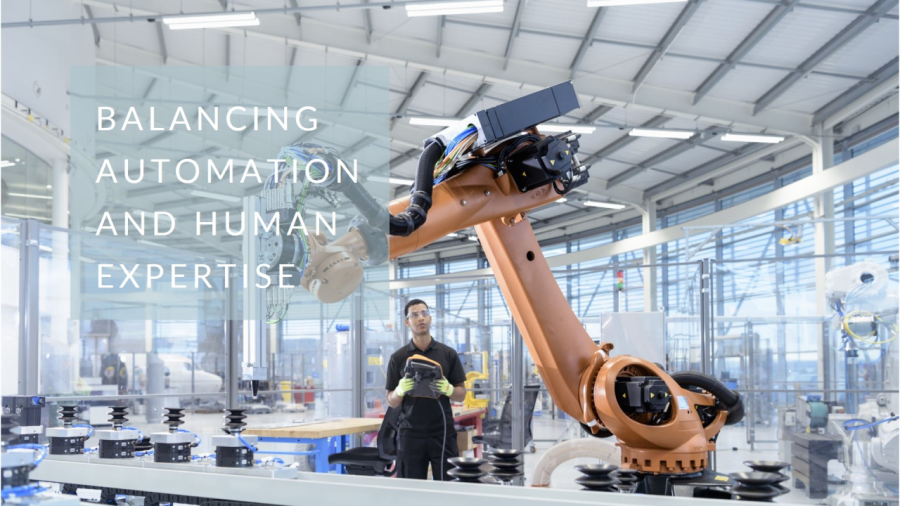
Generative AI in Simplified Technical English: A Balancing Act of Automation and Human Expertise

Generative AI in Simplified Technical English: A Balancing Act of Automation and Human Expertise

While generative AI offers exciting possibilities for streamlining STE content creation, it’s crucial to understand its limitations and the enduring value of human expertise.

AI as a Tool, Not a Replacement: Generative AI excels at tasks like:

  • Drafting and Editing: Automating repetitive tasks, suggesting alternative phrasing, and identifying potential inconsistencies.
  • Enforcing Standards: Checking for adherence to ASD-STE100 and other standards.
  • Improving Clarity: Identifying areas of ambiguity and suggesting clearer language.

However, AI cannot fully replace the critical thinking and nuanced understanding that human writers bring to the table.


Addressing Missing Information:

  • Human Expertise: Technical writers, with their deep domain knowledge and understanding of the target audience, are essential for identifying and addressing crucial information gaps.
  • Thorough Planning: Careful planning, including detailed requirements gathering and thorough subject matter research, is paramount to prevent missing information from the outset.

  • Human Review: Even with AI assistance, meticulous human review is necessary to ensure all mission critical information is accurately and comprehensively conveyed.


The Importance of Human Judgement:

  • Nuance and Context: STE requires understanding subtle nuances, interpreting complex technical concepts, and tailoring the information to the specific needs of the audience. These tasks demand human judgement and expertise.
  • Ethical Considerations: AI models can sometimes exhibit biases or generate inaccurate information. Human oversight is crucial to ensure the ethical and responsible use of AI in STE.

Generative AI can be a valuable tool for technical writers, enhancing efficiency and improving the quality of STE documentation. However, it should be viewed as an assistant, not a replacement. The unique skills and expertise of human writers, including critical thinking, domain knowledge, and the ability to understand and address complex technical issues, remain indispensable for creating high-quality, effective, and trustworthy STE content. By leveraging the strengths of both AI and human expertise, we can create a synergistic approach that maximises the benefits of both while mitigating the risks.