
Field engineers Archives | Shufrans TechDocs Home // Field engineers Archives | Shufrans TechDocs

FNSS Defence Systems: A Look Back at Clarity and Collaboration in Ankara with STE

FNSS Defence Systems: A Look Back at Clarity and Collaboration in Ankara with STE

Strengthening Technical Documentation and Optimising Team Contribution Across FNSS's Global Defence Operations

Client: FNSS Defence Systems

Industry: Defence Manufacturing (Armoured Vehicles)

Location: Ankara, Turkey (On-site Training)

Challenge: Ensuring clarity, consistency, and precision in critical technical documentation (Maintenance Manuals, Operator Manuals, Technical Specifications) for a global defence manufacturing operation, particularly in meeting comprehensive standards like S1000D and supporting robust Integrated Logistics Support (ILS).

Solution: A three-day on-site ASD-STE100 training programme delivered by Shufrans TechDocs to at least 15 professionals across five key job functions.

Results: Achieved enhanced precision and consistency in technical documentation, leading to improved operational readiness and safety, strengthened overall technical communication for FNSS’s armoured vehicle programmes, and augmented support for their Integrated Logistics Support Plan (ILP), Integrated Product Support (IPS) initiatives, and S1000D compliance.


Back in the winter of 2017, the vibrant city of Ankara, Turkey, played host to a memorable collaboration focused on elevating technical communication. At the Sheraton hotel, Shufrans TechDocs had the distinct pleasure of working with at least 15 dedicated professionals from FNSS Defence Systems, a leading manufacturer of armoured vehicles. It was a three-day on-site training programme that, beyond the serious work of technical documentation, was filled with engaging discussions and a truly enjoyable atmosphere, thanks to the wonderful team from Turkey.

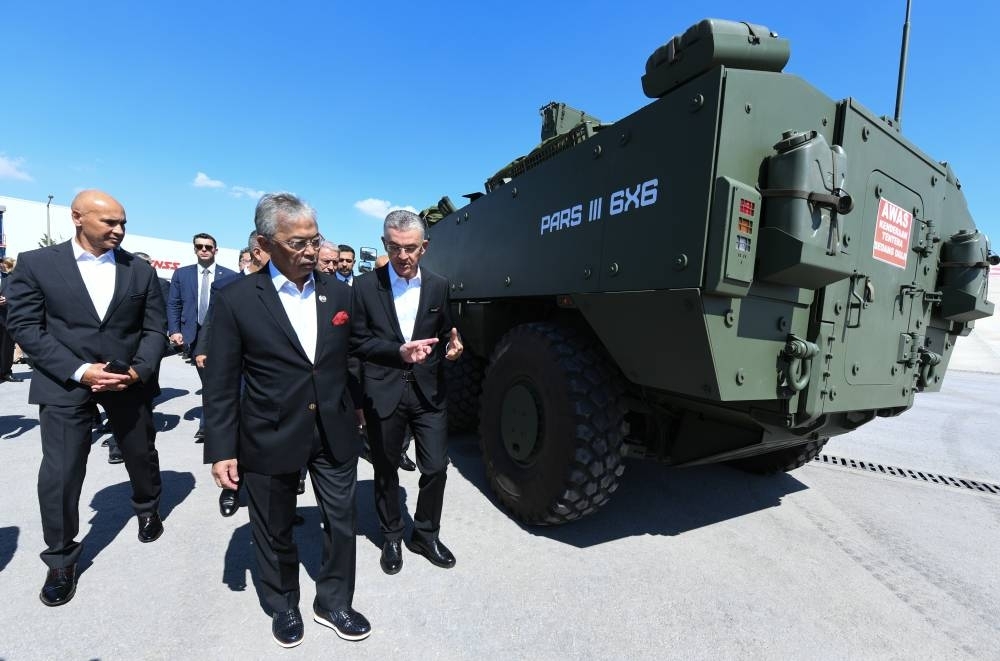
Our visit extended beyond the training room, offering a valuable opportunity to see the FNSS factory on the outskirts of Ankara, observing the impressive armoured vehicles firsthand. This immersive experience further reinforced the critical importance of clear and precise communication in the defence industry.

The Mission: Precision in Defence Documentation

FNSS operates in a sector where the stakes are incredibly high, and clarity in documentation directly translates to operational readiness and safety. The goal of the training was to introduce and apply ASD-STE100 Simplified Technical English (STE) principles to their existing documentation, enhancing precision and consistency across various critical materials. This is particularly vital in the context of global defence standards like S1000D and the overarching framework of Integrated Product Support (IPS), which encompasses all elements required to sustain a defence system throughout its lifecycle, including the foundational aspects of Integrated Logistics Support (ILS).


Key Document Types Transformed by STE

During the workshops, the focus was on real-world application, directly impacting some of FNSS’s most vital documentation:

  • Maintenance Manuals / Service Manuals: Essential for field engineers and technicians, STE ensures these manuals provide unambiguous, step-by-step instructions for repairs and routine servicing, directly impacting the operational uptime and longevity of armoured vehicles. These manuals are foundational to Integrated Logistics Support (ILS) and the broader IPS framework.
  • Operator Manuals / User Handbooks: These guides are crucial for military personnel operating the vehicles. STE helped to ensure that instructions on vehicle operation and integrated systems were easy to understand and execute correctly in challenging field conditions.
  • Technical Specifications / Design Documents: Fundamental for engineers and designers, STE ensures that design parameters, material requirements, and performance criteria are defined with absolute precision, supporting manufacturing accuracy and future vehicle upgrades. Clear specifications are key for S1000D data module development and overall IPS planning.

Empowering Diverse Roles with STE

The training brought together professionals from five key job functions, each gaining valuable skills tailored to their specific responsibilities:

  • Technical Writers / Documentation Experts: Directly responsible for creating and maintaining technical manuals, they refined their skills in applying STE rules for consistent and clear content, which is vital for S1000D compliance.
  • Engineers (across various disciplines): Involved in the design and development of the vehicles, they learned to contribute and interpret technical information with greater precision, ensuring alignment from concept to completion and improving inputs for ILS documentation.
  • Field Engineers: Working directly with the vehicles in operational settings, they benefited from clearer troubleshooting guides and reporting formats, improving efficiency and safety in the field, which directly contributes to ILS.
  • Quality Assurance / Quality Control Personnel: Gained tools to ensure that documentation consistently met stringent quality and compliance standards, directly reflecting in the reliability of the vehicles and adherence to specifications like S1000D.
  • Project Managers: Overseeing complex vehicle development and delivery programmes, they gained from improved clarity in all project-related documentation, helping to mitigate risks and ensure smooth execution, particularly within the framework of ILS and the Integrated Logistics Support Plan (ILP).

A Lasting Impact

Those three days in Ankara were more than just a training session; they were a testament to the universal value of clear communication and the dedication of the FNSS team. The collaborative spirit and commitment to continuous improvement demonstrated by the participants made it a truly rewarding experience. By embracing STE, FNSS further strengthened its foundation for precision and operational excellence in defence manufacturing, enhancing their Integrated Logistics Support Plan (ILP) and their capability to produce S1000D compliant technical publications.

Looking to empower your teams with unparalleled clarity in technical documentation?

Contact Shufrans TechDocs today to discuss how our bespoke ASD-STE100 training and support can benefit your organisation.

🗓️ View our training calendar.

www.shufrans.com

US, Canada West Coast Online Workshop: Book your seat today at our ASD-STE100 Simplified Technical English training!

US, Canada West Coast Online Workshop: Book your seat today at our ASD-STE100 Simplified Technical English training!

Quick Facts

Dates: 22 & 23 January 2020

Plan later: 

  1. 6 & 7 February 2020
  2. 24 & 25 February 2020.

Time: 09:00 to 17:00 Pacific Time

Length of training: 2 days

Course fee: 799 EUR**

Course registration ends one week before training commences.

**Course fee includes exercises, learning aids, certificate of completion, and 90-day post-training support.

I’ve found all the rules introduced in this workshop equally valuable and applicable in my field of work. The ASD-STE100 Specification is very useful for searching examples and finding STE compliant alternatives. It was also great that we has such a large number of practical exercises. Personally, it would be more valuable to have more context available. This helps us judge how to apply STE optimally. Thank you Shumin! Your workshop was concise, clear, and pragmatic. I also liked the occasional humour! 🙂 Diane Goodrick, Information Architect/ Author Trainer, Schindler Group.

Summary

Simplified Technical English (STE) is a controlled language that is used to write technical manuals in such a way that they can be more easily understood by an international audience. STE helps to make translations cheaper and more accurate. Often a formal requirement for aircraft and defence maintenance documentation, STE can easily be adapted to all technical industries and beyond. Ms. Shumin Chen will teach participants how to correctly and effectively use STE in practice. She will also address some of the mistakes commonly found in technical writing and the frequently incorrect use of common STE writing rules.


Course outline*

  • Day 1: Classroom Training
    1. Practical overview of Simplified Technical English
    2. How STE helps both native & non-native speakers of English
    3. Benefits of adopting the STE international writing standard
    4. Writing rules and how to apply them in practice
    5. How to use the general vocabulary.
    6. Approved and non-approved words discussion and the rationale behind.
  • Day 2: Application, Review, & Exercises
    1. How to deal with industry-specific terminology
    2. How to use STE for various documentation types
    3. How to implement STE with minimal disruption to on-going production and existing documentation
    4. Practical workshop session for applying STE rules to your own documents
    5. Review, edit, and discuss participants’ own documents to reinforce learning
    6. Classroom presentation of own documents.

* Shufrans also offers customised ASD-STE100 training solutions tailored to meet your specific requirements. These courses are normally provided at the customer’s premises.

Who should attend?

  • Compliance managers
  • CIO, COO, CTO
  • Customer support managers
  • Documentation managers
  • Editors
  • Engineering managers
  • Engineers and SMEs who create documentation
  • Graphics specialists
  • ILS managers
  • Maintenance managers
  • Operation managers
  • Product managers
  • Project managers
  • Quality managers
  • Software research engineers
  • Technical illustrators
  • Technical writers
  • Translation managers
  • Translators.

What training outcomes to expect?

Our interactive training, exercises and workshop, will teach participants to standardise content to:

  • Author more efficiently
  • Communicate more effectively with a global audience
  • Improve operational safety
  • Reduce AOG / downtime
  • Facilitate modular writing and reuse
  • Facilitate teamwork
  • Facilitate translation
  • Maximise consistency
  • Optimise product lifecycle support
  • Reduce the cost of creating and maintaining technical publications.

I will definitely recommend this training to writers of many fields, especially technical fields. The material, presentation, and instructor are fantastic. I learned a lot about ASD-STE. Even though I’ve been using this writing convention for almost eight years, formal training brought much clarity and comprehension that I had not previously realized. I now know that an aptitude for writing and a copy of the STE rules is a good start, but not enough. This course takes your understanding to a professional level. Lauren Gelli, Senior Technical Writer, Aerotech Inc.

Trainer’s qualifications

Ms. Shumin Chen, principal trainer & consultant at Shufrans TechDocs received her professional on-the-job training in the field of STE under the tutelage of Dr Frans Wijma, a linguist and documentation expert. Together as an experienced global team, they provided their combined knowledge and dedication to benefit customers worldwide. To date, they have provided training and consultancy services to over 180 companies. Shufrans TechDocs is the only company with such vast experience in providing certified STE training.

Shumin has supported various companies with their STE and other documentation needs, based on standards where possible. Although STE was developed for the aerospace industry, more specifically for aircraft maintenance documentation, Shumin found that it made a lot of sense to apply the same principles to other industries and types of documents as well. Few -if any- changes to the specification are necessary to adapt STE to industries ranging from machinery to IT, automotive to medical equipment.


NIMR (EDGE Group): Enhancing Operational Readiness through On-Site STE Training

NIMR (EDGE Group): Enhancing Operational Readiness through On-Site STE Training

Clarity and Multilingual Efficiency in Critical Defence Documentation

Client: NIMR (A subsidiary of EDGE Group)

Industry: Defence Manufacturing & Technology

Location: Abu Dhabi, UAE (On-site Training)

Challenge: Ensuring absolute clarity, consistency, and a unified communication standard in critical technical and support documentation, vital for operational readiness, effective customer support, and seamless English-Arabic translation in the defence sector.

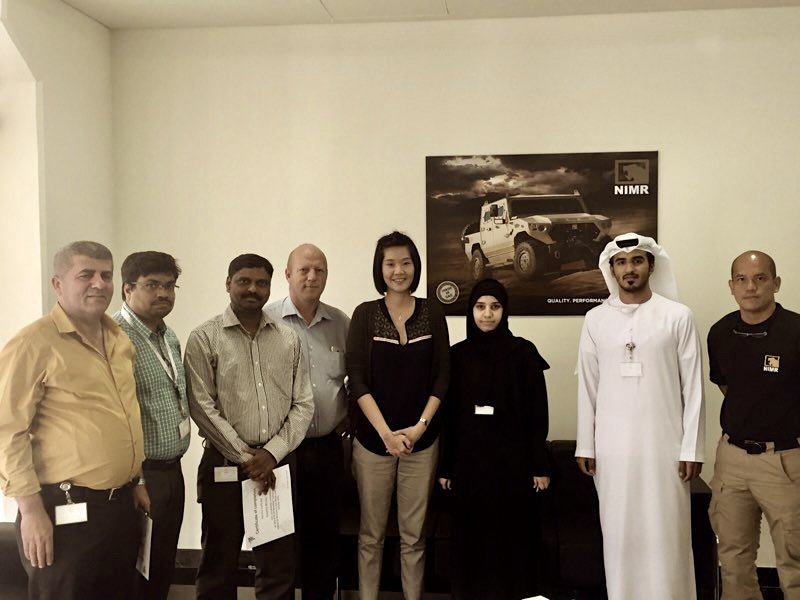
Solution: A bespoke, three-day on-site ASD-STE100 training programme delivered by Shufrans TechDocs to key personnel including Customer Support Officers, Field Engineers, Technical Writers, and Documentation Experts.

Results: Significant uplift in documentation precision, improved efficiency in field and customer support interactions, enhanced cross-functional communication, optimised translation processes, and accelerated professional development, directly contributing to NIMR’s mission of delivering mission-ready solutions.


The Challenge: Uncompromising Clarity in Defence Communications

NIMR, a leading manufacturer of wheeled military vehicles and a pivotal subsidiary within the UAE’s advanced technology and defence group, EDGE, operates in an environment where clarity is not merely beneficial—it is critical. The precision of technical documentation directly impacts the operational readiness, safety, and effectiveness of defence assets in demanding environments.

NIMR faced the challenge of ensuring that all its technical and support communications, from maintenance manuals to field service reports and customer interactions, adhered to an uncompromising standard of clarity and consistency. This was particularly complex given the diverse roles involved in creating and delivering this information, and the crucial requirement to translate documents accurately between English and Arabic for various customers and end-users:

  • Customer Support Officers: Needing to convey precise solutions and guidance efficiently to end-users, often in both English and Arabic.
  • Field Engineers & Technicians: Requiring unambiguous instructions for maintenance, troubleshooting, and on-site support of complex military vehicles, with the knowledge that these would be translated.
  • Technical Writers & Documentation Experts (from various backgrounds): Tasked with authoring and managing a vast array of critical technical content, with a direct impact on the quality of subsequent translations.

Any ambiguity could lead to misinterpretations in critical operational contexts, potentially compromising safety, delaying field repairs, impacting training effectiveness, or introducing errors during the English-Arabic translation process. NIMR sought a solution that would embed a culture of precise communication directly within their operational teams, with a clear benefit to their multilingual documentation needs.


The Results: A New Standard for Operational Clarity and Multilingual Efficiency

By investing in on-site ASD-STE100 training with Shufrans TechDocs, NIMR achieved significant, measurable improvements in its technical and support communications:

  • Enhanced Operational Clarity: A unified approach to language drastically minimised ambiguities in all forms of documentation, directly improving the understanding and execution of critical procedures by both internal teams and external customers.
  • Improved Field Efficiency: Field Engineers could more effectively diagnose issues and follow maintenance protocols, reducing downtime and ensuring rapid response in operational scenarios.
  • Streamlined Customer Support: Customer Support Officers provided clearer, more concise guidance, leading to reduced resolution times and enhanced customer satisfaction.
  • Boosted Documentation Quality: Technical Writers and Documentation Experts consistently produced high-quality, compliant content, streamlining workflows and reducing rework.
  • Optimised Translation Processes: With a consistent and unambiguous English source text, the translation of documents into Arabic became faster, more accurate, and more cost-effective, ensuring seamless communication with diverse customer bases.
  • Accelerated Professional Growth: The hands-on training significantly upskilled personnel across critical roles, fostering a collective commitment to precision communication and supporting their long-term professional development within the defence sector.
  • Strengthened Communication Chain: A common language standard facilitated seamless information exchange between engineering, documentation, field support, and translation teams, underpinning NIMR’s commitment to delivering superior defence solutions globally.

NIMR’s proactive investment in on-site STE training with Shufrans TechDocs has transformed its communication landscape, reinforcing its position as a leader in defence manufacturing through unparalleled clarity, operational excellence, and enhanced multilingual capabilities. This success story underscores the vital role of targeted communication training in ensuring readiness and reliability for critical industries operating on a global scale.

If your organisation faces similar challenges in achieving uncompromising clarity and operational readiness through precise communication, especially when translation between English and Arabic is a key requirement, discover how Shufrans TechDocs can help. Learn more about our ASD-STE100 training and consulting services:

🗓️ View our training calendar.

www.shufrans.com

Your Tactical Advantage | Emirates Defence Industries Company

Your Tactical Advantage | Emirates Defence Industries Company

STE as part of your global content strategy

Simplified Technical English as part of your content strategy

EDGE is creating opportunities in autonomous capabilities, directed energy, cyber-physical systems, advanced propulsion systems, robotics and smart materials, with artificial intelligence embedded across its products and services. Transforming how we live, and ensuring a more secure future, is what we do. Our mission is to bring innovative technologies and services to market with greater speed and efficiency.

ASD-STE100 Simplified Technical English (STE) is a controlled language that is used to write technical manuals in such a way that they can be more easily understood by an international audience. To put it across plainly, STE is a form of controlled language that is guided by 53 technical writing rules that were put together by a committee of linguists, engineers, and manufacturers who established over the years that these writing rules made sense and allowed them to re-write any of their existing documentation based on these rules, making their documentation easier to understand, while maintaining accuracy, safety, and validity.

Develop, deploy, and deliver documentation with STE

STE Quick facts

Background: With the widespread dissemination of user documentation published in various delivery formats across several language translations, the relevance of global information management has become greater in an attempt to stem terminology inconsistencies, mistranslations, and the disproportionate escalation of costs associated with the maintenance, reuse, and consumption of technical content.

Year: In use since 1986

Current Version: Issue 8, May 2021.

Technical writing rules: 53

Dictionary word entries: approx. 2400 terms.

The STE specification also includes a core vocabulary of around 930 approved words and 1500 non-approved words that let technical authors write just about everything that they need for for procedural and descriptive texts. Therefore, the use of approved words, compliance with the standard, and a language quality checker tool to complement your content strategy efforts is akin to pooling your most valuable resources where people, internal processes, and innovative technologies become more aligned.


The role of technical authors and technical documentation managers

Technical writers are the go-between for subject-matter-experts (SMEs), engineers, designers and the end-users of documentation. Consequently, the responsibility of creating effective documentation falls on technical authors who will then endeavour to send out a clear, unambiguous, and user-friendly message about their products and line of services.

At the level of global information management, technical writing professionals should consider short-term tactics and longer-term strategies to overcome the following:

  • An ever-increasing volume of words to write and translate
  • Snowballing translation and documentation management costs
  • Overlapping information across different versions of similar document types
  • Low comprehension levels for the English language jargon.

STE in practice

If this is your first time hearing about STE, the example that follows will hopefully shed more light on the principles and best practices that govern good STE writing. Here is an original piece of text presented in standard English writing:

THE SYNTHETIC LUBRICATING OIL USED IN THIS ENGINE CONTAINS ADDITIVES WHICH, IF ALLOWED TO COME INTO CONTACT WITH THE SKIN FOR PROLONGED PERIODS, CAN BE TOXIC THROUGH ABSORPTION.

And here it is again in STE:

THE OIL IS POISONOUS. DO NOT GET THE ENGINE OIL ON YOUR SKIN.  IT CAN GO THROUGH YOUR SKIN AND INTO YOUR BODY.

Making the comparison between the two types of writing above, you will see that the original writing is rather cumbersome in expression. It is also very likely that the person reading this sentence will have difficulties following the writer’s line of thought because of the longer sentence length and unnecessary information included. In contrast, the text written in STE is much more to the point and simply distils what is pertinent to the person doing this work:

  1. The oil is poisonous.
  2. I must always be careful not to touch oil without protection.

From this example, STE shows us that warnings and cautions must always start with a simple and clear command that is usually substantiated by a reasoning that comes before or after.  A command informs the user about the precautionary measures to take to avoid danger. Presenting information as if it were a general comment in the original writing obscures the importance of the message and is not specific enough.


What customers are saying.. | NIMR Automotive

Thuraya Al Mehrzi, Production Engineer, NIMR Automotive
“Shumin gave a good introduction to Simplified Technical English. Instead of writing long sentences that are difficult to read, I prefer the STE rule of presenting long sentences in a list that makes it much easier to understand the work that is required to be completed. The STE exercises were pretty engaging, and this is particularly so for day 2 of the rewriting workshop that gave the team a lot of insight into our documentation. Trainees also had the opportunity to replace many unapproved standard English words with STE ones that helped us better appreciate the application of STE rules in a real-world context. This is a training that I have rated 10/10 for.”

Nour Bazuhair, Engineer Trainee, NIMR Automotive “The introduction to Simplified Technical English (STE) was simple to follow and understand. Rule 1.4 to use only the approved forms of verbs and adjectives from the STE dictionary is something that I appreciate very much. Applying the rules faithfully was a challenging albeit enjoyable process. There is a lot of good writing rules to learn here. I’ve found the exercises to be very useful for learning reinforcement, and they have helped me to apply STE rules in a more efficient manner and I’ve gained a much better understanding of STE as a result. Shumin’s training methodology is easy to follow, and she offers us great technical writing advice and has simplified the process for us. Every aspect of this training is a 10/10 for me.”

Abdel Alazeem Arafah, Service Coordinator, NIMR Automotive “This was a great course with very useful and practical knowledge for my work. Simplified Technical English (STE) encourages users to always refer to the approved list of verbs and nouns in the STE dictionary before writing their technical documentation. The active voice is also a very useful and powerful tool in sending loud and clear instructions to our users. Starting a warning or caution with a simple and clear command is also very crucial in my line of work. Shumin’s delivery of the training is highly organised, and she has been most patient with our comments, questions, and feedback the whole time.”

An innovative approach to consider for your global documentation landscape

Over the last three decades, STE has emerged as a rather important and universal standard for technical English. Predictably, as a result of language standardisation, STE helps us to achieve a number of benefits. Technical writers become more consistent on a word level. This starts with the simple fact that we are going to use the same word whenever we refer to the same thing, so that means an improved level of consistency and consequently quality improvements.

Where can I learn more about STE?

Shufrans TechDocs regularly hosts online training workshops for technical writers, SMEs, and engineers at different time zones for your convenience. To learn more about our diverse course offerings and workshop customisations that we can do for you and your global technical documentation team, speak to us today!